


"The League's role is to get as close as possible to universities and territories. We are therefore pleased to create a comprehensive protocol that will be implemented. We want things to happen and will take that step forward very soon," he said.
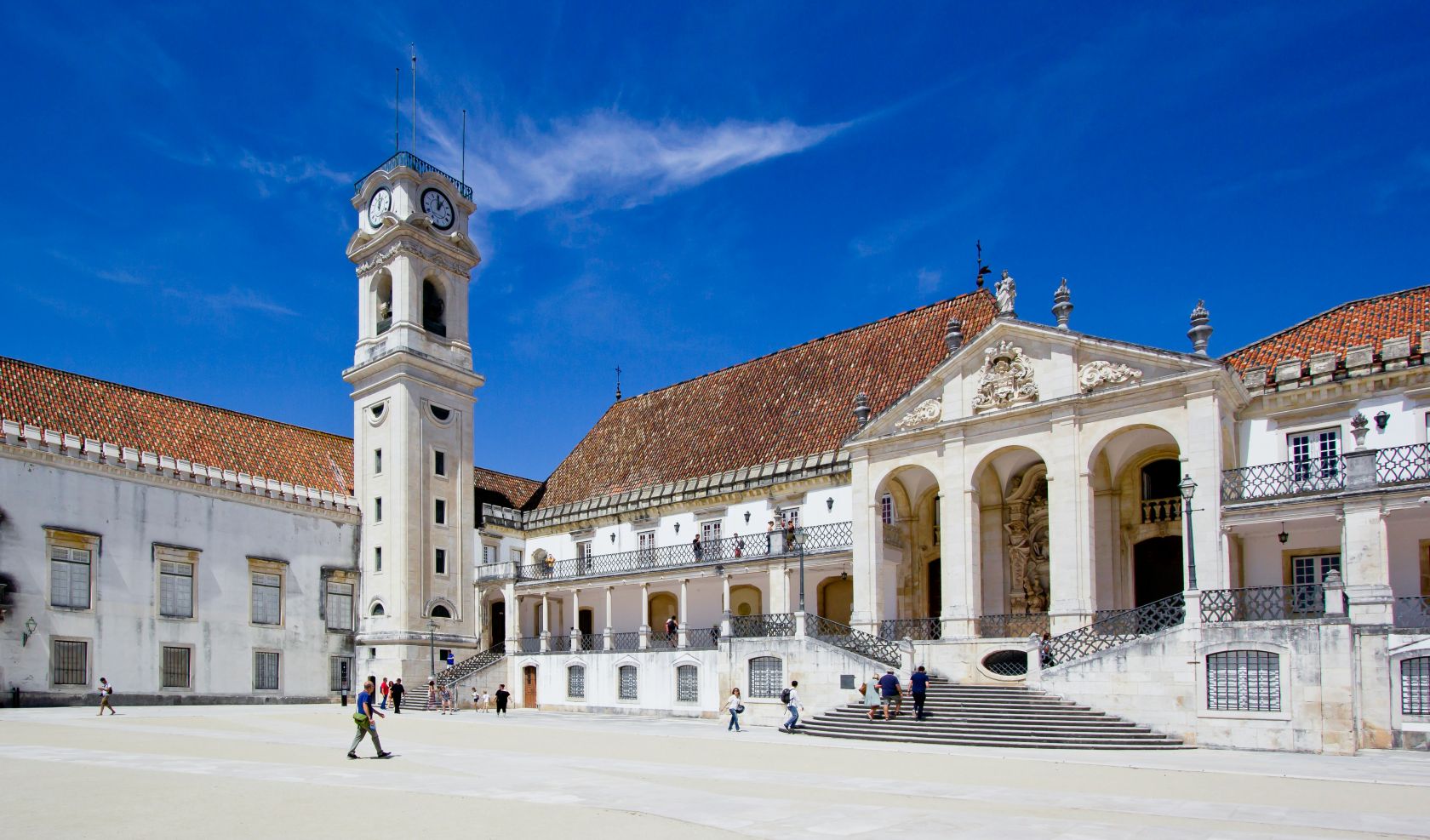
Reinaldo Teixeira spoke at the conference "The Role of Professional Football and Future Challenges," which took place as part of the Conversations at the House of Lusophony, organised by the University of Coimbra (UC).
Closer collaboration
During the opening, the Deputy Director of the Faculty of Sports Sciences and Physical Education of the University of Coimbra (FCDEFUC), Hugo Sarmento, advocated for “closer collaboration between academia and professional football,” explaining that such partnerships would allow clubs, FCDEFUC, and the League to share expertise and resources, leading to practical innovation and growth in both fields.
Portuguese football has long exported not only players but also coaches and managers. Now, it has the chance to export knowledge as well, and with this conviction, FCDEFUC is fully available to actively contribute to this joint construction,” he emphasised.
Training future coaches
The faculty is “training the future coaches, analysts, physical trainers, and specialists who will integrate Portuguese and world football in the coming years, which requires ensuring scientifically sound training aligned with the real needs of the sector.”
Throughout his speech, Reinaldo Teixeira stated that Liga Portugal Business School “wants to interact with national universities and, at the same time, provide training from here to there and from there to here for the rest of the world.”
Partnerships with federations
“We have a number of partnerships with federations, with other European leagues. Essentially, we share knowledge, experiences, and at the same time, we interact, making the world seem small in our relationship,” he argued.
Future goals
The president of the LPFP also highlighted the 2028 goal, which aims to add more value to competitions by making them more competitive, with fewer fouls and more effective playing time. He also pointed out that one of the challenges on the horizon is speeding up VAR responses and improving the on-field experience for fans.
Formalising a protocol
At the close of the session, the director of FCDEFUC, Vasco Vaz, reiterated his willingness to formalise a protocol with the LPFP, either through the faculty or the University of Coimbra (UC), to facilitate knowledge sharing. The rector of UC, Amílcar Falcão, noted the agreement's relevance and highlighted the partnership's advantages.
Not only a business
In his opening remarks, the vice-rector for External Relations and Alumni of UC, João Nuno Calvão da Silva, appealed for football not to be seen merely as a business, emphasising its democratic and emotional aspects.
Speaking on the sidelines of the conference, when questioned by journalists about how he viewed, 12 years later, the possibility of Portugal being represented at the 2026 World Cup with a trio of assistant referees, Reinaldo Teixeira said it was a source of pride.
“It’s a moment of pride,” because “it proves that we have quality, we have skills.”
The LPFP (Portuguese Professional Football League) had already congratulated referee João Pinheiro on his appointment to the 2026 World Cup, in “recognition of the consistent and excellent career he has demonstrated at the highest level.”
Set The Portugal News as your preferred source for news on Google
 Add as a preferred source on Google






 Portugal Handbook
 English
 Nederlands
 Deutsch
 Français
 Español
 Italiano
 Svenska
 Pусский
 中文
中文 Türkçe
 Português
 Czech
Czech Hungarian
 Polski
 عربي
عربي Suomi
Suomi עִברִית
 Português (Brasil)
Follow us on social media