


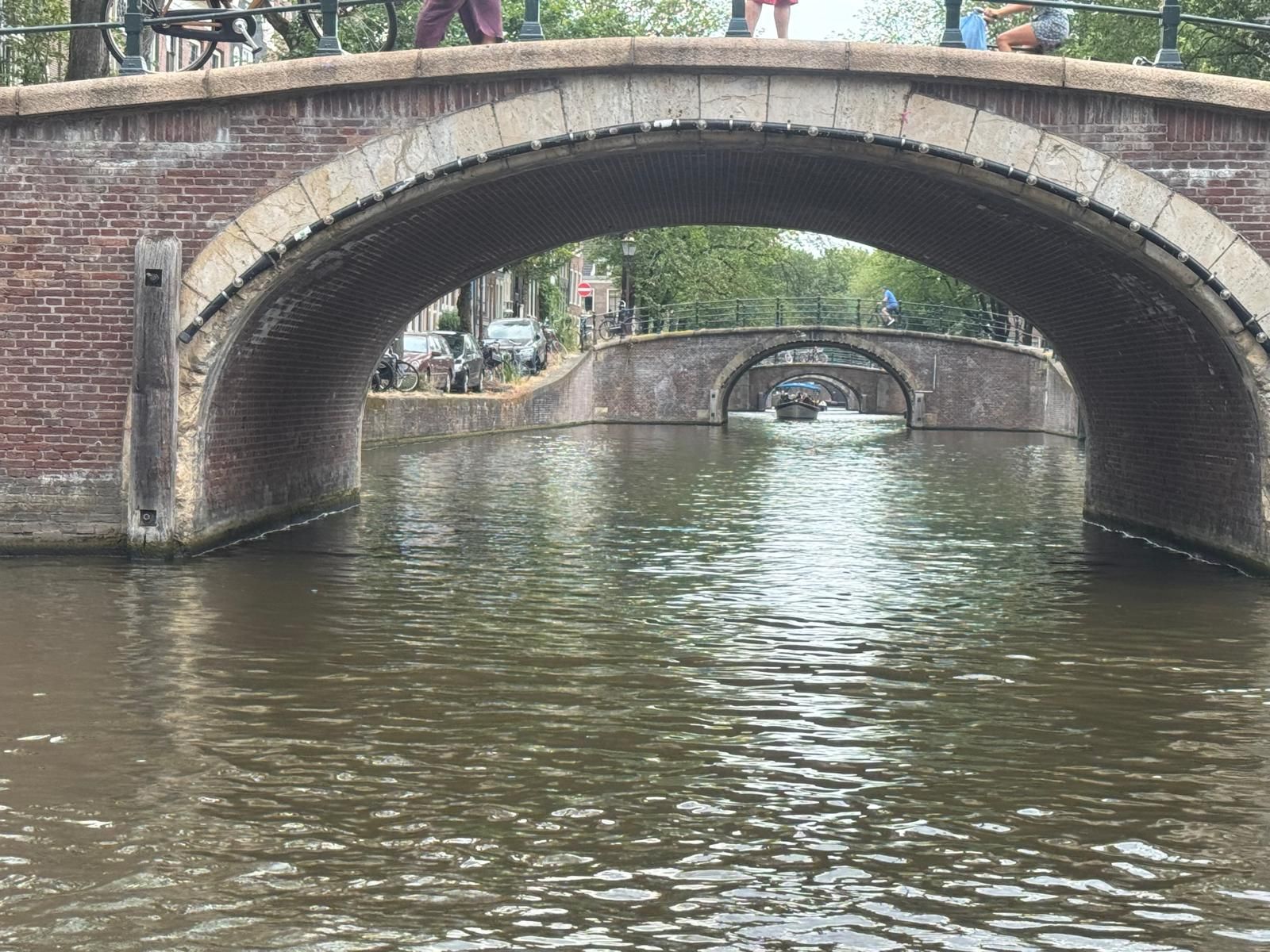
A city built on poles
There are several things that make Amsterdam pretty unique. One of them is that Amsterdam rests on approximately 11 million wooden and concrete poles driven deep into soft peat and clay to reach a stable layer of sand. As the children's song went: Amsterdam die grote stad, die is gebouwd op palen. Amsterdam, that big city, was built on poles. We had to sing it in school, which was a disaster for me (and for my classmates), as my singing sounded, and still does, much like a cat in heat, even to my own ears.
Because the poles are completely embedded in the soil, if they remain so, no oxygenation can occur, and the wood can last a long time without rotting.
Nowadays, strong concrete poles are used for new buildings. But failure can still occur. Modern urban development, subway construction, and changes in groundwater management have occasionally caused the water table to drop and the tops of the poles to be exposed to oxygen. This exact issue caused a major crisis at the famous Rijksmuseum, which sank 15 centimetres after fungi attacked its wooden foundations, requiring massive structural interventions.
The same thing occasionally happens to the canal-side buildings. Walking through Amsterdam, you will notice many historic canal houses that lean forward or tilt sideways— they’re often called the "Dancing Houses".
Amsterdam stock exchange
Something that made Amsterdam already famous in the 17th century is the Amsterdam stock exchange, or the Beurs van Amsterdam, which is now the Beurs van Berlage. Berlage was the architect who designed the building that houses the stock exchange today.
The stock exchange was started to trade the stocks of the VOC, or the East India Company, the Vereenigde Oostindische Compagnie (VOC), which was established in 1602 to trade spices, silk, and porcelain across global oceans. The original building to house the stock exchange was built in 1611.
Tulip mania
The stock market is a kind of virtual reality which is propped up by perceptions and expectations; just look at the tulip stock of the Golden Age.
Tulips arrived in Western Europe from the Ottoman Empire in the late 16th century and quickly became luxury status symbols during the Dutch Golden Age. Rare, multicoloured-blotched bulbs (like the Semper Augustus) led to a booming futures market, where people traded paper contracts for bulbs still growing in the ground. At its height in early 1637, single contracts or rare bulbs allegedly traded for the price of a grand canal-side mansion or multiple times a master craftsman's annual salary. Of course, this craziness could not last, and in February 1637 buyers suddenly vanished from auctions in Haarlem and Alkmaar, causing prices to plummet overnight.
While often cited as history's first major speculative financial bubble, modern economic historians (such as Anne Goldgar) note that the fallout was largely localised to a subset of traders and did not totally destroy the wider Dutch economy, though it left a lasting cultural mark on risk and credit.
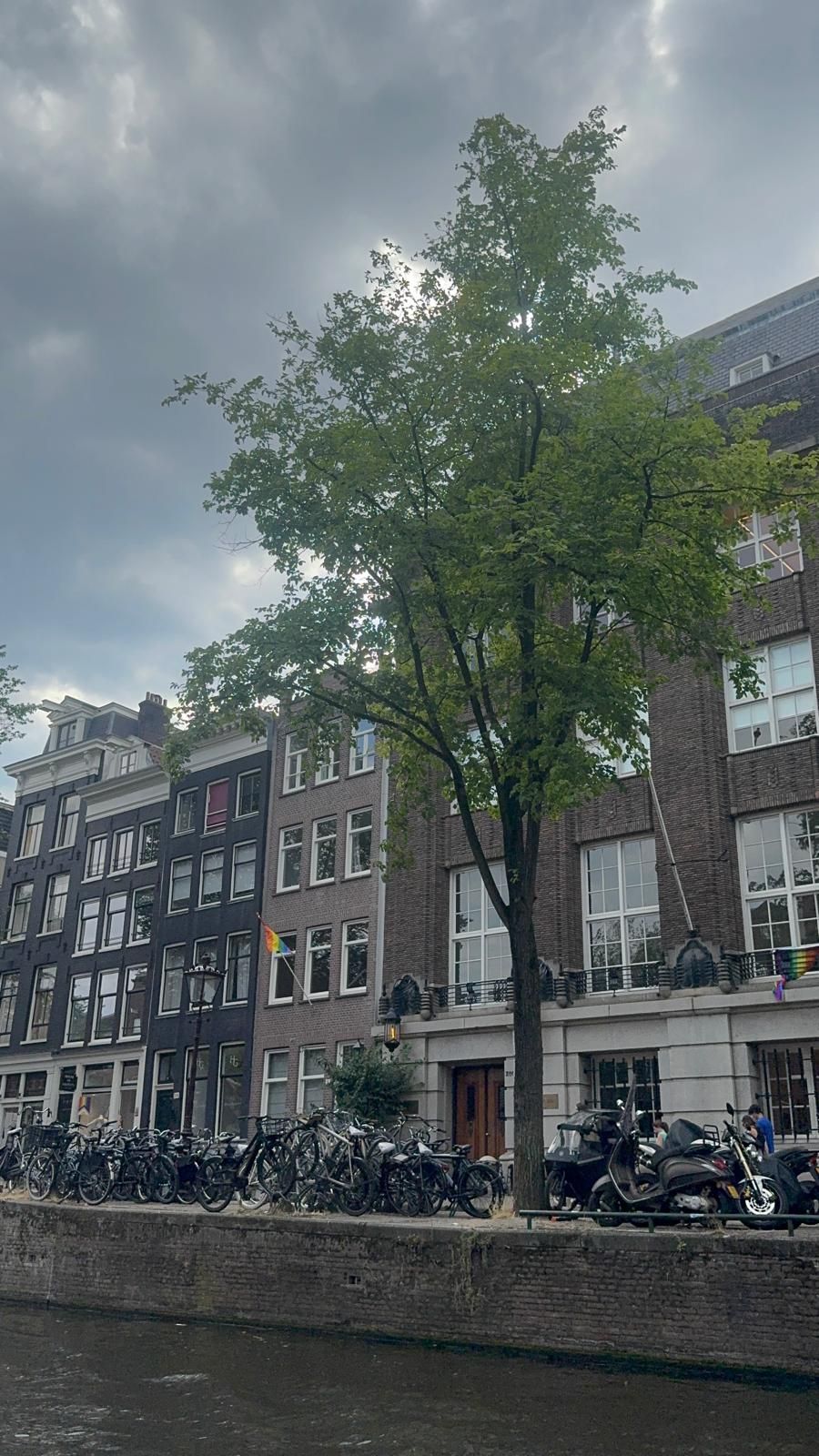
Red light district.
I cannot write about Amsterdam without mentioning Amsterdam’s (in)famous red light district, De Wallen, or The Walls, from the old defensive walls built around the medieval canals near the harbour, where the district is located.
For centuries, sex workers mostly walked the streets or worked from doorways. During the late medieval period, authorities banned married men and priests from entering the area to prevent moral corruption.
In the 19th and 20th centuries, police banned soliciting directly from open doorways. Sex workers began sitting behind windows with partially closed curtains, using a subtle red light or candle to signal that they were available. Then, of course, the Dutch being the Dutch, in the 20th century, Dutch authorities decided to legalise sex work, for reasons of security, or so they claimed, but mostly, what else, to be able to levy taxes on their incomes.
When I was in high school, my friends and I liked to visit the red light district after school. It was a really nice place, lovely people, making us feel welcome, buying us coffee or soft drinks. And no, not luring us into their trade, just friendly. It changed after drugs became a thing, and girls were brought in from Eastern Europe by drug dealers, and the district was a very unsafe place for a while. That has changed, but it is not the place it used to be in my teenage years.
If you'd like to know more about the red light district, visit the Museum of Prostitution, which is located in a former brothel, offering a look into the history and daily life of the district. Tickets cost around €14.50 online or €17 at the door. And if you want to walk around the district, there are some important rules and etiquette to remember.
No photos: Taking photographs or recording videos of the sex workers behind the windows is strictly prohibited and heavily enforced; doing so can lead to aggressive reactions or having your device confiscated.
Public drinking & smoking: Drinking alcohol in public spaces carries a fine (around €95), and public cannabis consumption in the streets can also result in a fine.
Behaviour: Do not tap on windows, block narrow pathways, or litter. Window workers have the right to refuse any customer.
Set The Portugal News as your preferred source for news on Google
 Add as a preferred source on Google






 Portugal Handbook
 English
 Nederlands
 Deutsch
 Français
 Español
 Italiano
 Svenska
 Pусский
 中文
 Türkçe
 Português
 Czech
 Hungarian
 Polski
 عربي
 Suomi
 עִברִית
 Português (Brasil)

Follow us on social media