


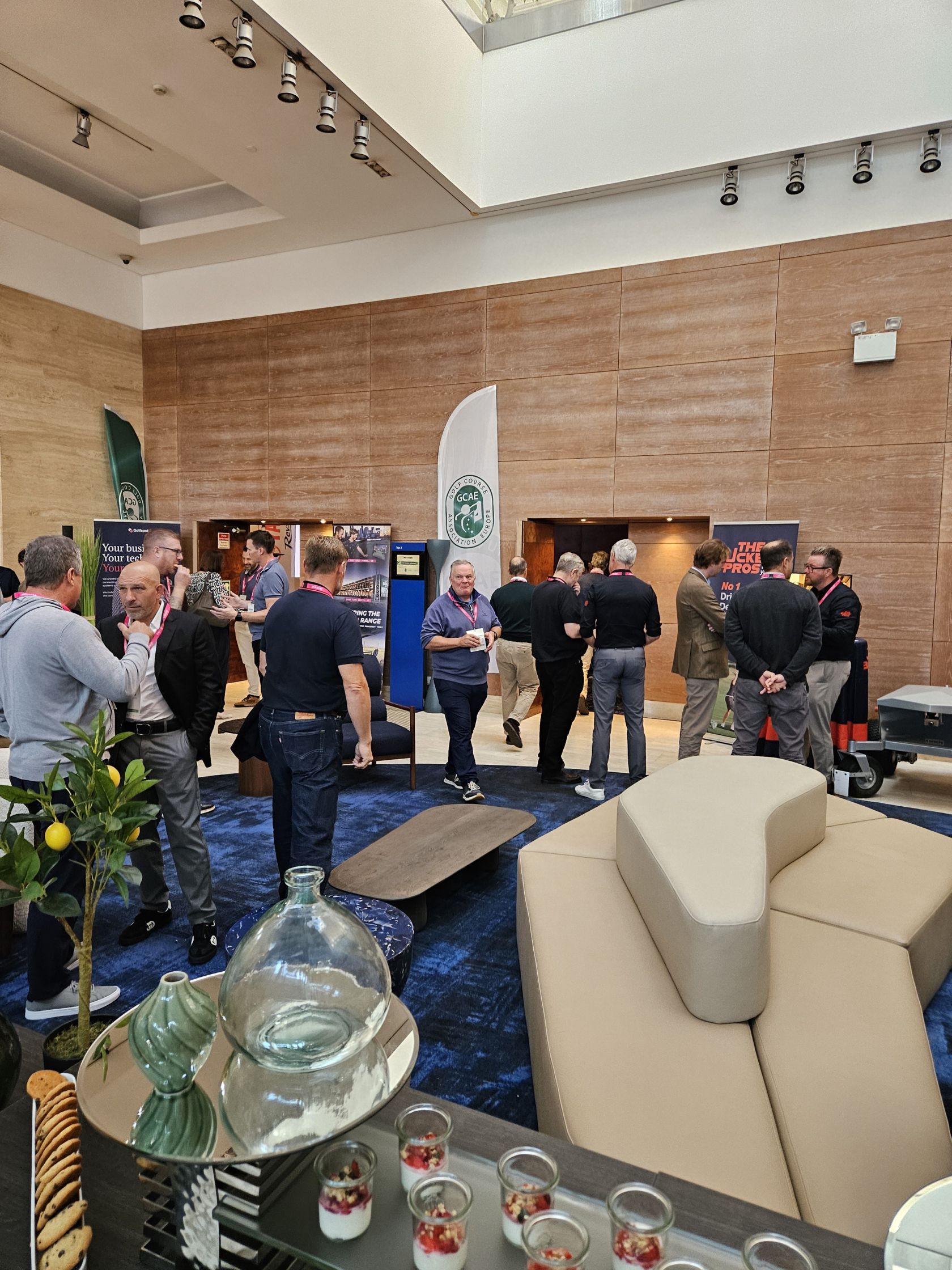
My participation in the Golf Business Conference 2026, in Vilamoura, reinforced the importance of understanding this relationship from a broader perspective. The development of a golf destination does not depend solely on the quality of its courses, but also on the ability to integrate different services, infrastructures, and experiences that make this territory attractive to visit, invest in, and live in.
The study developed by Nova SBE for the National Council of the Golf Industry (CNIG), presented in November 2025, allows us to quantify part of this reality. Between 2014 and 2024, the economic impact associated with the construction, sale, and resale of accommodation units covered by the study reached approximately 760.5 million euros in economic output and 407.9 million euros in Gross Value Added, also representing an average annual impact equivalent to 810 full-time jobs.
One of the most interesting indicators refers to the real estate appreciation associated with golf developments. The study cites data from European Tour Destinations, according to which properties located in golf resorts in that network show an average premium of 19% compared to properties outside these developments.
Although this indicator does not constitute a specific average of the Portuguese market, it helps to understand how certain infrastructures, services, and surrounding features can influence the value of a property. The proximity of a golf course, the quality of the landscape, security, leisure spaces, and available services contribute to a value proposition that goes beyond the physical characteristics of the property itself.
For real estate mediation, this reality also represents a professional challenge. Knowing the real estate product is no longer enough when dealing with clients seeking a certain life experience. It is necessary to understand how the destination works, the existing services, maintenance costs, the quality of development management, and its ability to preserve value over time.
There is also an economic dimension that does not end with the sale of a property. Property maintenance, asset management, gardening, catering, local commerce, and specialised services benefit from a relationship that can last for decades.
However, the development of residential tourism must respect the capacity of territories, the availability of natural resources, and the needs of local communities. Real estate appreciation will be more sustainable when accompanied by investment in infrastructure, urban quality, and environmental responsibility.
The future of real estate will increasingly depend on our ability to understand what actually creates value for the customer. The golf industry demonstrates that this value does not come only from building properties, but from creating destinations capable of providing experiences, establishing lasting relationships, and generating ongoing economic activity.
It is precisely in this connection between real estate, tourism, and quality of life that Portugal can continue to differentiate itself internationally.
Set The Portugal News as your preferred source for news on Google
 Add as a preferred source on Google







 Portugal Handbook
 English
 Nederlands
 Deutsch
 Français
 Español
 Italiano
 Svenska
 Pусский
 中文
 Türkçe
 Português
 Czech
 Hungarian
 Polski
 عربي
 Suomi
 עִברִית
 Português (Brasil)

Follow us on social media