


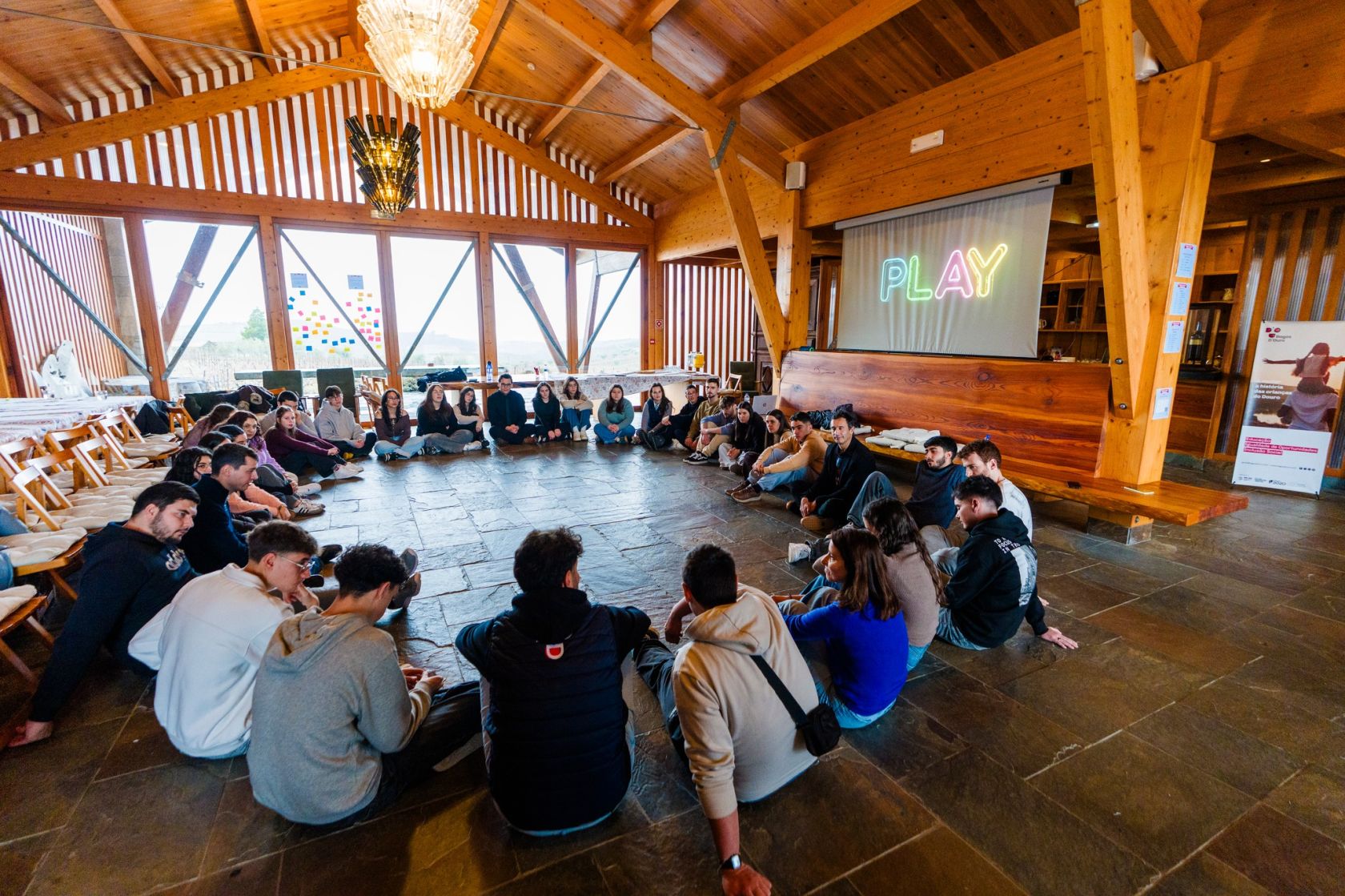
Take Action launched 10 years ago. It is an educational project focused on exploration and career guidance. The project helps children and young people discover their path through direct contact with professions and businesses in the Douro region.
The Bagos D’Ouro association said in a statement today that the project has helped to dispel the belief that a better future means leaving the region. It shows that the Douro also offers viable and inspiring paths.
The 2026 edition will run from today until Wednesday. It involves about 40 young people from lower and upper secondary schools. They will have the chance to engage with more than 50 companies in the region.
For 10 years, Take Action has given young people tools to choose their path with confidence. It shows them the future may be nearer than they think. The Douro region can be a home for the talents of new and future generations, said Maria Inês Taveira, general coordinator of Bagos D’Ouro, in the statement.
She added that people can only decide by knowing. Direct contact with the world of work is essential for broadening horizons and strengthening ties to the region.
Take Action was created specifically to broaden horizons and raise awareness of the career opportunities available in the region, enabling young people to engage directly with sectors ranging from hospitality to medicine, from journalism to sport, and including teaching and computer engineering.
The project is structured into different stages that follow the participants’ educational journey.
Take Action Kids is aimed at pupils in Years 5 and 6, offering an initial introduction to the world of work, followed by Take Action I for Years 8 and 9, Take Action II for secondary school pupils, with more in-depth experiences and direct contact with companies, and Take Action Uni, which supports Year 12 pupils, vocational students and those in higher education.
Established in 2010, the non-profit association began its work in São João da Pesqueira, in the district of Viseu, and Sabrosa, in the district of Vila Real.
Today, it operates in Alijó, Carrazeda de Ansiães, Tabuaço, Armamar, Murça and Mesão Frio, supporting, in the 2025/26 academic year, more than 240 children and young people from around 140 families in the Douro region.
 Add as a preferred source on Google





 Portugal Handbook
 English
 Nederlands
 Deutsch
 Français
 Español
 Italiano
 Svenska
 Pусский
 中文
中文 Türkçe
 Português
 Czech
Czech Hungarian
 Polski
 عربي
عربي Suomi
Suomi עִברִית
 Português (Brasil)
Follow us on social media