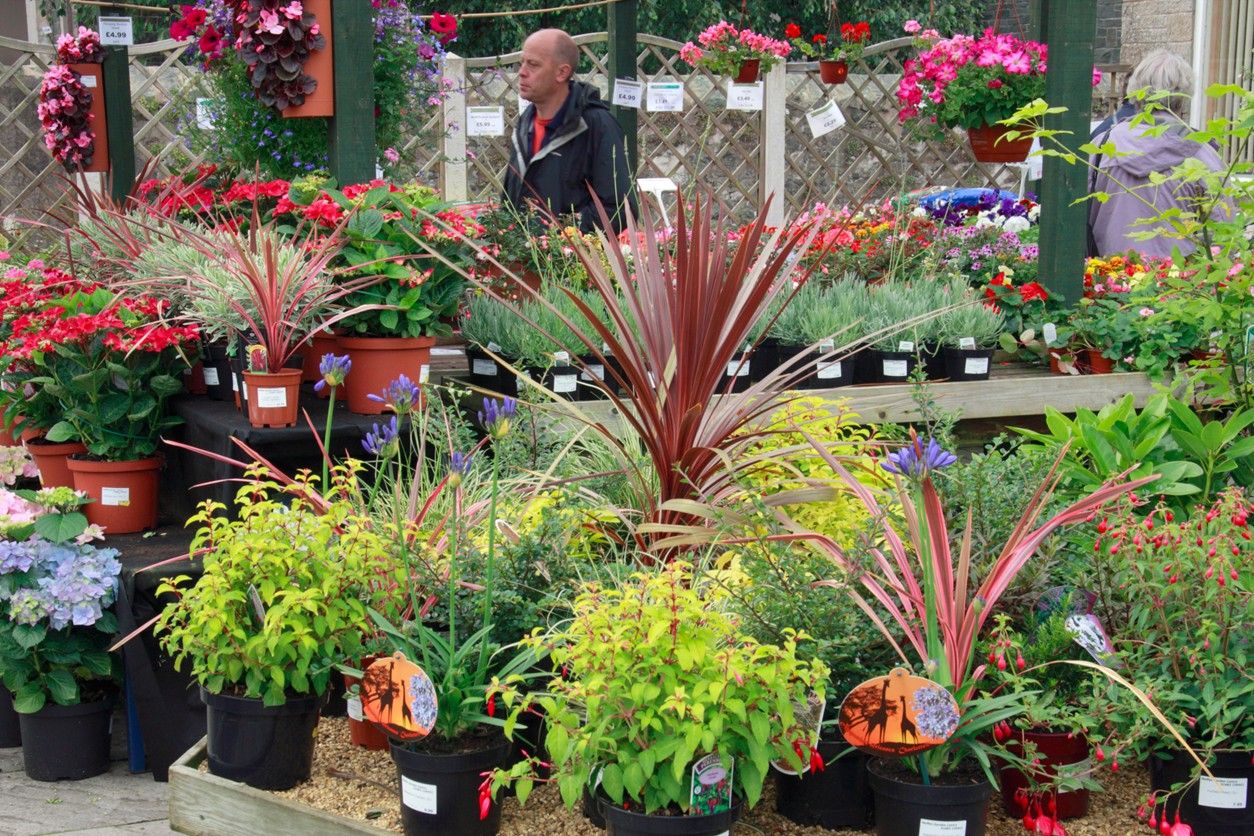
If you’re one of those people who goes to the garden centre for a bag of compost and comes out with a trolley full of plants and accessories, you may need help with your budget.
Conserving resources and considering the long-term when it comes to creating a sustainable garden that is resilient to our changing climate will all help make the gardener more thrifty, says gardening broadcaster, designer and author Mark Lane.
When selecting plants, see what’s growing well in your area, says Lane, who has presented on BBC Gardeners’ World and Morning Live, and whose new book, The Thrifty Gardener, shows how to reduce waste and save money.
“Look at the larger environment, whether that’s the countryside or a park or places you might visit and see what grows there naturally. If you can mimic those plants or sow seeds of the same plants or just grow the same plants, you are introducing species you know are going to grow well in your environment.
“That doesn’t cost a lot. With, say, five packets of seeds costing less than £20 you can fill a garden with wonderful native plants. And by doing that you’re going to invite all the right pollinators, who are going to be reliant on the right food sources at the right time of year.
“You’re not wasting money on fertilisers or active growth hormones to get that plant to grow its best within an environment that isn’t suited for it.”
Here he offers ideas on how to be a thrifty gardener
1. Make lists and share lifts
Make a list of essentials before you go to the garden centre to stop yourself from making spontaneous purchases, he advises.
“Don’t waste your money going to a garden without a plan because you’ll invariably pick stuff that doesn’t really go together and it’s going to cost you more than you originally wanted to pay.”
Encourage family, neighbours or friends who want a trip to the garden centre to go with you so you can share a lift and split the petrol costs.
2. Repurpose and recycle
“Look around the house and the garden to see what you’ve currently got and whether or not you can reuse it in a slightly different way,” he advises.
You might be able to grow plants in an old colander, hung off a coat stand. It’s about using materials you already have for adaptation, he explains.
“Take your time and enjoy being creative. Use tins and tin cans, particularly if they are decorative. Drill holes in the base of decorative Christmas chocolate or biscuit boxes to make a mini-planter.
“Tyres and the inner parts of the wheel make brilliant containers. They are brilliant for large leaf vegetables and fruits, or you could reuse things like scaffold board or old bits of wood which aren’t rotten to create either shelving or even cold frames.”
Credits: PA;
3. Think long-term
“Sometimes it is cheaper to get a professional in to do landscaping work or put up fences or make foundations for a wall long-term because they will do the work, which frees you up to enjoy the other parts of gardening like weeding, sowing and propagating, which you’re not wasting money on later on.
“One example is a typical family whose children want a sandpit. You decide to have it built out of brick so you spend the money on getting the foundations and the brickwork done.
“When the kids grow up, that sand can be removed and then, just with the cost of a pond liner and maybe a row or two of extra bricks, you can create a water feature.”
If you were thinking of introducing raised beds, for instance, consider what would happen to them in 20 years’ time, he suggests.
“Will the material last? Would you want to turn that area into something else later? If so, do you want something that you can easily dismantle, which would otherwise cost a lot later on to remove to make way for something new to be built?
“It’s about trying to think about the longer term, in ways that you don’t waste money.”
4. Choose thrifty plants
Consider multi-purpose plants, for instance something that may be ornamental but also has berries on it, such as blueberries, he suggests.
“They have wonderful red leaves in the autumn, white blossom in the spring and fruits in the summer. They look gorgeous but you’ll get something rewarding.”
Other good choices include plants which will produce wonderful seedheads and give you free seed, like poppies, he says, or plants where the stem is the star, such as rhubarb.
“It’s about finding plants which can do more than one thing.”
Credits: PA;
5. Go for longevity
“Rather than go down the annual bedding route, which you know you have to change ever year, go for perennials – the plants are more thrifty because they will last many years and you can propagate from them to make more.”
6. Create more plants
“Propagation is the obvious way to be thrifty,” he says. “Whether you’re going for division, layering, grafting or taking cuttings or sowing seed, plants that you can create for free are always going to be a win.”
Set The Portugal News as your preferred source for news on Google
We are proud to provide our readers from around the world with independent, honest and unbiased news for free – both online and in print.
Our dedicated team supports the local community, foreign residents and visitors of all nationalities through our newspaper, website, social media and our newsletter.
We appreciate that not everyone can afford to pay for our services but if you are able to, we ask you to support The Portugal News by making a contribution – no matter how small.
Comments
Be the first to comment on this article
More in Home & Garden
The Floor Is Only the Beginning: A New Way of Working with Flooring in Portugal





 Add as a preferred source on Google





 Portugal Handbook
 English
 Nederlands
 Deutsch
 Français
 Español
 Italiano
 Svenska
 Pусский
 中文
中文 Türkçe
 Português
 Czech
Czech Hungarian
 Polski
 عربي
عربي Suomi
Suomi עִברִית
 Português (Brasil)
Follow us on social media