


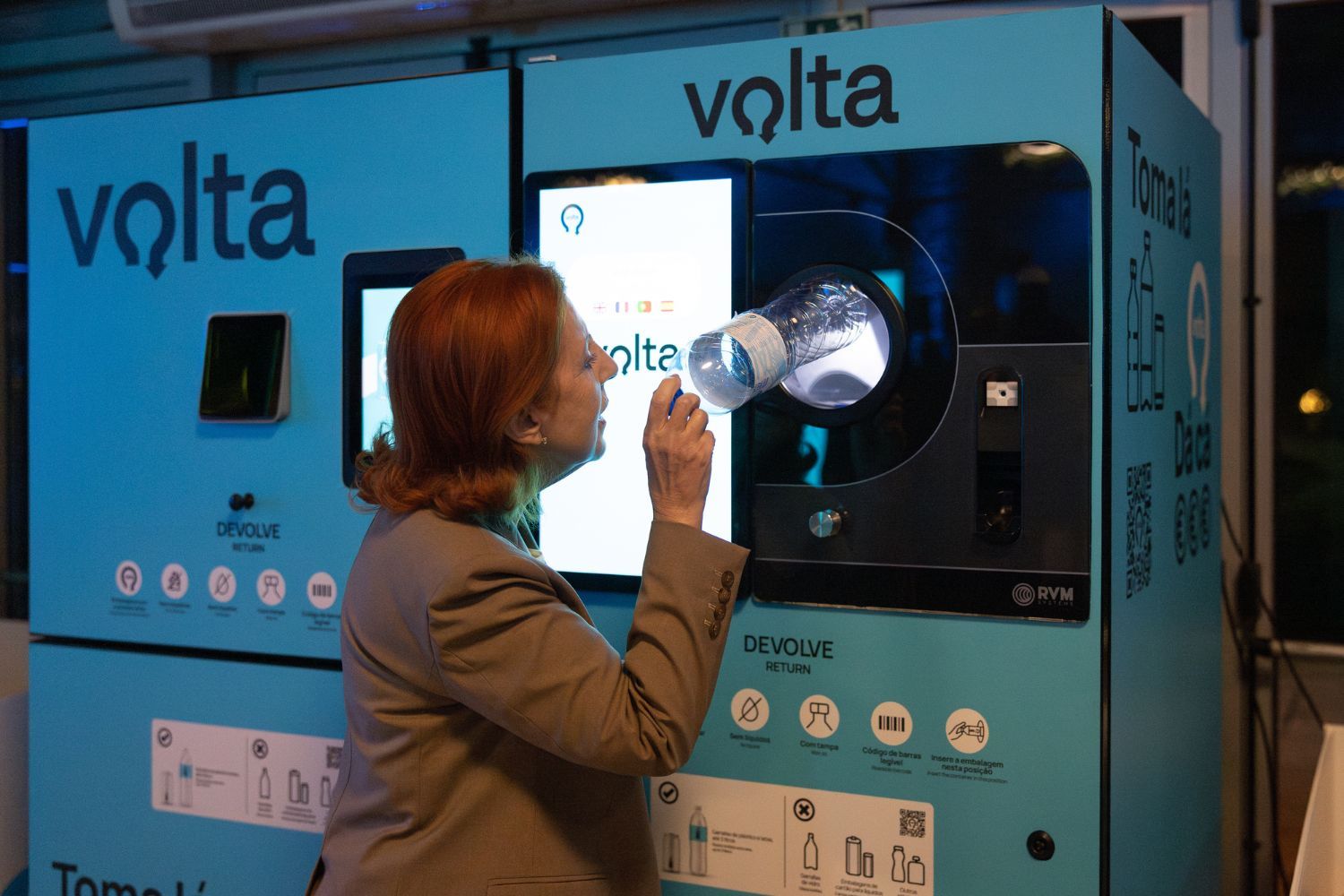
The scheme, known as “Volta”, launched in April and allows consumers to recover a €0.10 deposit paid when purchasing eligible single-use beverage containers. The initiative is designed to encourage recycling and help Portugal meet ambitious European waste collection targets.
According to SDR Portugal, the non-profit organisation responsible for managing the system, more than 10 million containers had been returned by early June through a network of over 2,500 collection points located across mainland Portugal, Madeira and the Azores.
Encouraging sign
The organisation described the figure as an encouraging sign of early public participation, particularly as the programme remains in a transitional phase while new packaging carrying the Volta logo gradually enters the market.
Consumers can currently return eligible plastic, aluminium and metal beverage containers of up to three litres in capacity at participating supermarkets, hypermarkets and dedicated collection kiosks.
The network is expected to continue expanding, with more than 3,000 collection points planned in the coming months. Around 50 dedicated Volta kiosks have also been installed, particularly in areas with a strong concentration of restaurants, cafés and hospitality businesses.
Different ways of refunding
Under the system, returned containers can generate a refund in several ways, including cash vouchers, store discounts, loyalty card credits and, in some cases, donations to charitable organisations.
SDR Portugal said collection activity has been strongest at weekends, particularly on Sundays, suggesting consumers are increasingly incorporating the system into their regular routines.
The deposit scheme remains in a transition period until 9 August. During this time, products carrying the Volta symbol will gradually replace older packaging. Containers without the symbol are not subject to the deposit charge and cannot be returned through the scheme.
To qualify for a refund, containers must display the Volta logo, have a readable barcode, be empty and undamaged, and bottles must still have their caps attached.
Portugal introduced the system as part of wider efforts to improve recycling performance and meet European environmental targets, including a requirement to collect 90% of eligible beverage containers by 2029.
SDR Portugal believes the strong early participation suggests consumers are responding positively to the initiative and could help accelerate the country’s transition towards a more circular economy.
 Add as a preferred source on Google









 Portugal Handbook
 English
 Nederlands
 Deutsch
 Français
 Español
 Italiano
 Svenska
 Pусский
 中文
中文 Türkçe
 Português
 Czech
Czech Hungarian
 Polski
 عربي
عربي Suomi
Suomi עִברִית
 Português (Brasil)
The introduction of the Volta system has had an interesting side effect. In my supermarket around the corner in Arroios the machine is now mainly frequently and blocked by homeless scavengers and crackheads who have found a new purpose in collecting loads of filthy plastic trash and cans from the streets and stuffing it into the machine. Every second piece gets rejected and they are holding up the process for everybody else. Security says that they don´t eve use the vouchers for buying anything in the shop but sell them somewhere else for a discount. I am not despising those people but that´s not what the system was actually made for.
By Arno from Lisbon on 12 Jun 2026, 03:11
I don’t care who is collecting containers and returning them for recycling. Anyone who participates is helping in fighting the existence of micro-plastics in pur ecosystem.
By JoeT from Algarve on 12 Jun 2026, 11:47
I´m finding a lot of machines are out of service, mainly due to stupid people stuffing their hands inside the slot for the bottles to be placed. This causes the machine to shut down, and help is required to reboot it. I asked a security guard at a supermarket and he typed in a PIN code to reboot the machine. It can´t be reset by a member of the public.
By Billy Bissett from Porto on 12 Jun 2026, 14:39