


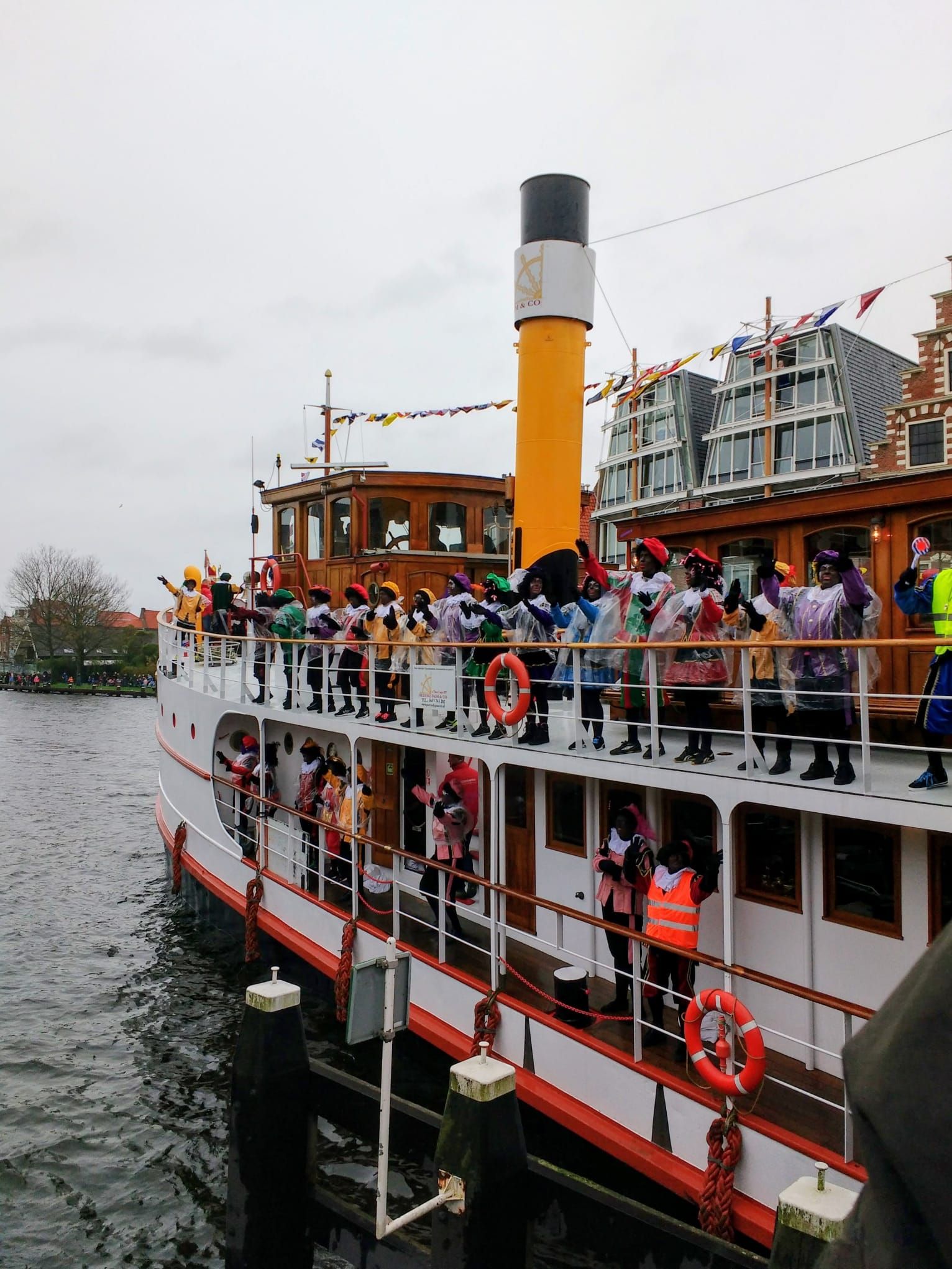
In spite of all the controversy around these celebrations, the feast of Sinterklaas is still very much alive in the Netherlands and Belgium. It’s a tradition that is hard to eradicate; fortunately, at least that is my opinion.
The legend
St. Nicholas, a fourth-century bishop who lived in the ancient Roman town of Myra, now Demre in Turkey, earned a longstanding reputation for charity and gift-giving.
And, by the way, he was reputed to be neither plump nor jolly, like his Anglo-Saxon namesake Santa Claus.
The tradition
In the Netherlands and Belgium, Sinterklaas is a big thing in December, for the children, but also for lots of grown-ups. People look forward to his arrival by steamboat.
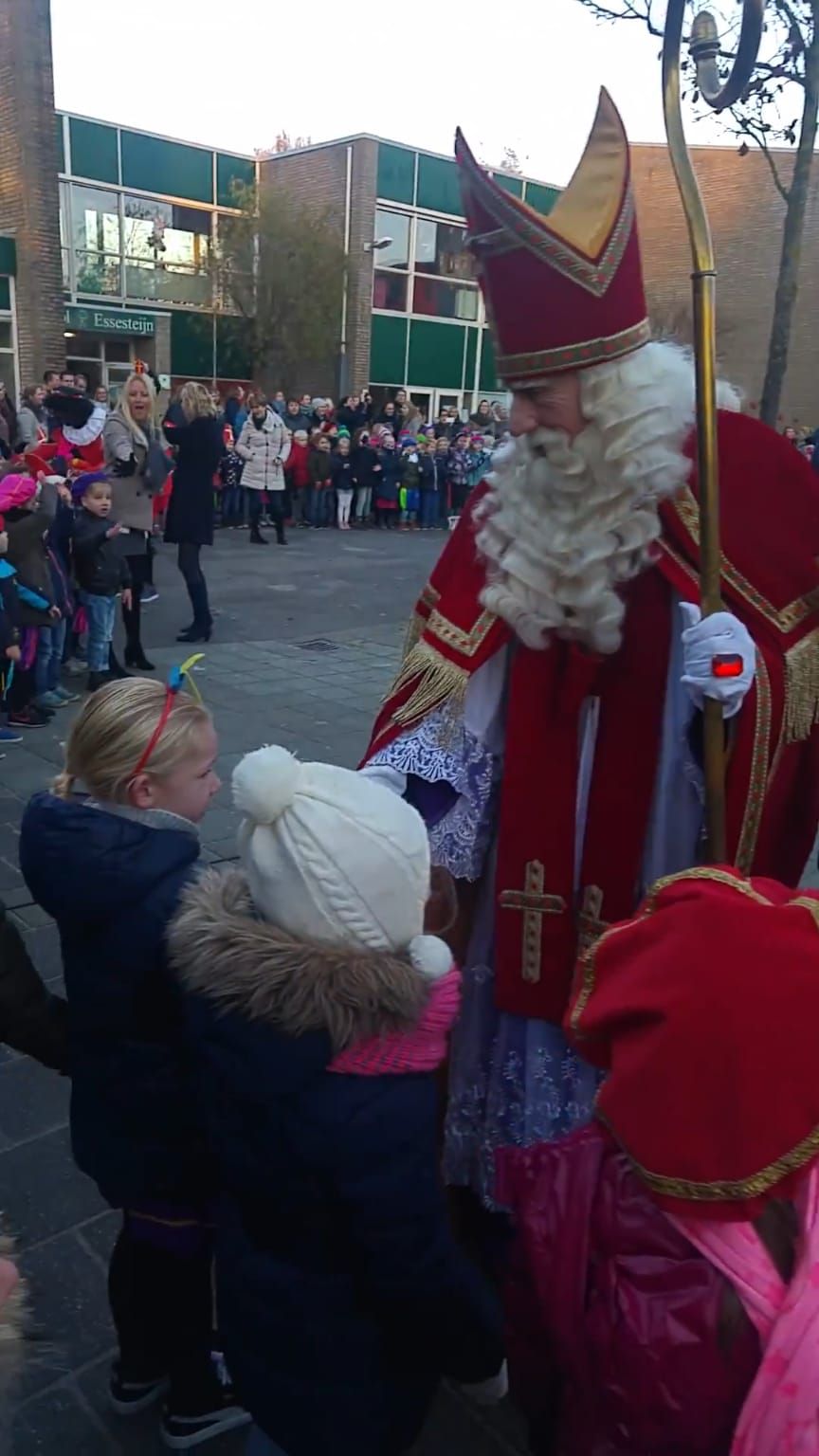
The arrival of Sinterklaas is celebrated with different festivities in the Netherlands. Starting in mid-November, crowds of children and parents enthusiastically gather to greet the saint as he arrives in their city or village by steamboat, horse or even hot air balloon. Landing with him are his little helpers, the so-called Zwarte Piet ("Black Pete"), traditionally depicted as a character with dark skin.
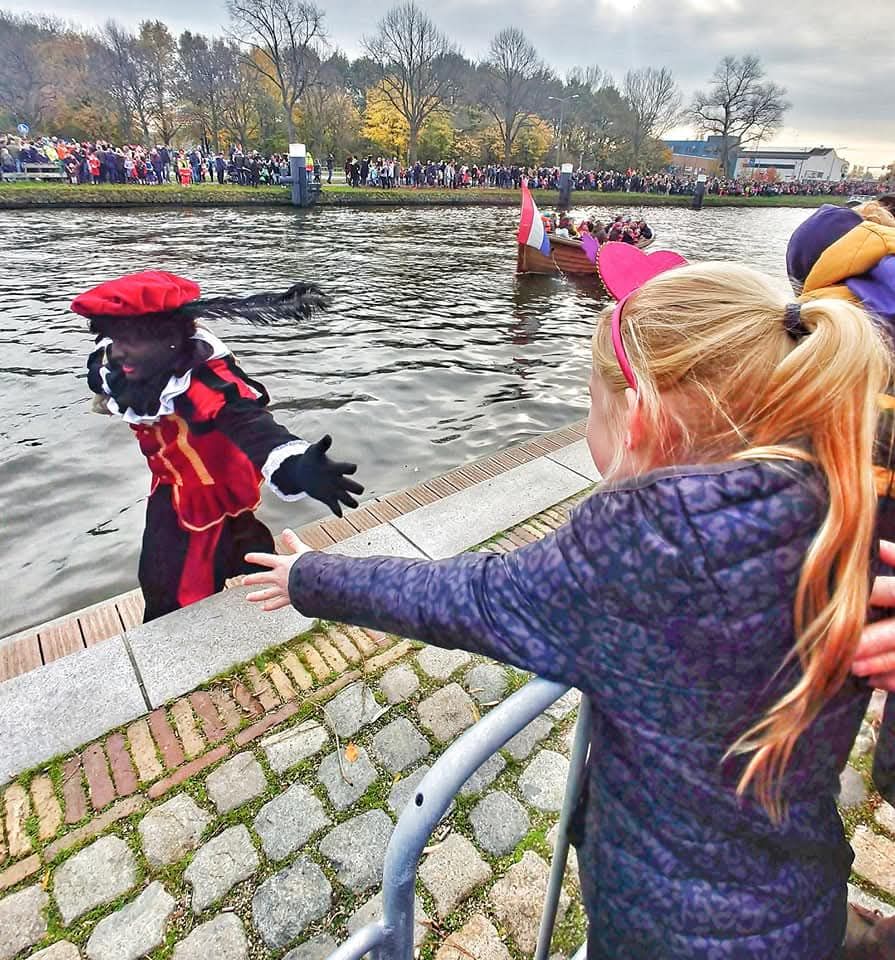
In Amsterdam alone, hundreds of Piets join Sinterklaas on his boat, or out in the streets, handing out or scattering kruidnoten, peppernut cookies, dancing, waving and fooling around.
This year his official arrival on 18 November was in Maassluis, a town near Rotterdam. A very cold arrival, apparently, only 4 degrees. You must really love him to wait for his arrival in that kind of temperature.
Why does Sinterklaas have black helpers, called Zwarte Piet, Black Pete? Back in 1850, a Dutch teacher, Jan Schekman, created a children's book called Sint Nikolaas en zijn knecht, Saint Nicholas and his servant, whom he depicted as a black person. Thus, Zwarte Piet, Black Pete, became part of the Sinterklaas tradition. It probably harks back to Dutch colonialism, where black people, slaves until that was abolished, worked on the sugar plantations in Surinam and the Dutch Caribbean. Black Pete carries the presents for Sinterklaas for the good children and also the rod to punish the “bad” children.
Children put their shoe underneath the chimney, if they have one, or near a window, put a carrot in the shoe for Sint’s horse, and some cookies for Sint and his helpers, hoping to find a nice present in the shoe the next morning. This shoe thing, by the way, is a tradition that goes back to medieval times, when poor people were invited to put their shoes in the churches, and on the morning of 6 December, the feast day of Saint Nicholas, they would find little gifts of food in them.
So Sinterklaas will send his Petes through the chimney to deliver the presents for the children, making the Petes extra black. All presents are accompanied by a little poem. Or Sinterklaas will visit in person to deliver the presents.
Of course, by the time they are 7 or 8, children know that it is usually a neighbour, an uncle or even their father who plays Sinterklaas, and the Petes are often other family members whose faces have been painted black, and they wear curly black wigs. I remember being bitterly disappointed when I found out that Sinterklaas was not real; I believe I even cried a bit!
Grown-ups have their own Sinterklaas parties, where they each play secret Sinterklaas and buy presents, write poems and wrap it all up in a silly surprise. Surprises are personally crafted items that hide the presents, but it's not as simple as that. Mostly, the idea behind the gift is to play a prank or make fun of the recipient, and it's important to mention that no one is trying to offend anyone in the process. This is intended to keep 5 December a fun celebration.
The controversy
The controversy surrounding Zwarte Piet (Black Pete), a traditional companion of Sinterklaas in the Netherlands and Belgium, centres on whether the character's
portrayal relies on racist stereotypes and colonial history, which it does, of course. But then, so what? This was too long ago to make people today suffer or pay for it, in my opinion. Black Pete’s rod is now waiting for me, I’m sure!
The movement against white Dutch people playing Black Pete has some very fanatical, ardent activists and followers, and clashes have happened at the arrival of Sinterklaas here and there, some quite violent even.
The controversy surrounding the Zwarte Piet character has been growing, especially in the Netherlands, for years. But fans of the figure say the accusations of racism are misleading and "a threat to one of the most important traditions in the Netherlands”. There is even a community of people who dress up as Zwarte Piet: they call themselves the Sint & Pietengilde, and are fervent Zwarte Piet supporters. As a compromise, many municipalities that organise the festivities around Sinterklaas now have the Zwarte Piet who is not all black but with only smudges of soot, as if they have just come from a trip through a chimney.
It’s one of those politically correct, woke things that we can’t seem to escape.
Set The Portugal News as your preferred source for news on Google
 Add as a preferred source on Google






 Portugal Handbook
 English
 Nederlands
 Deutsch
 Français
 Español
 Italiano
 Svenska
 Pусский
 中文
 Türkçe
 Português
 Czech
 Hungarian
 Polski
 عربي
 Suomi
 עִברִית
 Português (Brasil)

And not at all racist.
By Shawn from Lisbon on 23 Nov 2026, 11:17