


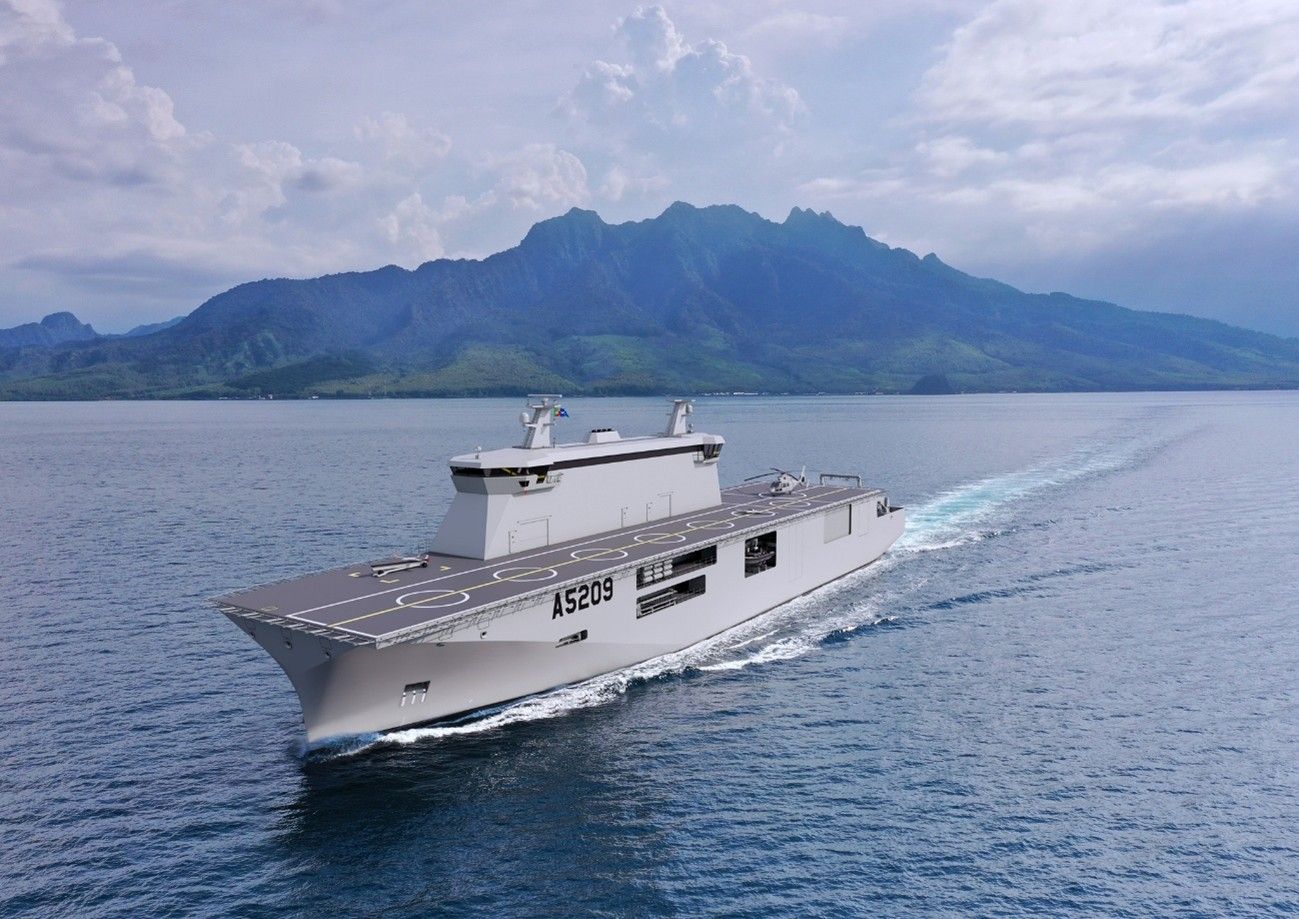
This is not about brute force or an arms race. It is pragmatism. It is ingenuity. It is, in essence, Portuguese DNA in its pure state.
Portugal has never been a country of colossal military budgets. It has never competed with the great powers on the scale of investment. But historically, it has always been known how to compensate for this limitation with creativity, vision, and adaptability. When we cannot keep up with others in spending, we create solutions that change the rules of the game. It was like this at sea centuries ago. It is like this again now.
D. João II does not try to imitate the large aircraft carriers. You do not have to. While a traditional aircraft carrier costs billions and requires gigantic structures, this ship bets on modularity, flexibility, and unmanned technology. You can change missions in a few days. It can operate air, surface, and underwater drones. It can support science, maritime surveillance, search and rescue, environmental monitoring, or crisis response. All at a fraction of the cost and human risk.
This is strategic innovation. It is not improvisation. It is systems thinking.
In a country with one of the largest exclusive economic zones in Europe, with huge responsibilities in the Atlantic and with increasingly exposed submerged critical infrastructure, this approach makes perfect sense. Instead of trying to do everything, Portugal chooses to do what is essential well. Observation, surveillance, knowledge of the sea, rapid response, and the ability to act in multiple scenarios.
There is another point that seems to me to be particularly relevant. This project does not close doors. On the contrary. It has not been patented, it is already attracting interest from other European navies, and it has been designed with an open architecture, prepared to integrate new technologies, including artificial intelligence. This reveals something rare: confidence in the idea and awareness that the value is in execution, not in secrecy.
Nor is the effort to integrate the national industry irrelevant. Whenever Portuguese companies develop possible, unmanned systems. This creates a value chain, knowledge, qualified employment, and a technological ecosystem that goes far beyond defence. Underwater robotics, sensors, secure communications, and data processing. All of this has civil, scientific, and economic applications.
Basically, D. João II symbolises a way of being. We are not the biggest. We are not the richest. But we are capable of thinking differently. To anticipate trends. To design solutions adapted to our scale and our needs.
It would be good if there were more examples of these to share. Not only in defence, but in so many other areas where Portugal can gain global relevance not by force, but by intelligence. Because, in the world we have entered, those who think better and execute with pragmatism can perfectly match differences that, at first, seemed insurmountable.








 Portugal Handbook
 English
 Nederlands
 Deutsch
 Français
 Español
 Italiano
 Svenska
 Pусский
 中文
中文 Türkçe
 Português
 Czech
Czech Hungarian
 Polski
 عربي
عربي Suomi
Suomi עִברִית
 Português (Brasil)
The Iranians have had one of these operation for a couple years. Not sure if it is still afloat given the hostilities. But let us call this what it really is: a helicopter carrier. perhaps it will be fitted out with excellent over-the-horizon drone control ability.
By Mark from Lisbon on 05 Mar 2026, 12:19