


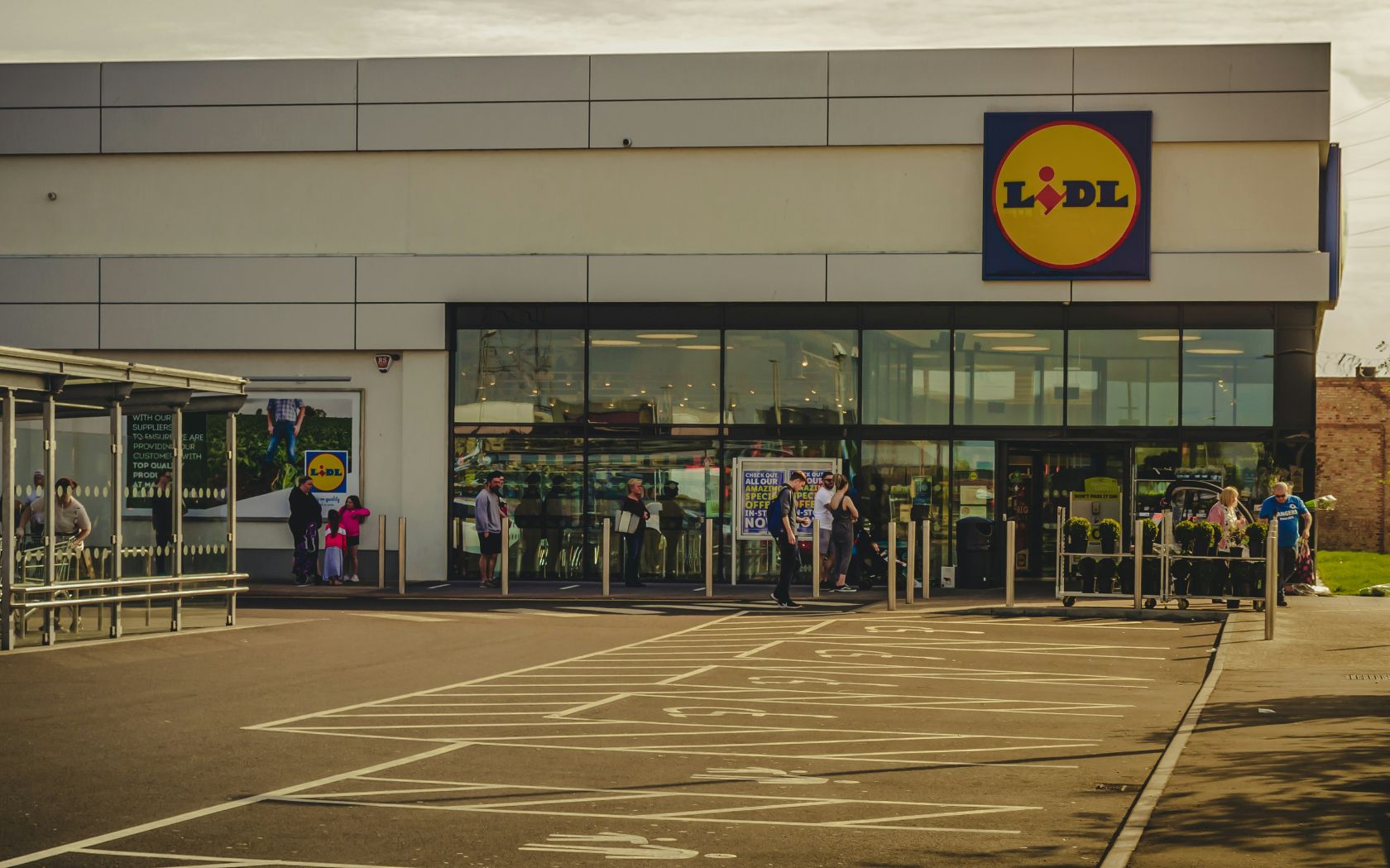
The retailer has rolled out the national Deposit Return System (SDR) across its stores, investing in new technology and store adaptations to make the process faster and easier. At the centre of this update is a new feature in the Lidl Plus app called “My Deposits”, which allows customers to manage their refunds digitally, removing the need for paper receipts.
A faster, more flexible experience
Returning bottles and cans is now much simpler. Instead of dealing with paper receipts, customers can just open the Lidl Plus app, scan the QR code on the machine, and start inserting their items. The refund—€0.10 per container—is added straight to their account.
From there, it’s up to them how to use it. They can spend it right away at the checkout, save it for another shop (it stays valid for up to a year), or even donate it to a partner charity.
And for anyone who prefers the old way, nothing really changes—printed vouchers and cash refunds are still available at the till.
The new machines installed in Lidl stores are designed for speed and efficiency, capable of processing up to 60 containers per minute—roughly one per second.
High-performance machines and trained staff
Lidl is also trying to make sure people don’t feel lost when using the system for the first time. Store teams have been trained to walk customers through it, answer questions, and keep things moving smoothly—especially in these early weeks while everyone is still getting used to it.
Luis Alcalde, Chief Commercial Officer at Lidl Portugal, says the idea is simple: make the sustainable option the easiest one.
“At Lidl, customer convenience is at the heart of every decision. By integrating the deposit system into our app, we’re not only promoting circular economy practices—we’re making them simple, digital, and frictionless.”
Built on experience elsewhere
This isn’t something Lidl is testing for the first time. Deposit systems like this have been in place for years in several European countries, and Lidl is leaning on that experience to roll it out in Portugal in a way that actually works in practice—not just on paper.
 Add as a preferred source on Google







 Portugal Handbook
 English
 Nederlands
 Deutsch
 Français
 Español
 Italiano
 Svenska
 Pусский
 中文
中文 Türkçe
 Português
 Czech
Czech Hungarian
 Polski
 عربي
عربي Suomi
Suomi עִברִית
 Português (Brasil)
Follow us on social media