


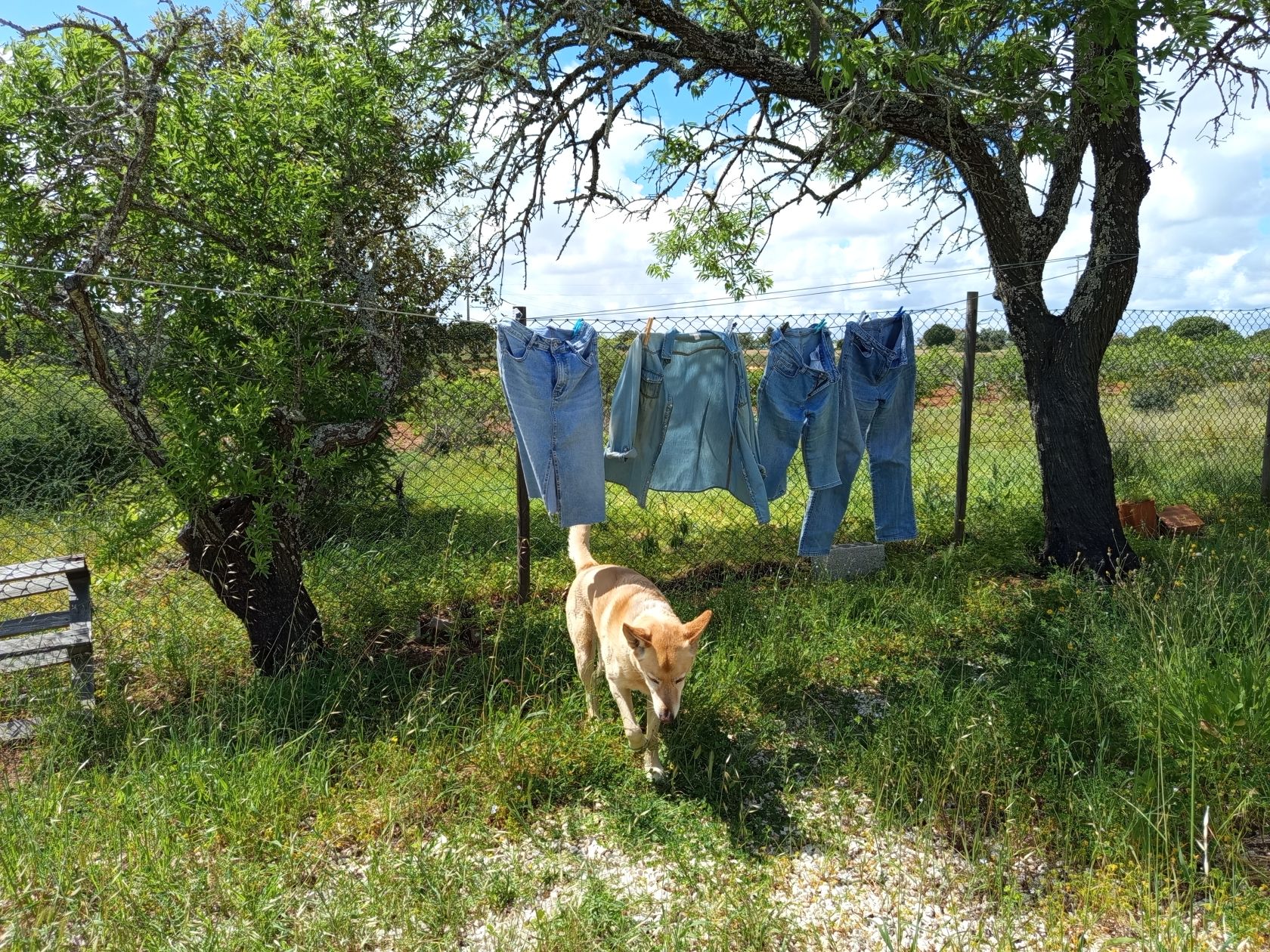
I got my first jeans, or spijkerbroek as they were called in the Netherlands, when I was 12. My mother did not like it all that I wanted them, but my stepsister-in-law understood totally and persuaded my mother to come with me and her to buy a pair. She knew where the one shop was located that sold them in our neighbourhood. My mother made me partly pay for it with my own newspaper money. I couldn’t wear them to school, even though I was in a mixed (boys and girls) high school. Trousers for girls were “not done” in school at the time! I couldn’t care less, my spijkerbroek was a hit when we all got together on our bikes on the weekends!
Jeans and denim, there’s definitely an American tang to both words, isn’t there? So, what I am going to tell you here may blow your mind. Or not, if you have already researched the subject, or are French or Italian.
Denim, as French as French can be
My attention was first drawn to this when we lived in France, and we were visiting the lovely town of Nîmes in Provence in the south of the country. During lunch, we got to talking to the waitress and at one point she said: “You probably don’t realise you are wearing something from Nîmes…”, or as she said it: …de Nîmes…”, while she pointed to our trousers. As we had just enjoyed a bottle of the local wine, we needed a minute for the penny to drop.
The blue cloth that we now call denim originated in Nîmes in the south of France. Sergé de Nîmes, de Nîmes, denim.
Denim has been used in the United States since the mid-19th century. Denim initially gained popularity in 1873 when Jacob Davis, a tailor from Nevada, manufactured his first pair of rivet-reinforced denim trousers (or pants as they say over there).
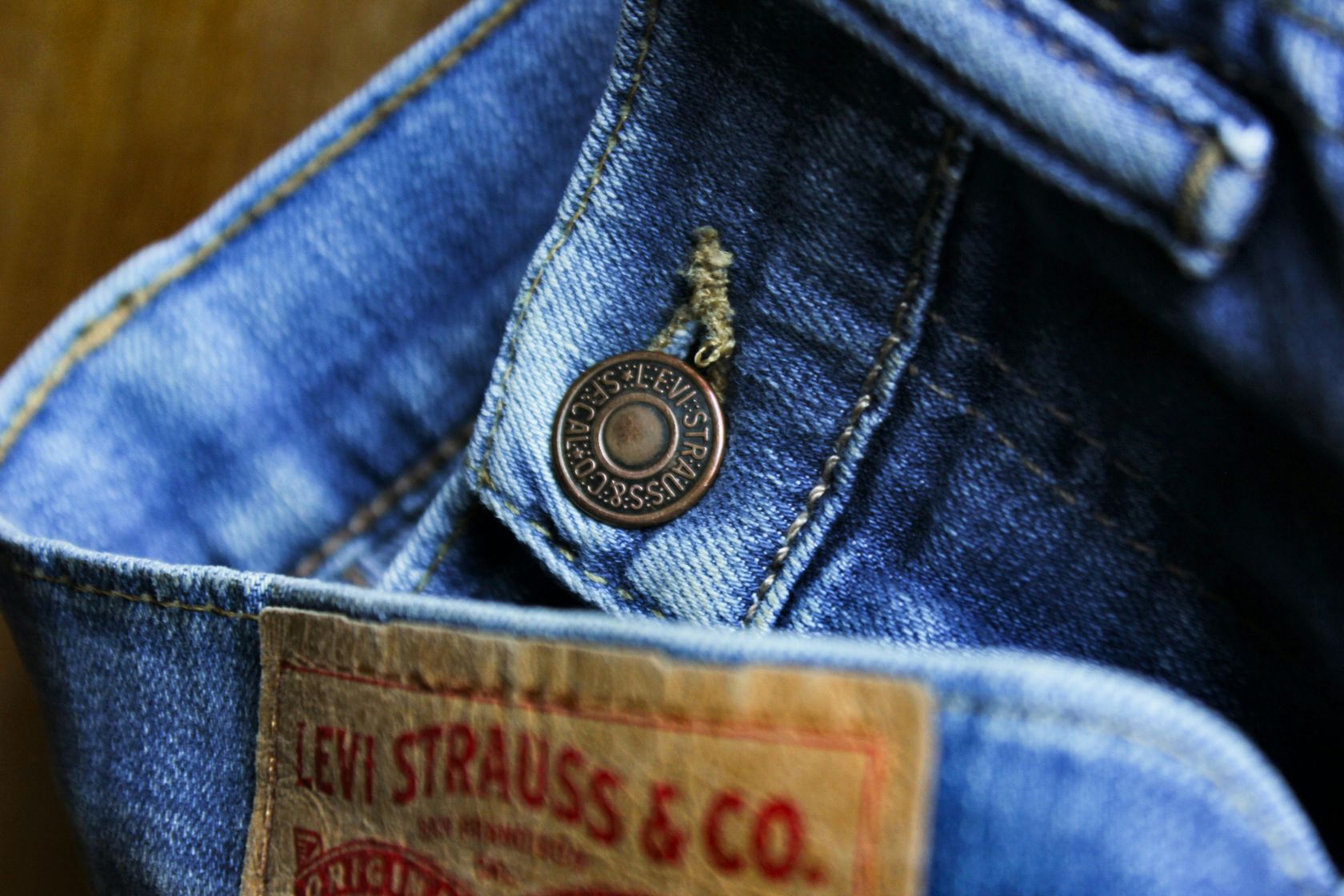
The rivets made the Dutch call those trousers “spijkerbroek”, nail trousers. The term is still used by Baby boomers and millennials, but the younger generations probably find this old-fashioned and refer to them as jeans.
The rivets were supplied by Levi Strauss & Co. When demand for the trousers outstripped the capacity of Jacob Davis’s shop, he moved his business to the facilities of Levi Strauss. They patented their “blue jeans” with the copper rivets. But why jeans?
Jeans, with love from Italy

The trade of jean fabric emerged in the city of Genoa in Italy - Gênes as the French call it, so genes or jeans - in the 16th century, followed by Nîmes, in the 17th century. Genoa’s jeans fabric was a cloth mixture of fustian (various textiles) of “medium quality and of reasonable cost”, very similar to cotton corduroy for which Genoa was famous and was “used for work clothes in general”.
Weavers in Nîmes tried to reproduce the jean fabric but instead came up with a similar twill fabric that became known as denim.
By the 17th century, jean was a crucial textile for working-class people in Northern Italy. This is seen in a series of genre paintings from around the 17th century, attributed to an artist now known as the Master of the Blue Jeans (Gerlinde Gruber). Her ten paintings depict impoverished scenes featuring lower-class figures wearing fabric that resembles denim. The fabric would have been Genoese jean, which was cheaper.
Two Swiss bankers had established a textile company in Genoa and were at one point entrusted with furnishing the uniforms for Massena’s army, which were cut from blue cloth called bleu de Gênes , which later came to be known as blue jeans.
These days, denim is used to describe the cloth, whereas jeans refer to the blue trousers. And to this day, jeans and denim are my favourites.
 Add as a preferred source on Google





 Portugal Handbook
 English
 Nederlands
 Deutsch
 Français
 Español
 Italiano
 Svenska
 Pусский
 中文
中文 Türkçe
 Português
 Czech
Czech Hungarian
 Polski
 عربي
عربي Suomi
Suomi עִברִית
 Português (Brasil)
Follow us on social media