


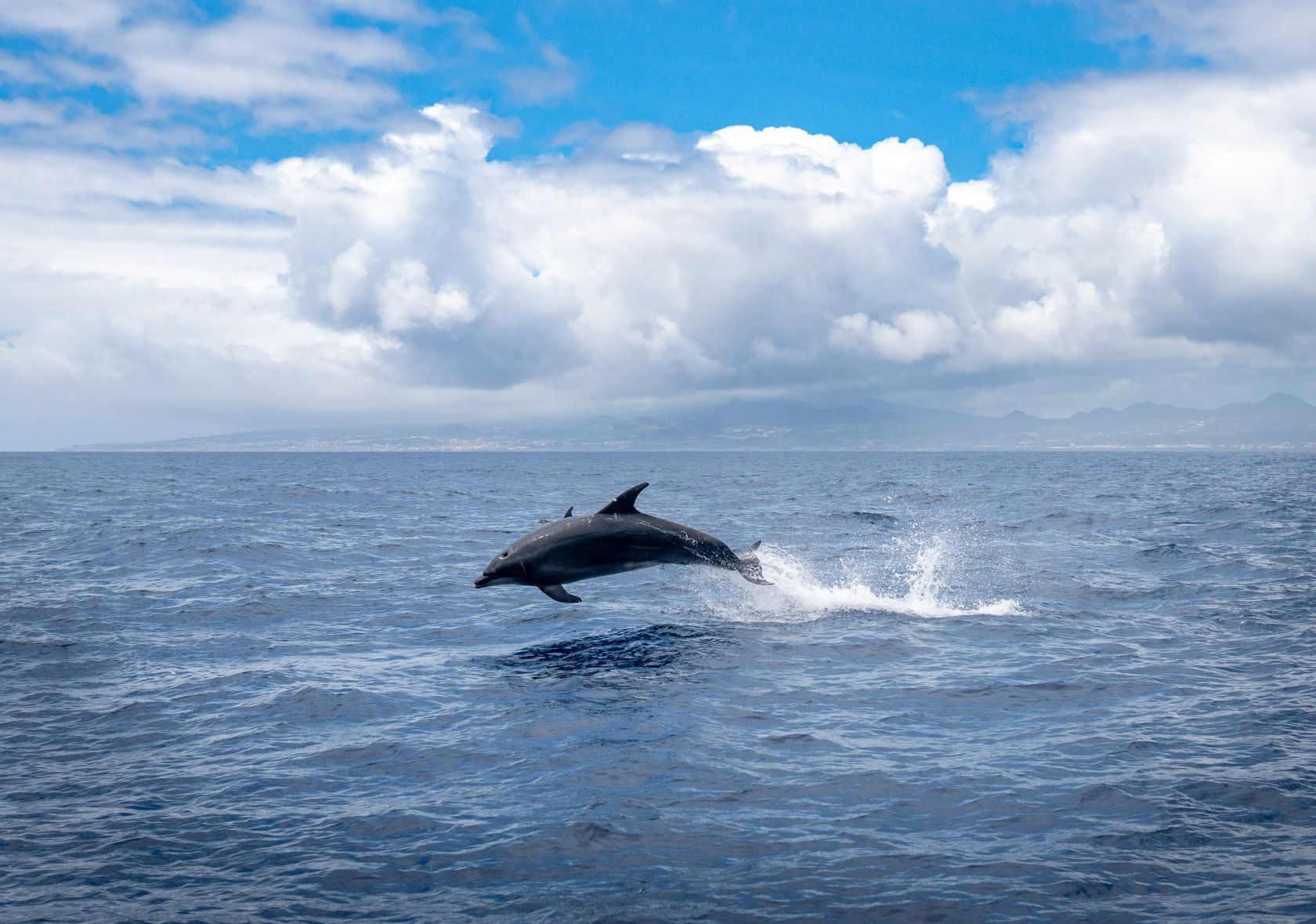
The bottlenose dolphin, a majestic marine mammal, is listed as "critically endangered" in the Red Book of Mammals of Continental Portugal.
According to a note about that scientific study, based on samples from bottlenose dolphins stranded in Portugal between 2005 and 2013, the contaminants accumulate in the animals' tissues and degrade slowly in the marine environment, posing potential health risks to the dolphins.
The conclusions indicate that adult males exhibit higher pollutant concentrations than adult females.
Ana Sofia Tavares, who works on the team with biologists Sílvia Monteiro and Catarina Eira, explains that mothers transfer these compounds to their offspring during gestation and then during breastfeeding.
“This process is particularly worrying, since the young and younger animals receive high loads of pollutants at a stage when their immune and metabolic systems are still underdeveloped, making them more vulnerable to the harmful effects of these substances,” they emphasise.
The research team also notes that the dolphin population “still faces threats such as accidental capture in fishing nets and the loss of genetic diversity.”
 Add as a preferred source on Google





 Portugal Handbook
 English
 Nederlands
 Deutsch
 Français
 Español
 Italiano
 Svenska
 Pусский
 中文
中文 Türkçe
 Português
 Czech
Czech Hungarian
 Polski
 عربي
عربي Suomi
Suomi עִברִית
 Português (Brasil)
Follow us on social media