


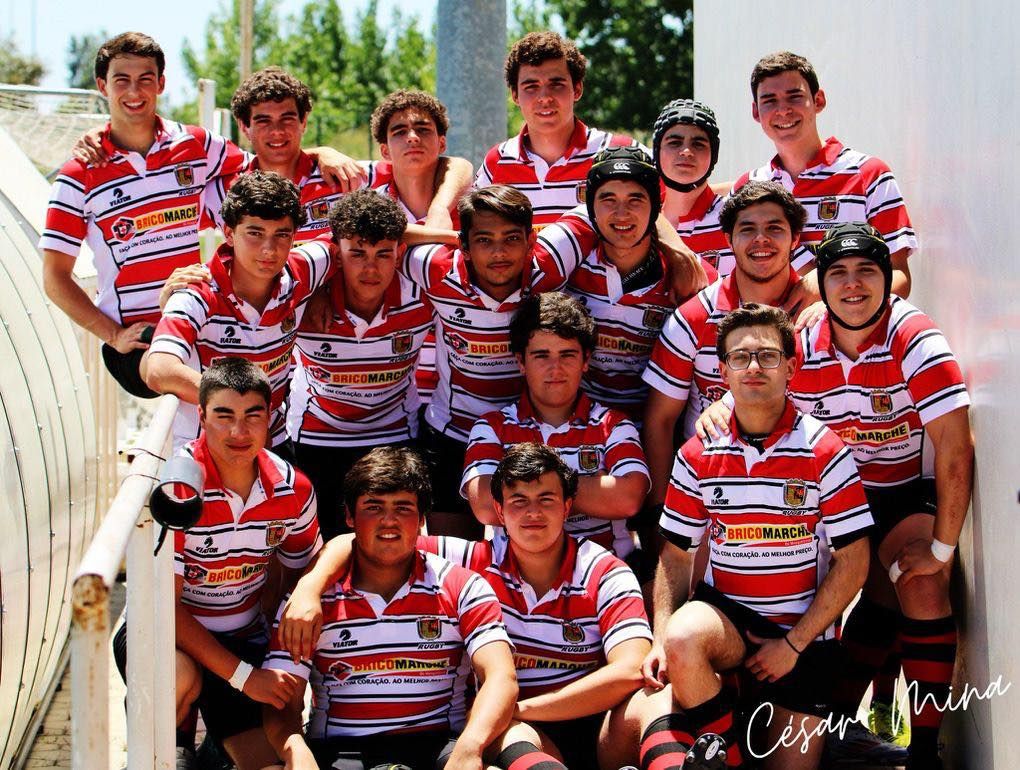
Rugby has a way of finding you, wherever you end up in the world. For one British family who relocated to the Alentejo region of Portugal, it didn’t take long before they were searching for a club. What they found in Beja was something they hadn’t quite expected — not just a rugby club, but a community in the making.
Beja Rugby Club was barely off the ground when the family arrived. Since then, it has grown steadily, found its footing in the Portuguese National 3rd Division Championship, and built something that goes well beyond results on the pitch. The club trains under the institutional support of the Câmara Municipal de Beja, using municipal sports facilities, though conditions are far from luxurious. The senior squad trains in winter at nine o’clock at night, often in cold and rain, which tells you everything you need to know about the character of the men who show up. That character was on full display during a recent match against a touring Welsh side. The Welsh came in waves. Beja kept getting up. There’s something in the Alentejo rural spirit — a nuggety, unhurried determination, forged by generations of hard land and harder seasons — that translates surprisingly well to rugby. The scoreline may not have gone their way, but the heart shown that afternoon was the kind you can’t coach.
Rugby runs deep in some of the families now woven into the fabric of this club. One supporter knows the game from birth — his father played for England and the British Lions, and alongside his uncle represented Northampton Rugby Club, with a stint in rugby league thrown in for good measure at Wakefield. He went on to captain Jeddah Rugby Club in Saudi Arabia. His nephews are currently representing Canford School at the Rosslyn Park Sevens. So when the family put down roots in the Alentejo, finding a club for his son Martim was never optional, it was instinct.
Young Martim has taken to it with the infectious enthusiasm only a child can muster — he arrived at school on Monday clutching his rugby ball, attempting to explain to his classmates what on earth the strange oval thing was. That image, perhaps more than anything, captures what clubs like Beja represent: the slow, joyful spread of the game into new soil.
The subject of family and community in rugby came up recently in conversation with Dan Luger — the electric winger who was part of England’s 2003 Rugby World Cup-winning squad. Luger spoke candidly about what happened in the years after that famous triumph. The fame faded fast for some. Several players faced financial difficulty, alcoholism, the breakdown of marriages. What held them together, he reflected, was the bonds forged long before the trophy was lifted. The team remained a team. That, he said, is the fundamental ingredient — not just for a World Cup winning side, but for any club at any level trying to build something lasting: family and community that extends far beyond the game itself.
Luger also spoke enthusiastically about Portugal’s national side, the Lobos, whose recent success has done much to fertilise rugby at grassroots level across the country. The timing could hardly be better for a club like Beja.
The club carries the backing of some committed local partners — Agrobeja as the principal sponsor, alongside Bolshare, Sulcount, Inogas, Farmácia Palma and the much-loved local institution Tasca do Pinguinhas. The kit is supplied by Kappa. Together they represent a community that has chosen to invest in something bigger than themselves.
These players are not professionals. They are juggling jobs, families, early mornings and late nights. And yet there they are, every training session, under floodlights in the January cold, because they love the game and they believe in what they’re building. That sets a standard — for the youngsters watching, for the town, and frankly for all of us.
So if you live anywhere near Beja, here is your invitation. Come out to a match. Bring a few beers. Get behind the lads. You won’t regret it.
Força Beja.
 Add as a preferred source on Google







 Portugal Handbook
 English
 Nederlands
 Deutsch
 Français
 Español
 Italiano
 Svenska
 Pусский
 中文
中文 Türkçe
 Português
 Czech
Czech Hungarian
 Polski
 عربي
عربي Suomi
Suomi עִברִית
 Português (Brasil)
Follow us on social media