


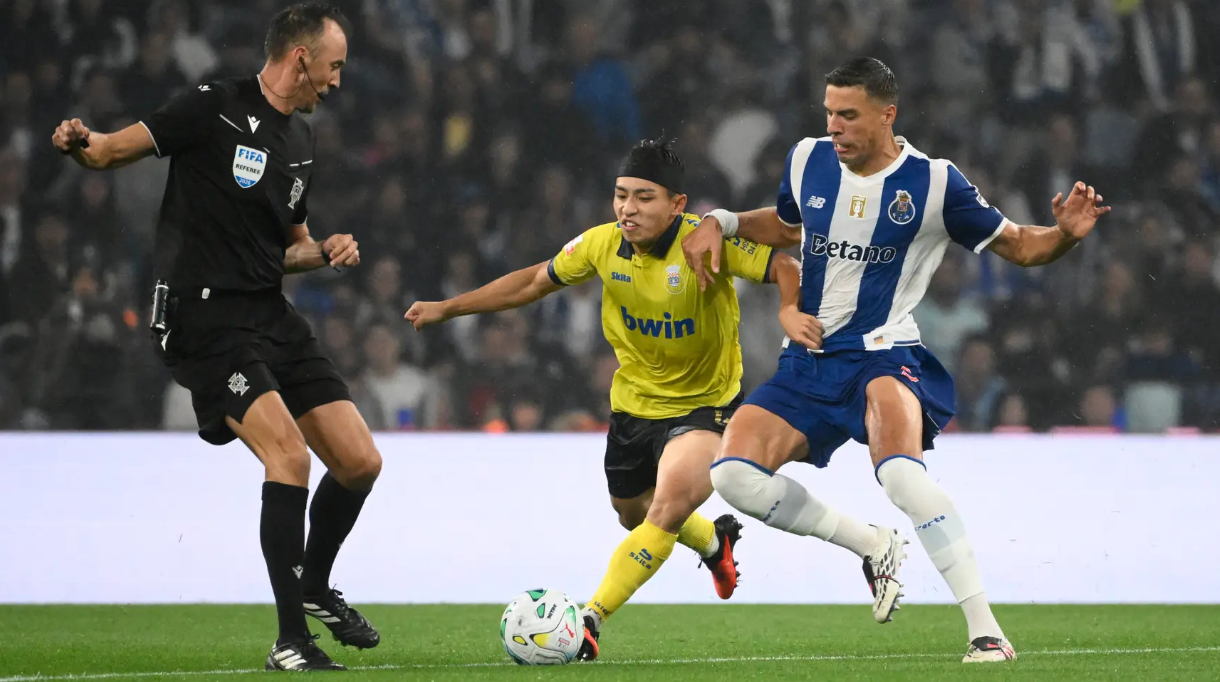
Rather than embarking on another major recruitment drive, the Portuguese champions have largely kept faith with the group that delivered last season's title, a decision that says a great deal about how Francesco Farioli and the club's hierarchy view the current squad.
After a summer in which Porto invested heavily to rebuild the team, this year's transfer window has been marked by restraint. André Villas-Boas publicly pointed towards a more measured strategy, prioritising continuity and selective additions instead of significant spending. The return of André Silva has generated plenty of interest, while a handful of younger players have arrived, but the core of the squad remains intact.
For Porto supporters hoping for a revolution, that may feel somewhat underwhelming. Yet it also means fans should have a clear idea of what to expect from Farioli's side this season.
The Italian coach transformed Porto's identity during his first campaign. His team was built on organisation, tactical discipline and defensive solidity rather than overwhelming attacking flair. There were matches in which Porto dominated possession and others in which they were content to control space and limit opponents' chances, but the common factor was always structure. That formula ultimately delivered silverware and there is little indication that Farioli intends to abandon it.
In many ways, the 2026/27 season already feels set to be an extension of the previous one. The foundations remain identical. Diogo Costa continues to be one of the best goalkeepers in Europe, the defensive framework has been preserved, and the team's understanding of Farioli's demands should be significantly stronger after a full year working together. While Benfica and Sporting may require time to integrate new players and adapt to evolving dynamics, Porto enter the season with the advantage of familiarity.
That continuity has already been visible in the opening weeks. Porto began their domestic campaign with a controlled 2-0 victory over Alverca and lifted the Super Cup, extending the positive momentum from last season. More importantly, the performances have reflected the same characteristics that defined the title-winning campaign: organisation, patience and defensive reliability.
If there is one prediction supporters can make with confidence, it is that Porto are unlikely to concede many goals.
At a time when Benfica are still finding their balance under new influences and Sporting continue to adjust after key departures, Porto looks capable of remaining the league's most difficult side to break down. Farioli has built his reputation on defensive structure and collective discipline, and there are few signs that opponents will find significantly more space against the Dragons this season than they did a year ago.
The question is whether defensive excellence alone will be enough to retain the title.
The biggest challenge facing Porto may not be preventing goals but creating them. Maintaining largely the same squad means the strengths remain, but so do some of the limitations. There will be pressure on players such as Gabri Veiga, André Silva and Porto's attacking unit to provide the creativity and cutting edge required to compete with the firepower assembled by Benfica and Sporting.
Still, there is a strong argument that Porto's greatest transfer business was avoiding the need for major transfer business at all. In an era where clubs often seek constant reinvention, the Dragons have opted for stability. The coach is unchanged, the tactical identity is established, and the dressing room already understands its mission.
It may not be the most exciting project among Portugal's "Big Three", but it could well be the most predictable. For Porto fans, that predictability is not necessarily a bad thing. If the opening signs are anything to go by, the Dragons appear ready to offer more of what brought success last season: disciplined football, defensive security and a team that is exceptionally difficult to beat.
Set The Portugal News as your preferred source for news on Google
 Add as a preferred source on Google








 Portugal Handbook
 English
 Nederlands
 Deutsch
 Français
 Español
 Italiano
 Svenska
 Pусский
 中文
中文 Türkçe
 Português
 Czech
Czech Hungarian
 Polski
 عربي
عربي Suomi
Suomi עִברִית
 Português (Brasil)
Follow us on social media