


The new Innocenti Report Card 19, published by UNICEF’s Global Office of Research and Foresight, examined child well-being across 43 OECD and EU countries, analysing indicators including mental health, physical health, academic ability and social skills.
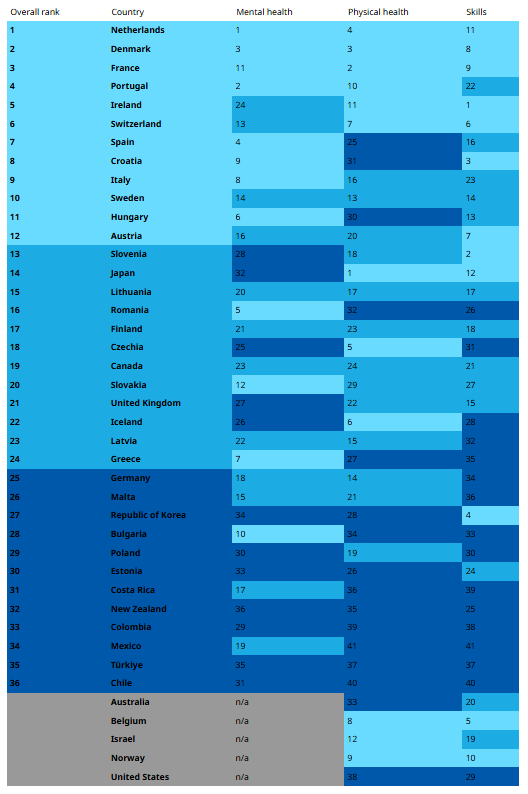
The Netherlands, Denmark and France occupied the top three overall positions, with Portugal following closely behind in fourth place, one of the strongest performances recorded anywhere in southern Europe.
Portugal also stood out internationally for children’s mental well-being, ranking second overall in this category, a result likely to draw attention at a time when many wealthy countries are seeing worsening mental health outcomes among young people following the Covid-19 pandemic.
The report found that life satisfaction among teenagers has declined in many developed countries in recent years, particularly among girls. Across much of Europe and North America, children also experienced learning losses linked to school closures and growing social pressures.
Against that backdrop, Portugal’s performance was viewed as notably positive.
UNICEF’s findings suggest Portugal has managed to maintain comparatively strong outcomes across several indicators despite wider international concerns around anxiety, obesity, educational setbacks and digital overstimulation affecting younger generations.
Ireland also performed strongly in the report and ranked first in the category linked to children’s skills and educational development, a result likely to resonate with Portugal’s large Irish community and international education sector.
The study highlighted that, while many countries continue to face challenges around child well-being, progress remains possible when long-term investment is made in health, education and social support systems.
The report also noted some encouraging developments globally, including continued reductions in child mortality rates and generally stable social and emotional skills among children in several countries.
However, UNICEF warned that growing global instability, environmental pressures, economic uncertainty and the long-term effects of the pandemic continue to place increasing pressure on children and adolescents worldwide.
The organisation is now urging governments to adopt more coordinated, long-term approaches focused on supporting children’s mental health, academic development and overall quality of life.
To The Portugal News, Matthew Tompkins, CEO of Dukes Education, said, "It is wonderful to see Portugal recognised by UNICEF in this way. I see the high-quality care described in the report, reflected in the faces of the students we serve in this wonderful country. At Dukes Education, we support this through our schools’ unwavering commitment to student wellbeing, nurturing resilient, confident young people who thrive academically, socially, and emotionally."
UNICEF Child Well-Being Rankings
 Add as a preferred source on Google







 Portugal Handbook
 English
 Nederlands
 Deutsch
 Français
 Español
 Italiano
 Svenska
 Pусский
 中文
中文 Türkçe
 Português
 Czech
Czech Hungarian
 Polski
 عربي
عربي Suomi
Suomi עִברִית
 Português (Brasil)
Follow us on social media