


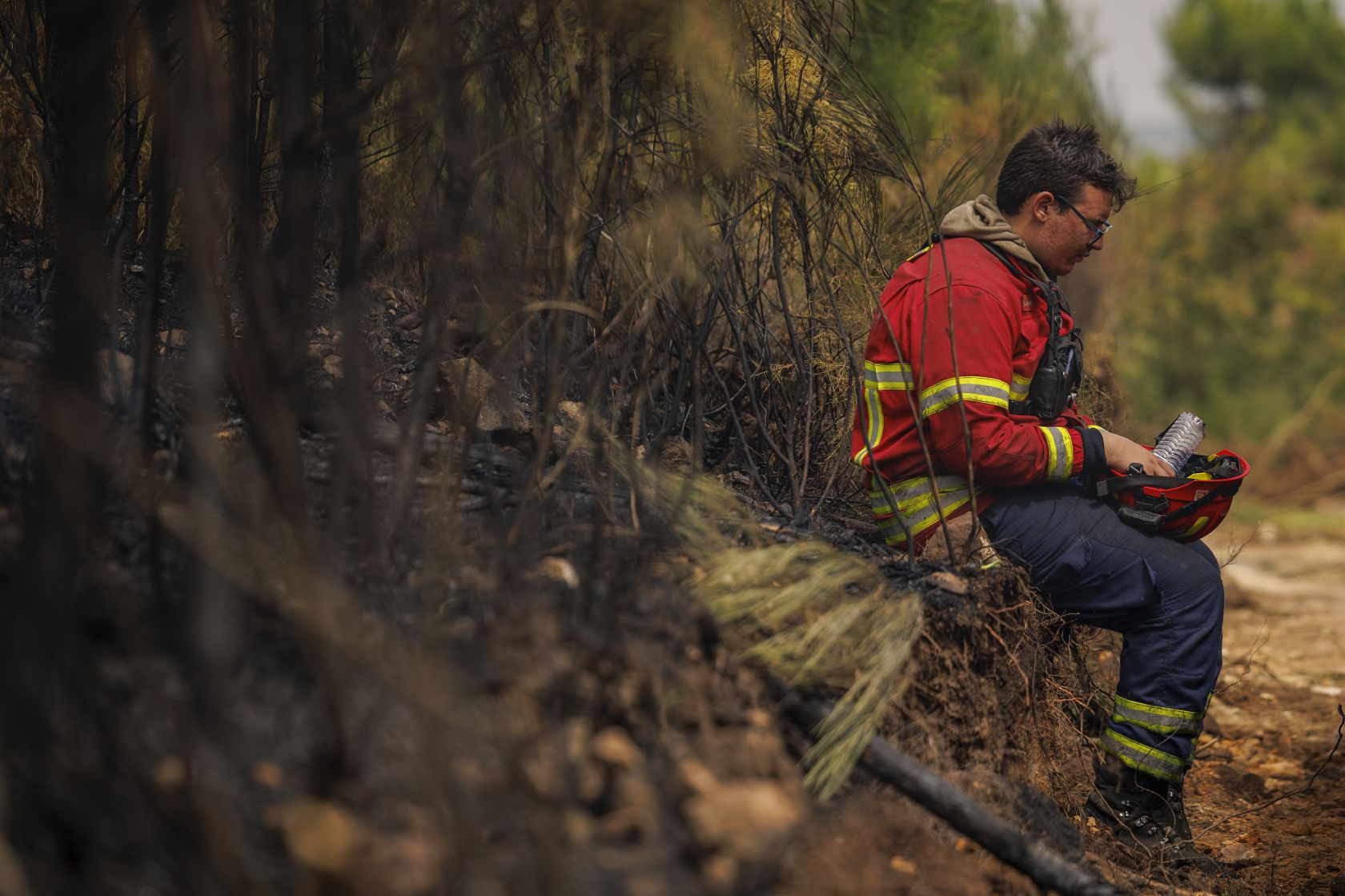
The mayor of Albufeira, Rui Cristina (Chega party), explained that the purchase of the vehicles will be financed by EU funds under an agreement signed by the Central Purchasing Office of the Algarve Intermunicipal Community, and is awaiting validation from the Court of Auditors.
The total investment of 912,660 euros includes the purchase of a light forest fire-fighting vehicle (VLCI-F), a light rural fire-fighting vehicle (VLCI-R), a forest fire-fighting vehicle (VFCI), and a tactical forest tank (VTTF).
“These vehicles are essential to reinforce the operational and response capacity of the Albufeira Volunteer Firefighters to rural fires, a scourge that, unfortunately, has become more frequent in recent years,” he highlighted.
According to Rui Cristina, in addition to the vehicles, the municipality will allocate to the corporation this year “a financial package of more than 700,000 euros, as well as other funds resulting from collaboration protocols, because firefighters are the ones who provide assistance in the most necessary moments.”
In turn, the second-in-command of the Albufeira Volunteer Firefighters, Milton Rodrigues, told the Lusa news agency that the new vehicles “allow us to increase our operational capacity in fighting rural fires, being a valuable asset for the renewal of the fleet.”
“Our fleet is becoming old, and these vehicles, which are prepared to operate off-road, also allow for a reduction in maintenance costs,” he pointed out.
According to Milton Rodrigues, one of the vehicles “is equipped with an urban component and, at the same time, can operate in urban/rural interfaces, where there are some dwellings, allowing for an autonomy that did not previously exist.”
The Albufeira fire department currently has a fleet of 35 emergency vehicles, including ambulances, patient transport vehicles, support vehicles, firefighting vehicles, and extrication vehicles.
According to the operational manager, the personnel consists of approximately 120 operational staff, 60 of whom are professionals.
“These are technicians specialised in the area of medical emergencies, first intervention teams, and rural firefighting teams; this is the system that is on standby during the summer,” concluded Milton Rodrigues.
 Add as a preferred source on Google





 Portugal Handbook
 English
 Nederlands
 Deutsch
 Français
 Español
 Italiano
 Svenska
 Pусский
 中文
中文 Türkçe
 Português
 Czech
Czech Hungarian
 Polski
 عربي
عربي Suomi
Suomi עִברִית
 Português (Brasil)
Follow us on social media