


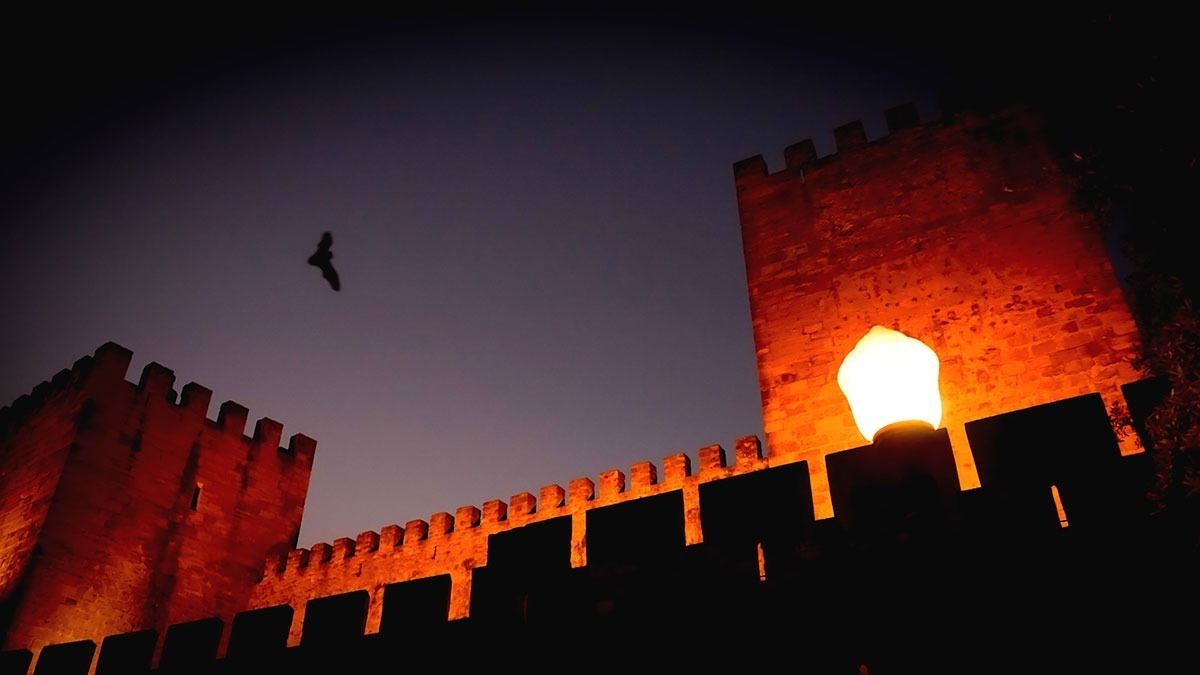
The new “Bat Nights” programme invites visitors to explore the castle grounds at sunset while learning about the important role bats play in Portugal’s ecosystems. Led by environmental educators, the tours combine history, wildlife and conservation, offering a different perspective on one of Lisbon’s most visited landmarks.
Participants will discover how bats navigate using echolocation, where they shelter within the castle walls and why they are considered essential for maintaining healthy ecosystems. The experience is aimed at both adults and children and includes the use of bat detectors, allowing visitors to hear the ultrasonic calls normally inaudible to the human ear.
The initiative is designed to highlight the castle’s natural heritage alongside its centuries of history. While Castelo de São Jorge is best known for its medieval fortifications and panoramic views over Lisbon, its gardens and ancient stonework also provide an important habitat for several wildlife species.
More than a historic monument
One of the lesser-known facts about Portugal is that it is home to around 30 species of bats, all of which are protected by law. Despite their reputation, bats are harmless to people and play a crucial ecological role by feeding on insects, including mosquitoes and agricultural pests.
According to conservation organisations, a single bat can consume thousands of insects in one night, making them valuable natural pest controllers and an important part of urban biodiversity.
The evening tours also reflect a growing trend among European heritage sites to showcase biodiversity alongside cultural history. By introducing visitors to the castle’s nocturnal wildlife, organisers hope to raise awareness of urban conservation while offering a unique experience away from the daytime crowds.
The tours will take place on selected evenings throughout the summer, with advance booking recommended due to limited group sizes.
For visitors looking to experience one of Lisbon’s best-known landmarks from a different perspective, the programme offers a rare opportunity to discover the castle after sunset while learning about one of the city’s most fascinating and often misunderstood native mammals.
 Add as a preferred source on Google







 Portugal Handbook
 English
 Nederlands
 Deutsch
 Français
 Español
 Italiano
 Svenska
 Pусский
 中文
中文 Türkçe
 Português
 Czech
Czech Hungarian
 Polski
 عربي
عربي Suomi
Suomi עִברִית
 Português (Brasil)
Follow us on social media