


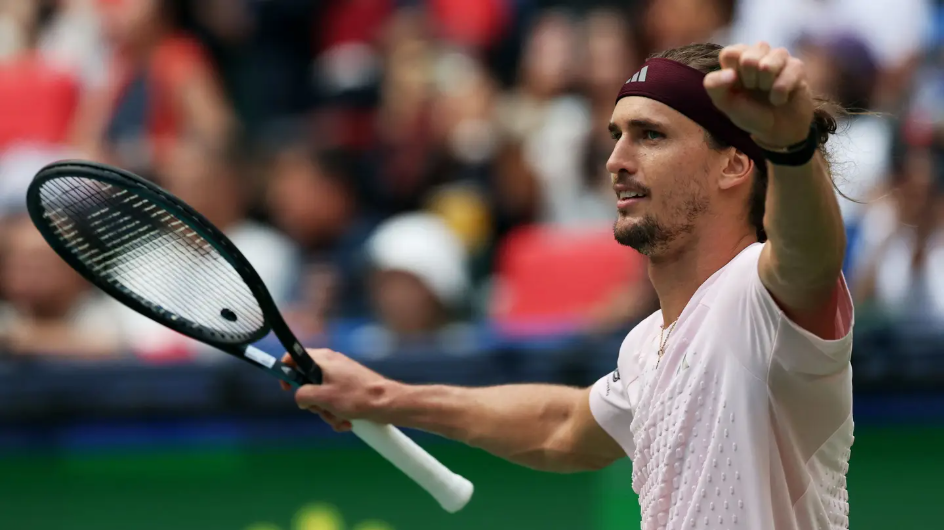
In 2026, he answered that question emphatically. The German star has officially secured the year-end World No. 1 ranking, becoming the first German to achieve such honour and completing what is unquestionably the finest season of his career. Having spent much of the last decade hovering around the sport's elite without quite breaking through at the biggest moments, Zverev has finally transformed himself from perennial contender into the player everyone else is chasing.
What makes this achievement particularly remarkable is the manner in which it was earned. The foundations of Zverev's rise were built at the Grand Slam tournaments. He finally captured his maiden major title at Roland Garros, ending years of frustration and near misses. Rather than being satisfied with that breakthrough, he followed it by reaching the final at Wimbledon before conquering Flushing Meadows to win the US Open, his second Grand Slam title of the season.
Grand Slams
Three Grand Slam finals in a single season. Two Grand Slam trophies. And now the World No. 1 ranking. That combination places 2026 near the very best campaigns produced by any player in the modern era.
Perhaps the most impressive part of Zverev's journey has been his resilience. For years he carried the burden of painful defeats on tennis's biggest stages. The loss to Dominic Thiem in the 2020 US Open final seemed destined to define his career. Later disappointments only fuelled the narrative that he was somehow missing the final piece required to become a true champion.
Instead of allowing those setbacks to consume him, Zverev used them as motivation. When he stepped onto the court this season, he looked different. More composed. More confident. More certain of his ability to win the matches that previously slipped away from him.
That confidence was evident throughout the US Open, where he defeated Ben Shelton in four sets to claim his first title in New York. The victory was more than another trophy. It was a symbol of how far he has come as a competitor and as a person.
Transition period
The timing of his rise is also fascinating. Men's tennis is in the middle of a transition period. The dominance of the so-called "Big Three" belongs to history, while stars such as Carlos Alcaraz and Jannik Sinner continue to establish themselves as the future of the sport. Yet in 2026, Zverev, taking advantage of either injuries or bad preparation from those two, has stood above the rest.
At 29 years old, he is no longer viewed as a rising prospect. He is a fully formed champion entering what could be the most productive period of his career. The obvious question now becomes, what comes next?
Winning a first Grand Slam is often the hardest step. Winning multiple Grand Slams and finishing a season as world No. 1 suggests that Zverev is no longer chasing validation.
The challenge moving forward will be maintaining that standard. Every tournament from now on will see him arrive as the man to beat. Opponents will prepare specifically for him. Expectations will rise. The pressure that once belonged to others now rests squarely on his shoulders.
Yet based on everything we have seen this season, Zverev appears ready for that responsibility.
Set The Portugal News as your preferred source for news on Google
 Add as a preferred source on Google


 Portugal Handbook
 English
 Nederlands
 Deutsch
 Français
 Español
 Italiano
 Svenska
 Pусский
 中文
 Türkçe
 Português
 Czech
 Hungarian
 Polski
 عربي
 Suomi
 עִברִית
 Português (Brasil)

Follow us on social media