



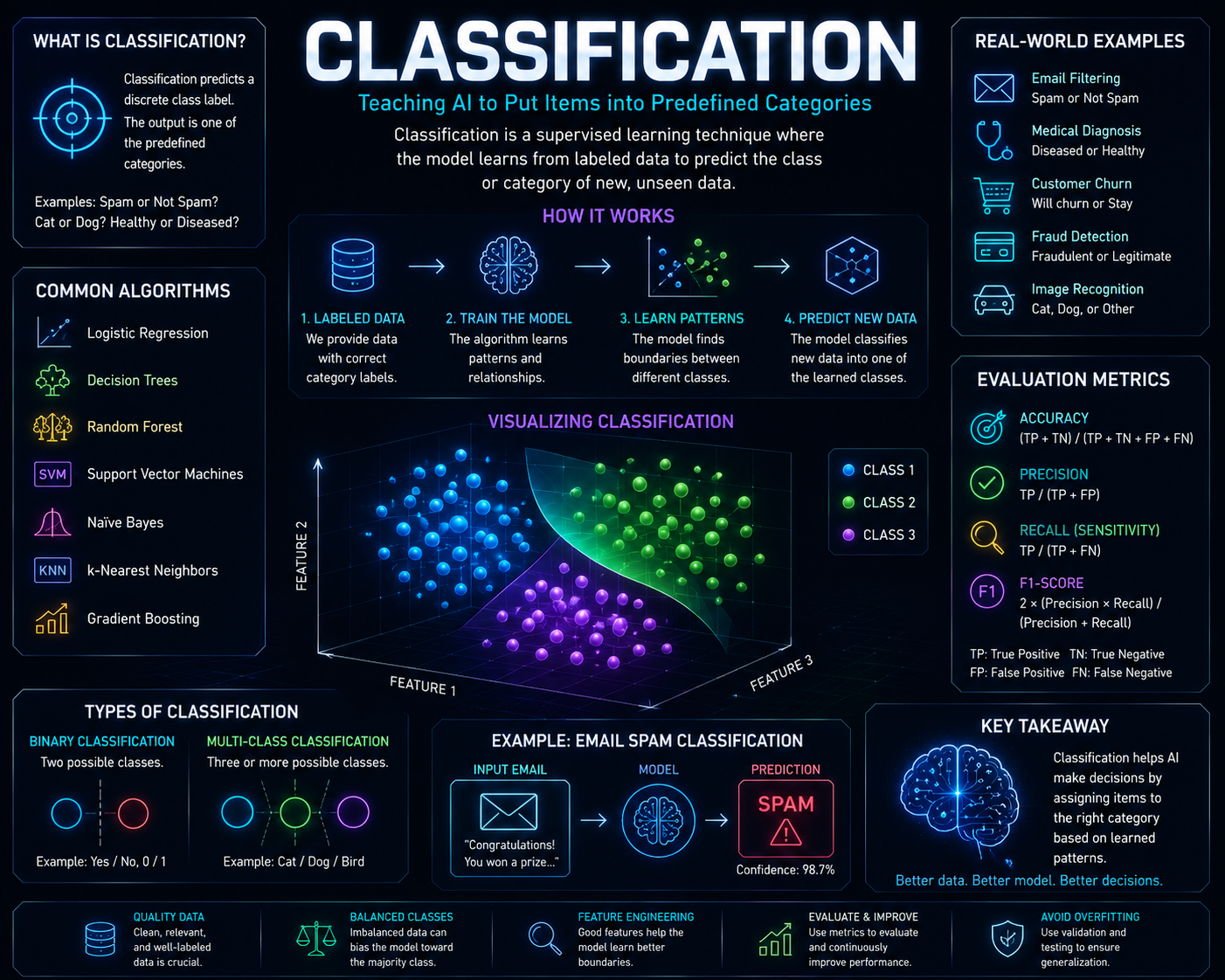
Classification
Classification is an AI task where the system assigns something to a category. Examples include sorting emails into spam and not spam, identifying whether a review is positive or negative, or detecting whether an X-ray looks normal or abnormal. Classification is one of the most common uses of machine learning.
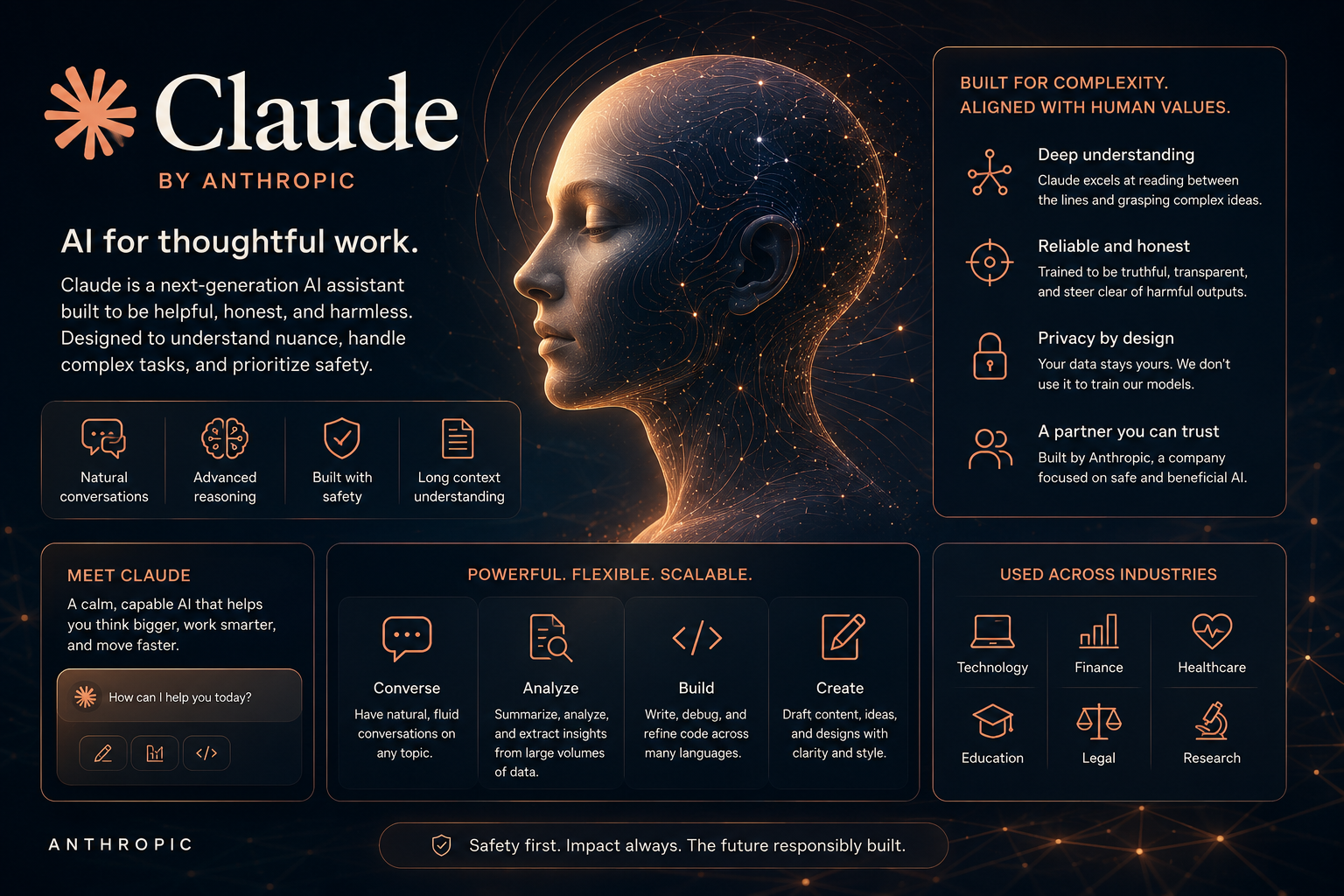
Claude
Claude is an advanced family of large language models developed by Anthropic. Designed to be safe, accurate, and secure, it features specialized tools like Claude Code (an agentic coding tool), Claude Design, and Claude Science for research. Claude was named after the famous Claude Shannon a mathematician, computer scientist and the father of information theory.

Cloud AI
Cloud AI refers to AI services delivered over the internet by large computing providers. Instead of buying expensive hardware, businesses can access AI models, storage and computing power through cloud platforms. This makes AI more accessible, but it also raises questions about data privacy, security, cost and dependence on large technology companies.
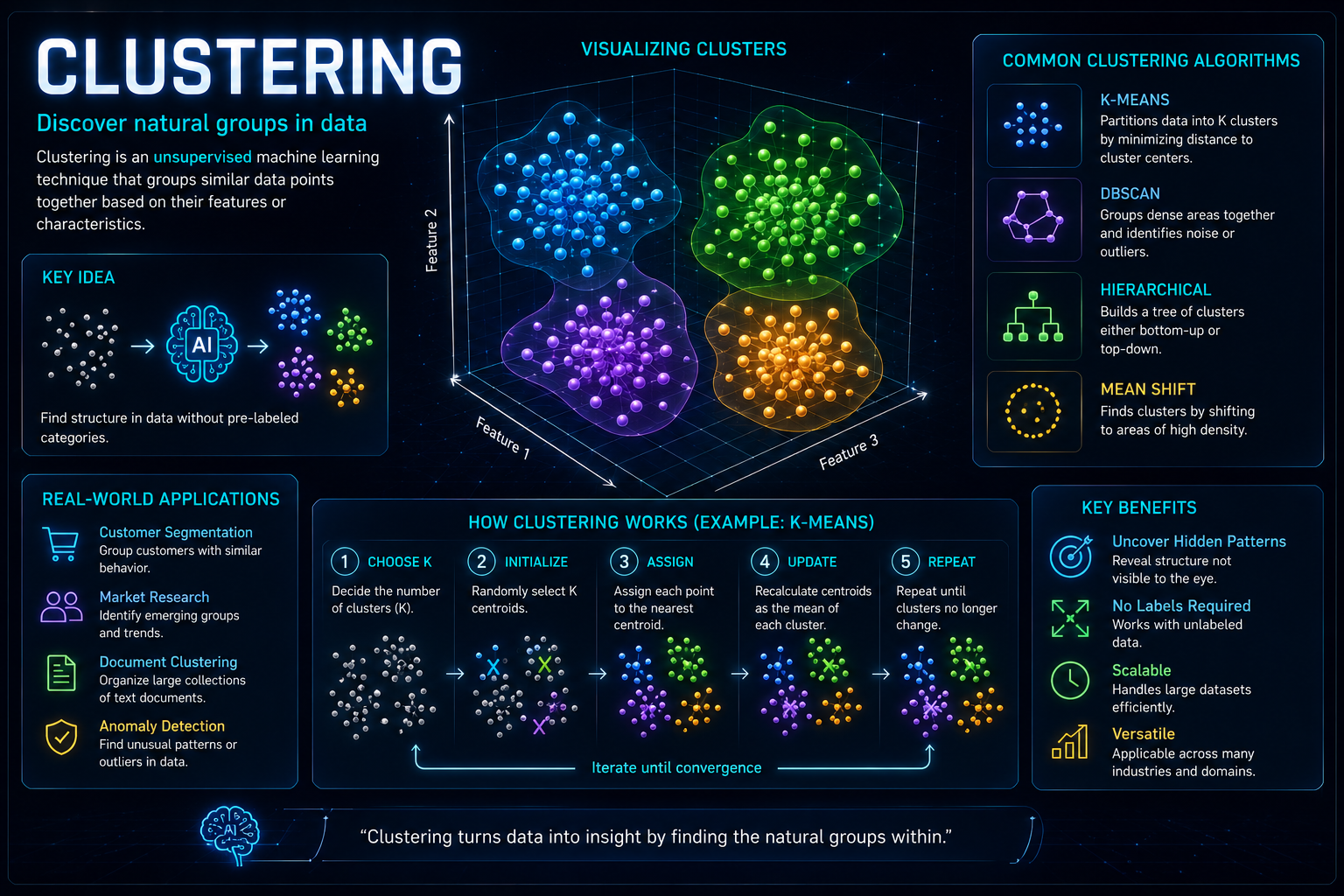
Clustering
Clustering is a machine-learning method that groups similar items together without being told the correct categories in advance. For example, a retailer might use clustering to identify groups of customers with similar buying habits. Clustering is useful for discovering patterns, but the groups it finds still need human interpretation.
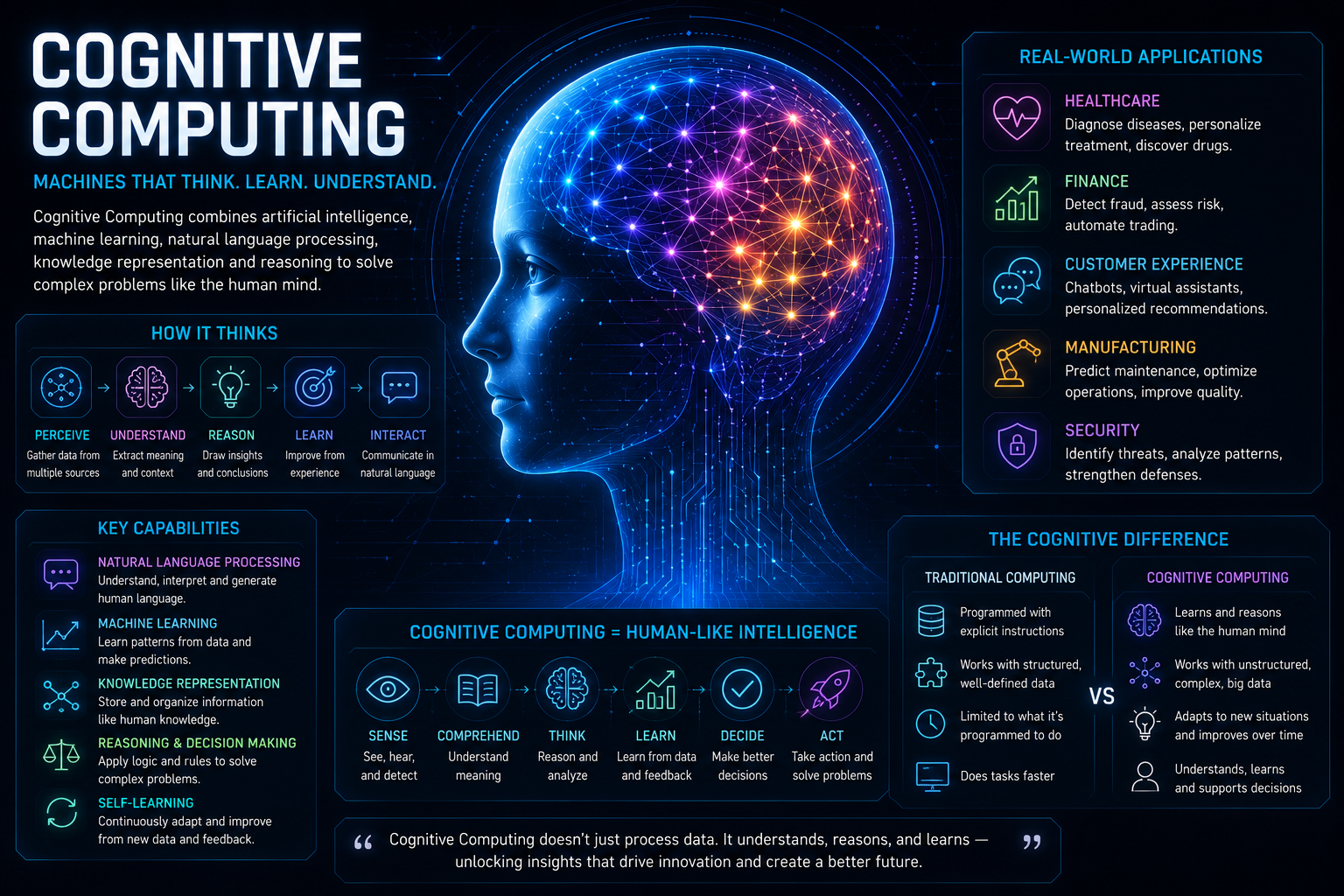
Cognitive Computing
Cognitive computing is an older and broader term for systems designed to mimic aspects of human thinking, such as learning, reasoning and language understanding. It is often used in business contexts. Today, people more commonly talk about AI, machine learning and generative AI, but the basic idea remains: using computers to support complex human-style tasks.
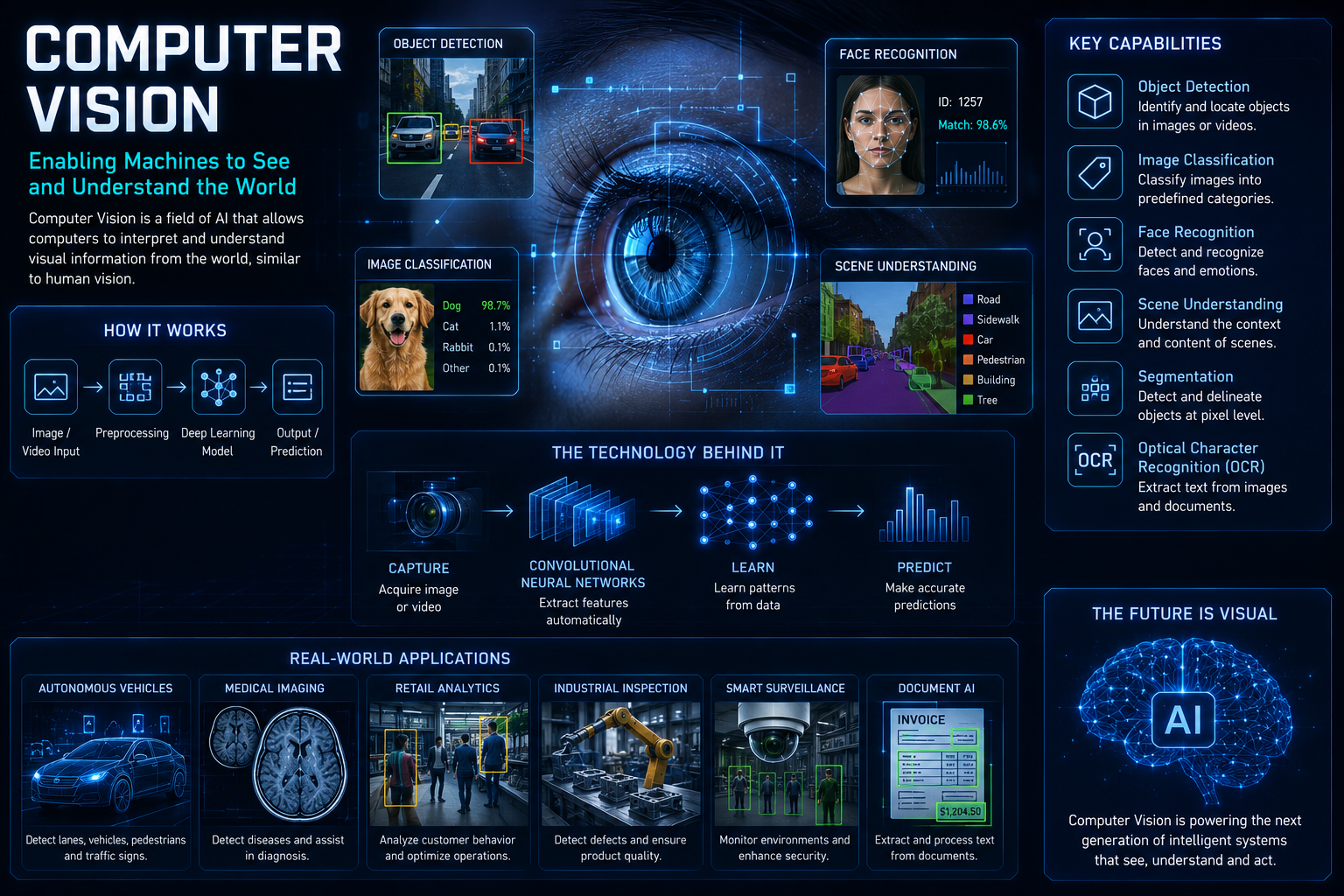
Computer Vision
Computer vision is the branch of AI that helps computers interpret images and video. It is used in medical imaging, facial recognition, self-driving cars, quality control, agriculture, security and sports analysis. Computer vision systems can be powerful, but they may fail when lighting, angles, backgrounds or real-world conditions differ from training data.
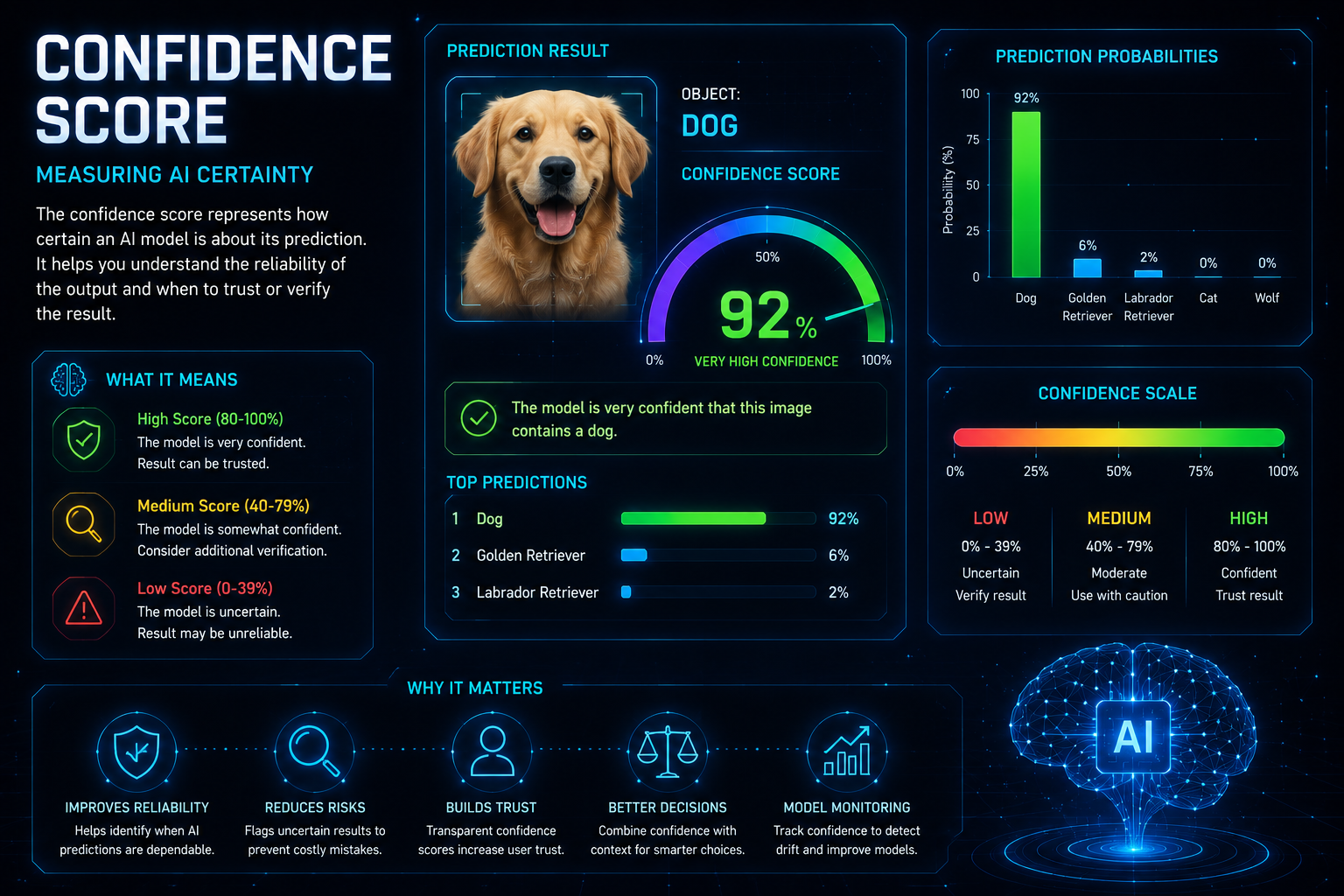
Confidence Score
A confidence score is a number showing how certain an AI system is about its output. For example, an image classifier might say it is 92% confident that a picture shows a dog. Confidence scores can be useful, but they are not guarantees. Some AI systems are overconfident even when wrong, which is why calibration and testing matter.
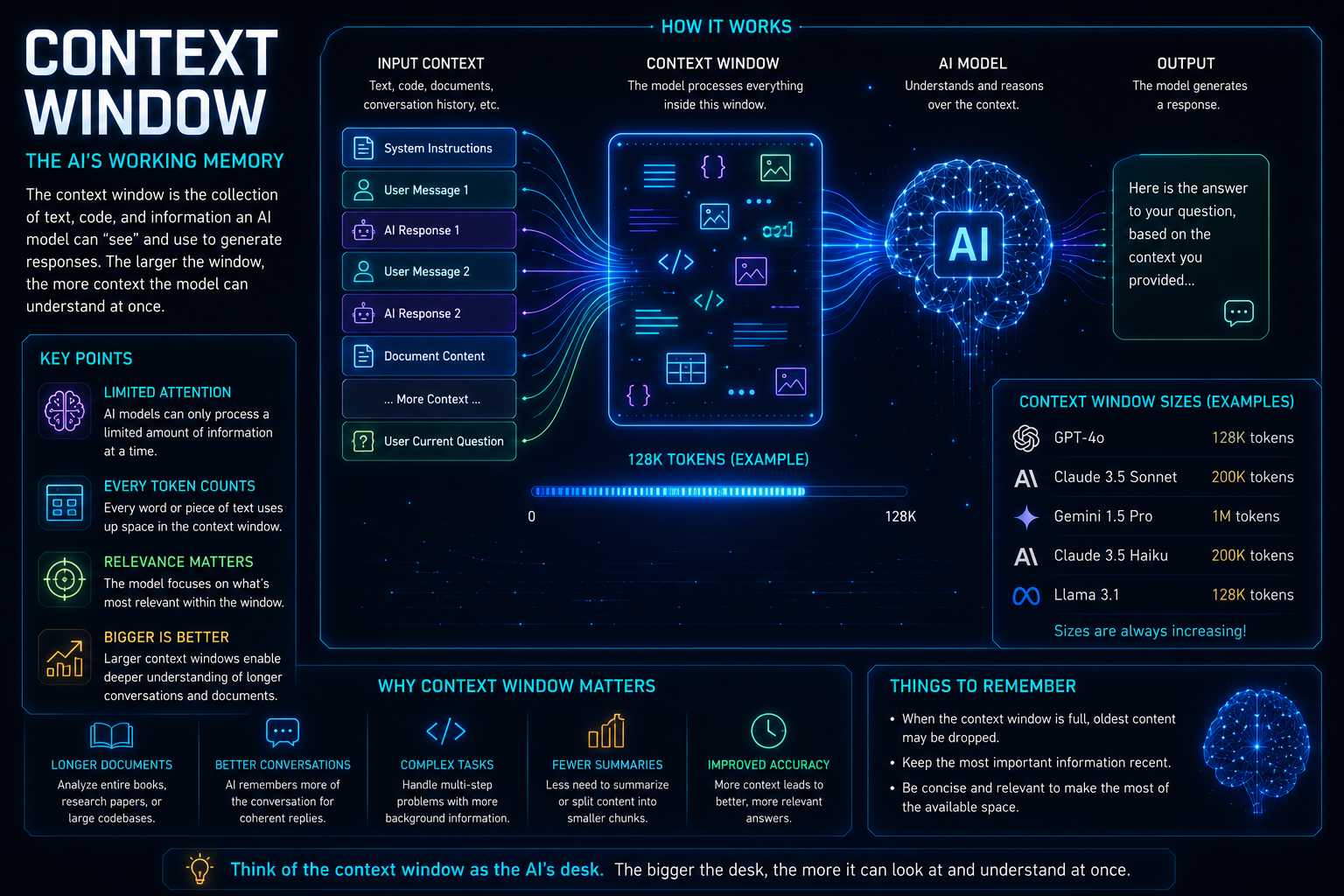
Context Window
The context window is the amount of information a language model can consider at one time. It may include the user’s question, earlier conversation, uploaded text or retrieved documents. A larger context window allows the model to work with longer documents and more background information. However, even with a large context window, the model may still miss details or prioritise some information over others. Many in the industry believe we may be heading for infinite context windows – i.e. something the user no longer has to consider.
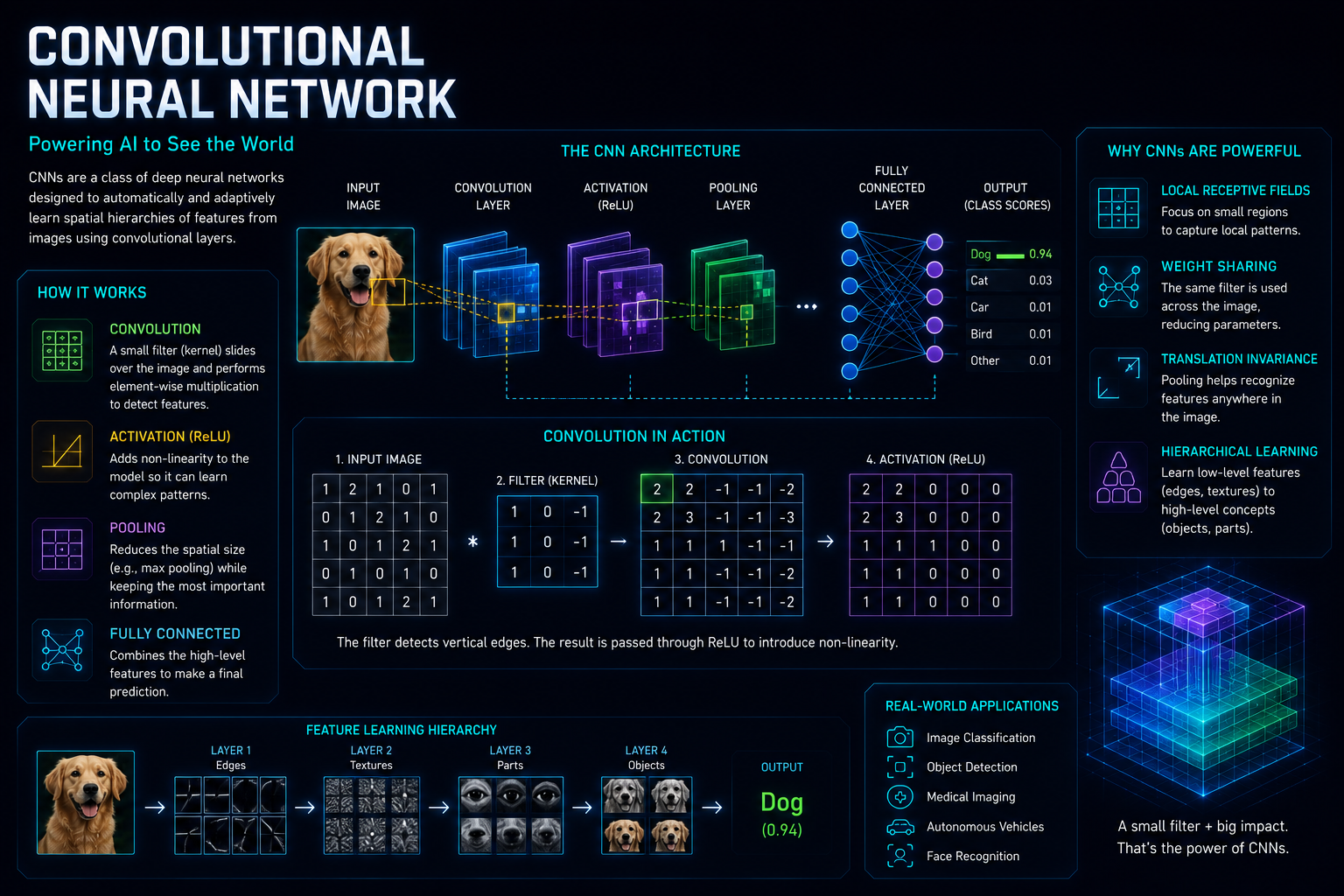
Convolutional Neural Network
A convolutional neural network, or CNN, is a type of neural network especially useful for images. CNNs detect patterns such as edges, shapes, textures and objects. They played a major role in the rise of computer vision. Although newer architectures are now also used, CNNs remain important in image analysis, medical imaging and visual recognition.
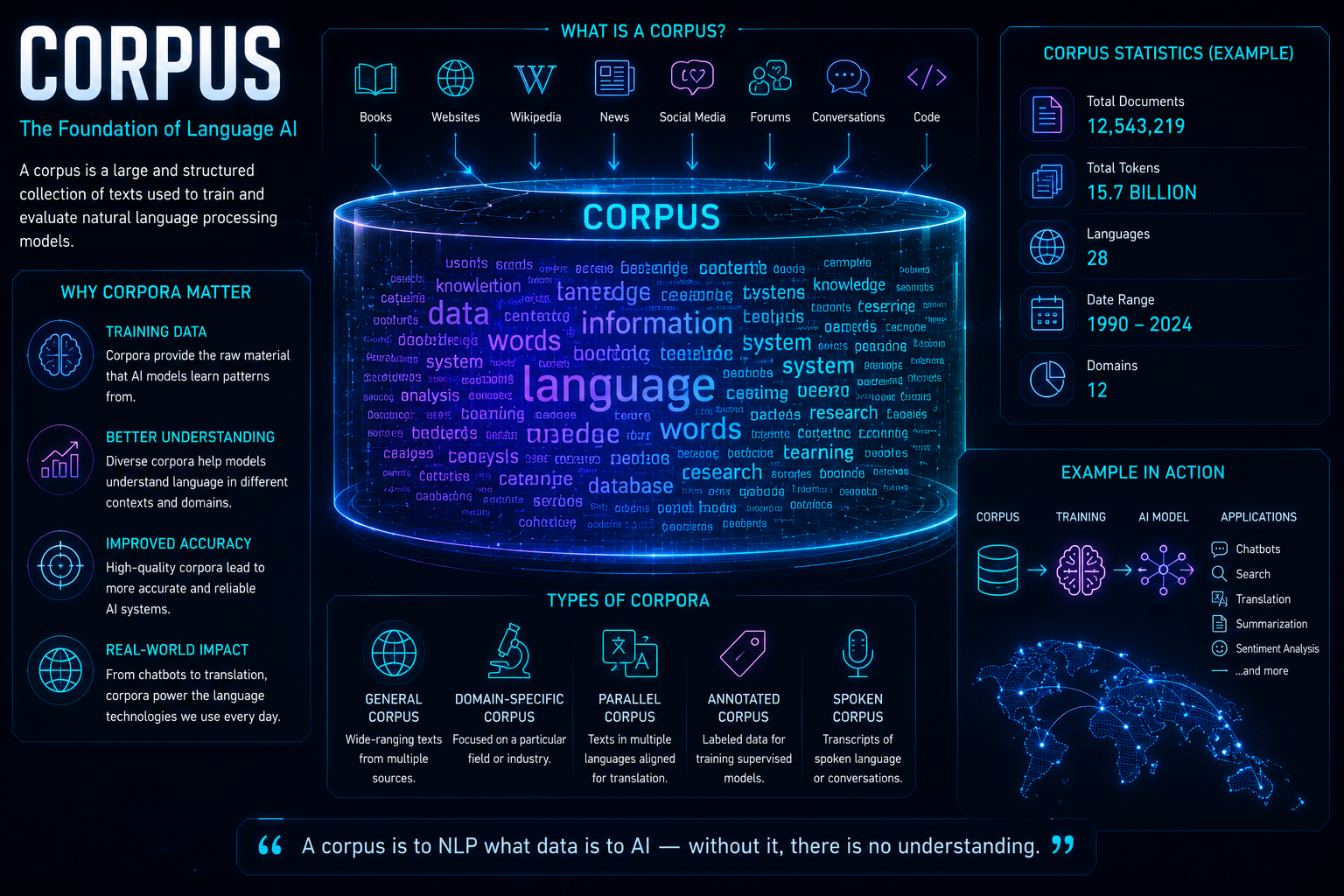
Corpus
A corpus is a collection of text or data used for analysis or training. For example, a language model may be trained on a corpus containing books, articles, websites, code and other written material. The quality and composition of the corpus strongly affect the behaviour of the model. If the corpus contains errors, bias or outdated information, the model may learn those too.
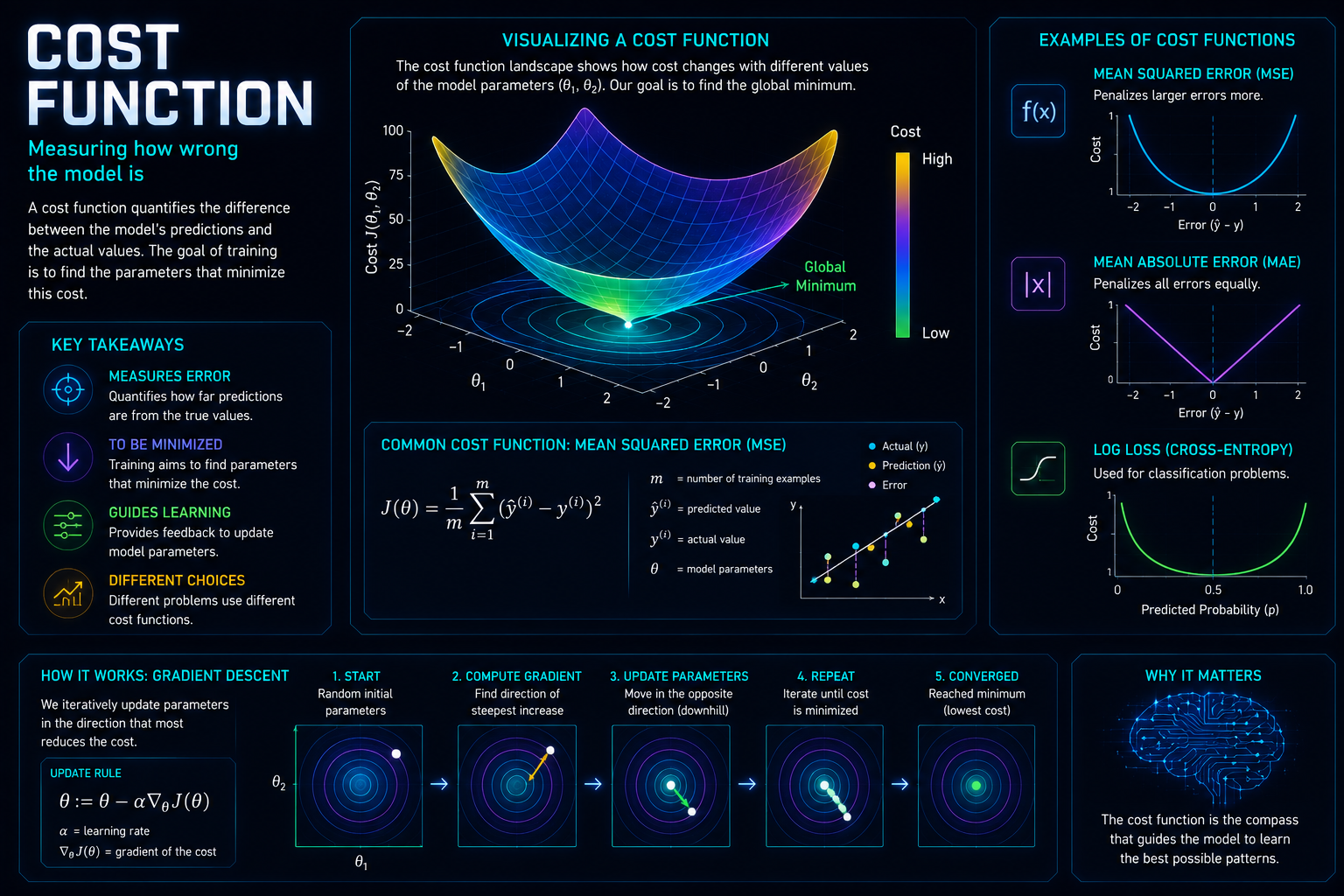
Cost Function
A cost function, also called a loss function, measures how wrong a model is during training. The model tries to reduce this error over time. For example, if an AI predicts house prices, the cost function measures the difference between predicted and actual prices. Training is essentially the process of adjusting the model to minimise this loss.
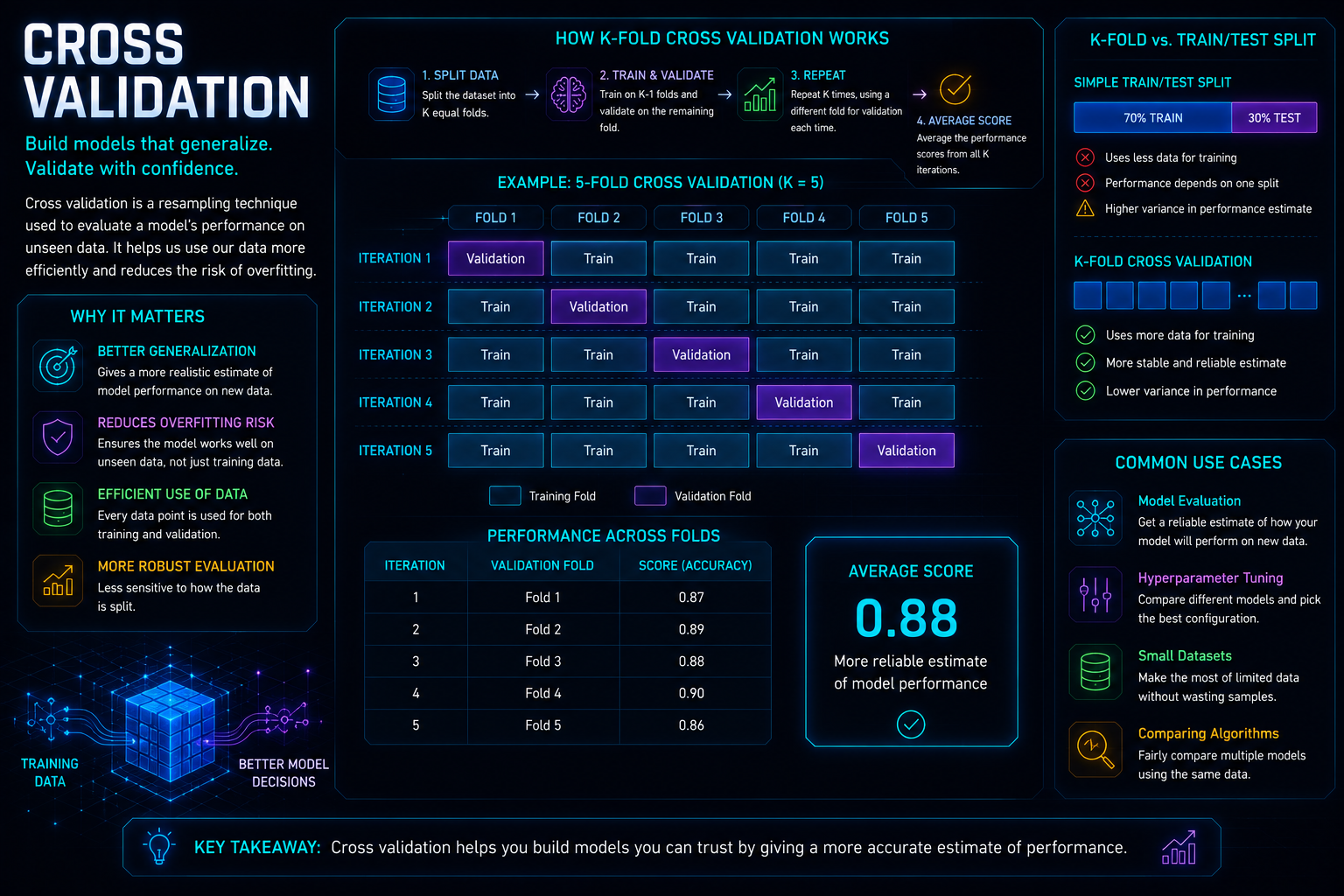
Cross-Validation
Cross-validation is a technique used to test how well a model performs on different parts of the data. Instead of training and testing only once, the data is split in several ways. This helps reveal whether the model performs consistently or only works well on one lucky split. Cross-validation reduces the risk of overestimating a model’s real-world performance.
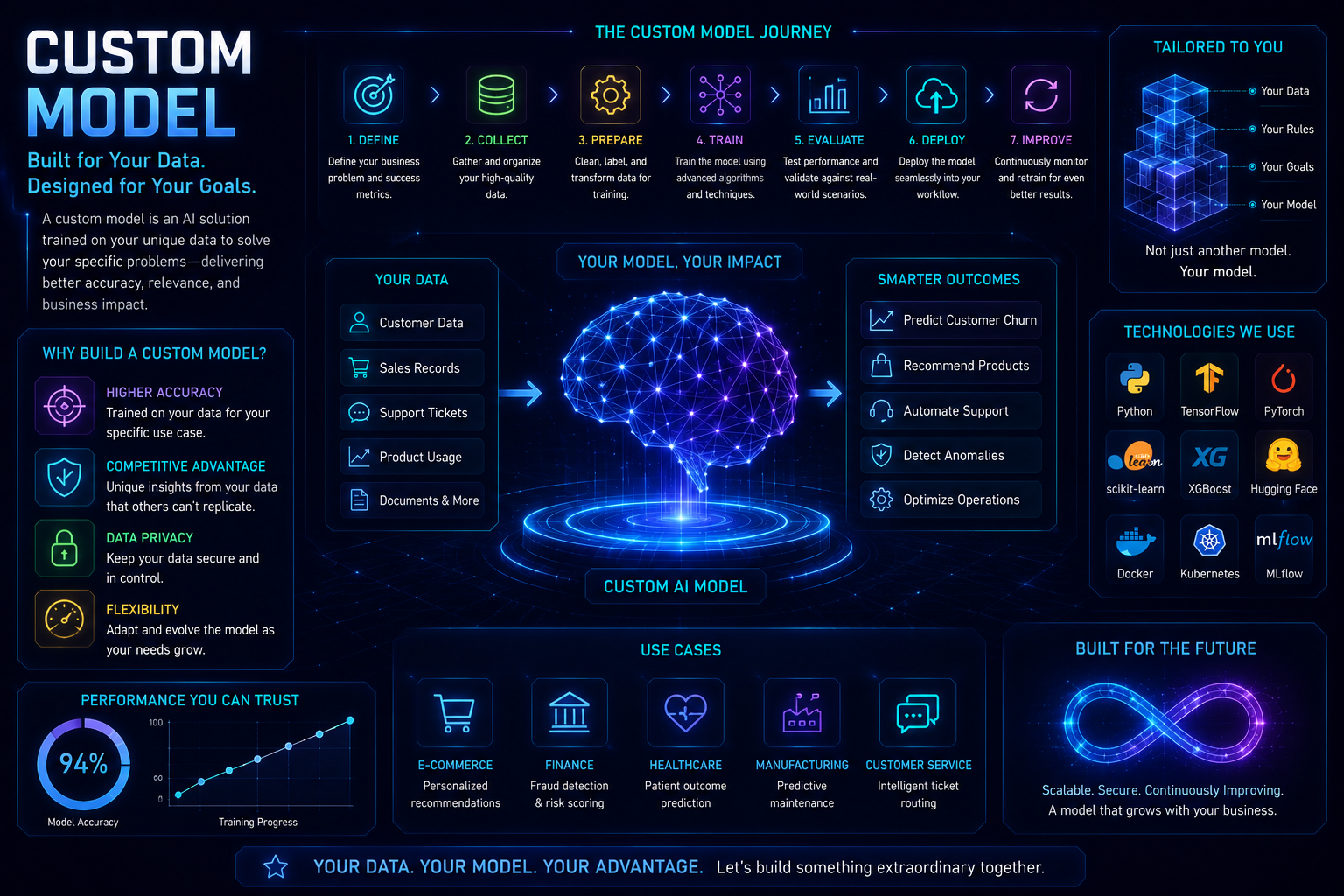
Custom Model
A custom model is an AI model adapted for a specific organisation, task or dataset. For example, a hospital might want a model trained on its own clinical documents, or a law firm might want one tuned for legal drafting. Custom models can be more relevant than general models, but they require careful data handling, testing and governance.

Cybersecurity AI
Cybersecurity AI uses machine learning and automation to detect, prevent or respond to digital threats. It can help spot unusual network behaviour, phishing attempts, malware or suspicious logins. At the same time, attackers can also use AI to write more convincing scams or automate attacks. AI is therefore both a defensive tool and a new challenge in cybersecurity.
Set The Portugal News as your preferred source for news on Google
 Add as a preferred source on Google


 Portugal Handbook
 English
 Nederlands
 Deutsch
 Français
 Español
 Italiano
 Svenska
 Pусский
 中文
 Türkçe
 Português
 Czech
 Hungarian
 Polski
 عربي
 Suomi
 עִברִית
 Português (Brasil)

Follow us on social media