


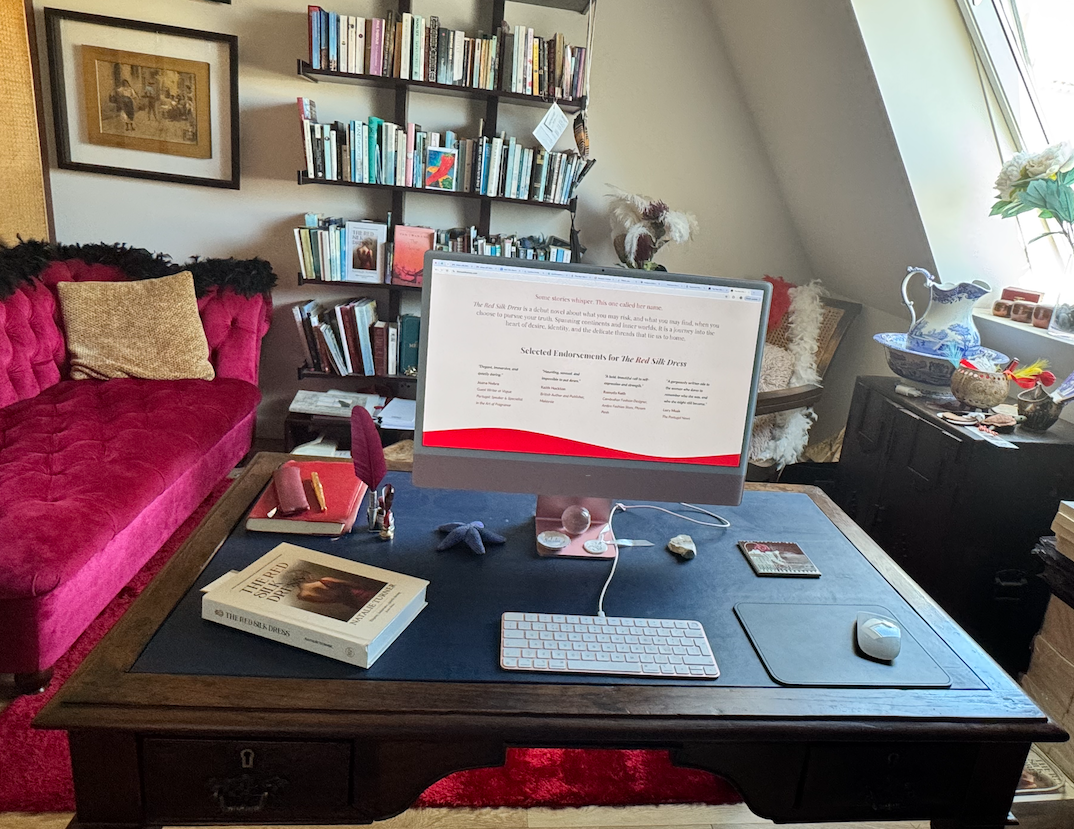
My hand rests on the blue leather of an antique Indian writing table as I write these words. I bought it many years ago in Penang, Malaysia, simply because I thought it was beautiful.
On the island known as the Pearl of the Orient, overlooking the shimmering blue waves of Selat Utara between Penang and the mainland, I wrote much of The Red Silk Dress sitting here at this desk, early in the morning, before the world awoke. Today, the same table sits in my home in Portugal. I cannot see the Tagus River from my window, but just beyond my door lies its great estuary, the Mar da Palha, the Sea of Straw.
From the Pearl of the Orient to the Sea of Straw. The table travelled. I travelled. And neither of us arrived entirely unchanged.
My relationship with beauty deepened during those years in Asia, at almost the same time as another longing became impossible to ignore; I wanted to become a novelist. I had always appreciated beautiful things, but this was different. I became increasingly sensitive to the spaces around me, to light, texture, colour, scent, sound, old buildings and objects carrying histories I could only imagine.
Somewhere along the way, I discovered Sensual Home by British designer Ilse Crawford. I cannot remember where I found my copy, but I remember where I kept it. By my side, in my writing space.
In those quiet early mornings, I would enter my writing room, read, reflect and write. Crawford's ideas about the relationship between our physical surroundings and our inner lives fascinated me; Penang seemed to embody them.
Long before we lived there, I had been drawn to the island. I loved the old shophouses of George Town, the indigo walls of the Blue Mansion, the timeless elegance of the Eastern & Oriental Hotel, the food, the sea, the heat and the extraordinary layering of cultures.
I would attend the George Town Literary Festival and listen to writers such as Tan Twan Eng, author of The Gift of Rain and The Garden of Evening Mists. The possibility of a literary life seemed somehow closer there.
Eventually, my husband and I made Penang our home, and I began writing seriously.
I wrote at my blue-leather table, but also in cafés and beautiful boutique hotels, lovingly restored. Certain spaces seemed to alter the quality of my attention. They made me notice more, feel more, imagine more.
Looking back, I wonder whether Penang didn't simply give me somewhere to write. Perhaps it helped me become the writer I was longing to be.
Years later, I recognise that same relationship between place, objects and identity in my own writing.
There is a moment in The Red Silk Dress when Claudette looks around her home at furniture she and her husband have collected during their travels: a golden velvet chaise longue from Paris, a Balinese teak bed and an Art Deco wardrobe from Myanmar.
She had cherished these objects for their beauty and what they represented when she bought them. But now she is questioning her own identity and origins and begins to see them differently.
“They possessed a life of their own. It was as if they were beckoning her to understand them, to know them, to learn their story, and in knowing theirs she would understand her own.”
When I wrote those words, I wasn't consciously thinking about inquiry. Yet today I find myself doing something remarkably similar.
Where in India was my writing table made? Who owned it before me? Who else placed their hands upon this blue leather? What was written here before I began writing my own stories?
And then the inquiry inevitably turns inwards.
Perhaps our homes are autobiographies we write without words.
For those of us who have moved countries, this takes on another dimension. We don't arrive empty-handed. We carry paintings, photographs, books, furniture, fabrics and objects gathered elsewhere. But we also carry things that cannot be packed into boxes: memories, tastes, relationships, rituals, longings and earlier versions of ourselves.
We place them in new rooms, beneath different light, and something shifts.
Perhaps creating a home is not simply about surrounding ourselves with beautiful things. It is about paying attention to what we choose to carry forward, what we leave behind and what we invite into the life we are creating now.
Our spaces tell us something about who we have been. If we become curious enough, perhaps they can also help us inquire into who we are becoming.
This is one of the ideas I am exploring through Red Silk: creating spaces for beauty, conversation, creativity and inquiry. This autumn I am beginning The Red Silk Thread, a new correspondence for people who want to pay closer attention to how they are living.
Many of those letters, I imagine, will be written here.
At an antique Indian writing table I bought in Penang simply because I thought it was beautiful.
What has travelled with you? And what might it be waiting to whisper in your ear?
Join The Red Silk Thread
If this column has stirred something in you, I invite you to discover The Red Silk Thread, a private correspondence for thoughtful people navigating change, making sense of the world, and wanting to live with greater attention, creativity and aliveness.
You can also discover The Red Silk Dress, Red Silk Salons and more at: www.theredsilkdress.com
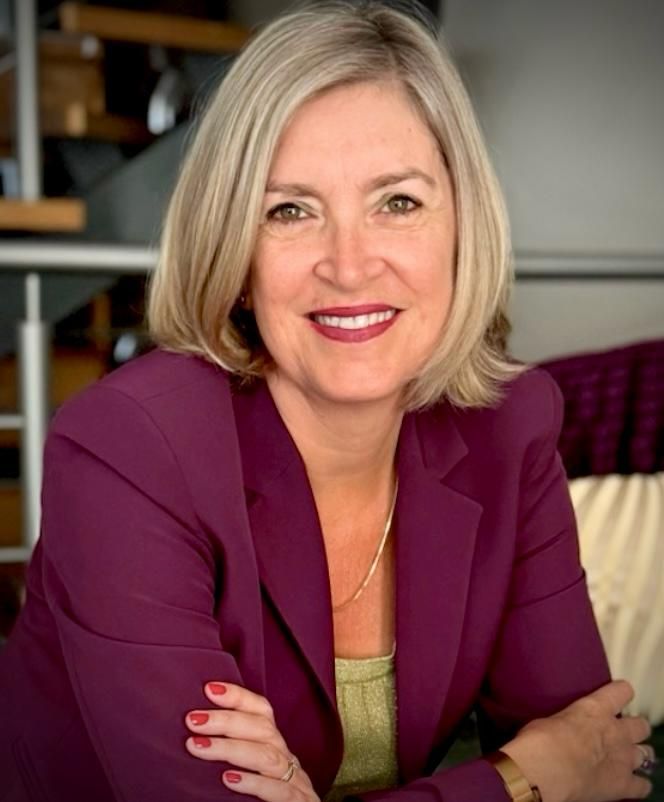
About Natalie Turner
Natalie Turner is a British author, columnist, cultural curator and leadership adviser based in Lisbon. Her debut novel, The Red Silk Dress, explores longing, identity and awakening across Cambodia, Malaysia and Paris. She is also the author of the award-winning book Yes, You Can Innovate, creator of Red Silk and founder of Women Who Lead.
Credits:
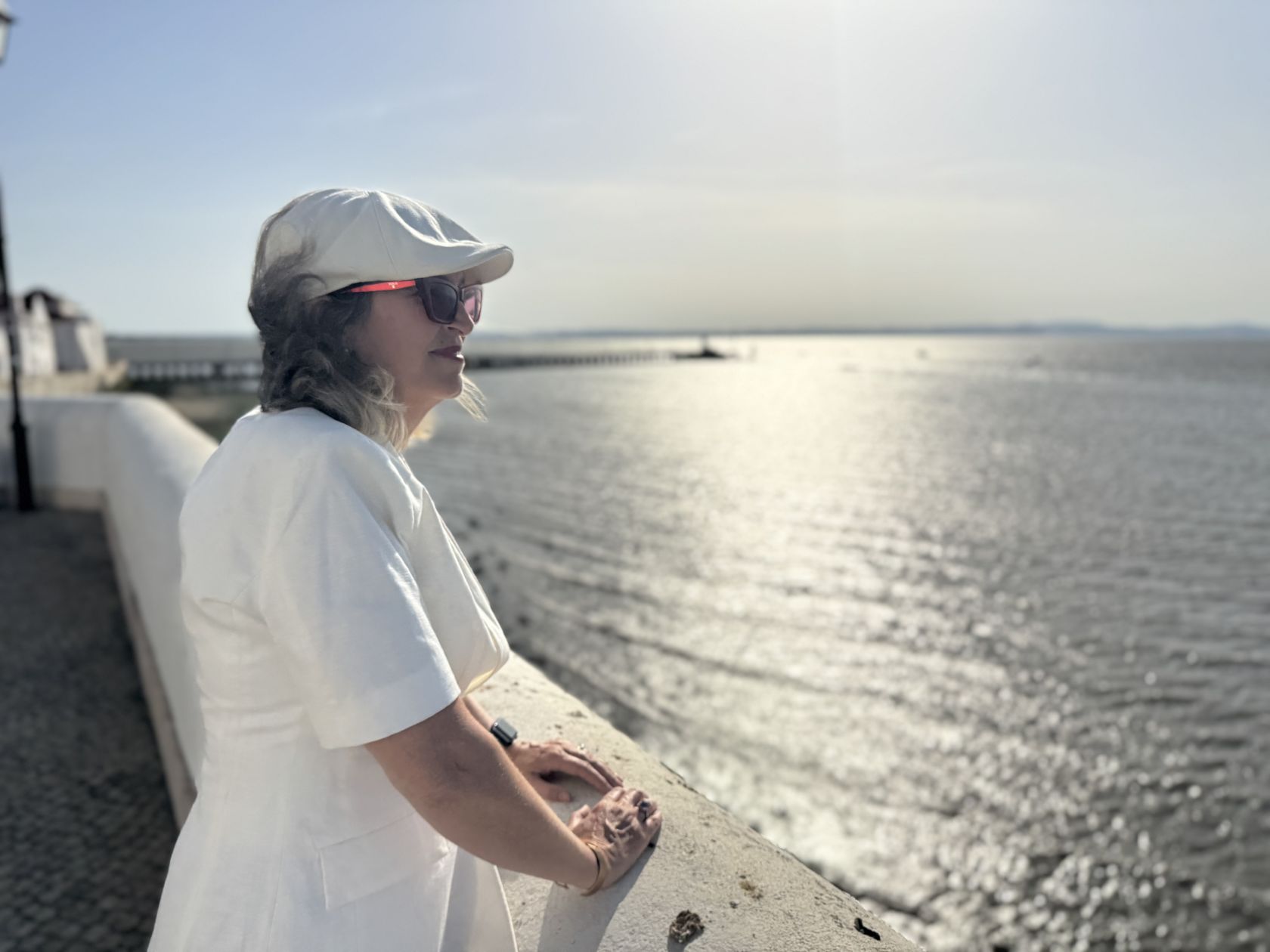
Natalie Turner beside the Tagus River near her home in Portugal.
Natalie’s antique Indian writing desk, bought in Penang, Malaysia, where she wrote much of The Red Silk Dress.
Set The Portugal News as your preferred source for news on Google
 Add as a preferred source on Google


 Portugal Handbook
 English
 Nederlands
 Deutsch
 Français
 Español
 Italiano
 Svenska
 Pусский
 中文
 Türkçe
 Português
 Czech
 Hungarian
 Polski
 عربي
 Suomi
 עִברִית
 Português (Brasil)

Follow us on social media