


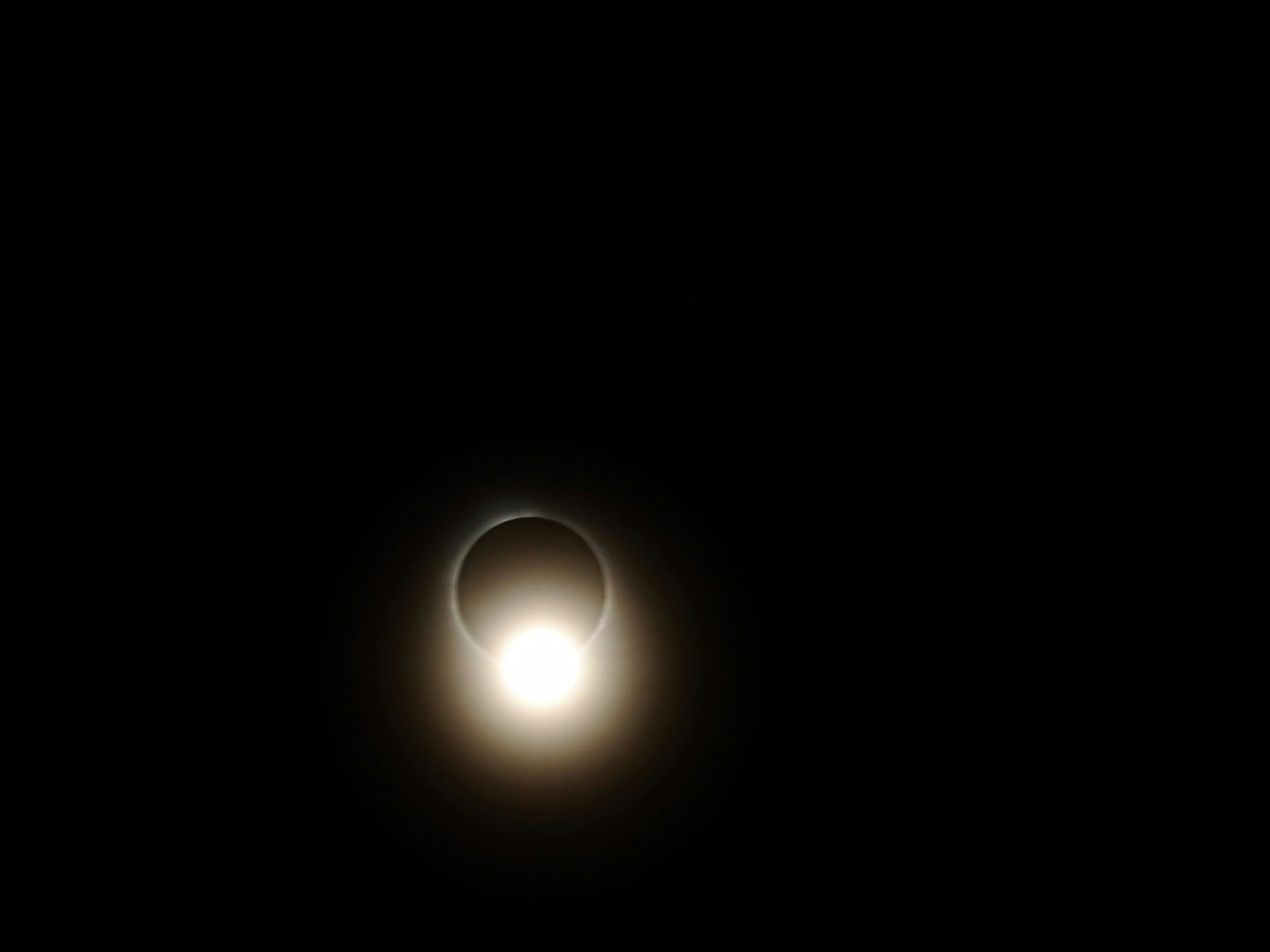
Portugal will not be directly in the path of totality, but the country is expected to witness an exceptionally deep partial eclipse, particularly in the Algarve, where more than 99% of the Sun’s surface will be obscured.
According to NASA, the eclipse will reach a maximum duration of approximately six minutes and 23 seconds in parts of Egypt, making it one of the longest total solar eclipses of the 21st century.
The event is already attracting international attention because of its unusually long duration and the large geographical area from which it will be visible.
Where will the eclipse be visible?
The path of totality will begin over the Atlantic Ocean before crossing southern Spain, the Strait of Gibraltar, North Africa and parts of the Middle East.
Countries within the path include Spain, Morocco, Algeria, Tunisia, Libya, Egypt, Sudan, Saudi Arabia, Yemen and Somalia.
Observers located directly beneath the Moon’s shadow will experience a total solar eclipse, when the Moon completely covers the Sun and briefly turns day into night.
One of the most notable viewing locations will be Luxor, Egypt, where totality will last for more than six minutes.
The exceptional duration is linked to the alignment and apparent sizes of the Sun and Moon, as well as the location of the Moon’s shadow on the Earth’s surface.
What will happen in Portugal?
Although Portugal lies outside the path of totality, residents will still have an opportunity to witness a remarkable partial eclipse.
Astronomical calculations published by Time and Date indicate that approximately 99.27% of the Sun’s visible surface will be covered in Faro at the height of the event.
The eclipse will begin at approximately 8:40am on 2 August, reaching its maximum at 9:45am before ending shortly before 11am.
Other parts of the Algarve will also experience extremely high levels of solar coverage, including Albufeira at approximately 99% and Portimão at 98.78%.
Farther north, the eclipse will be less extensive but still significant.
In Lisbon, approximately 92.5% of the Sun will be obscured, with maximum coverage expected at 9:44am.
Porto will experience approximately 82.6% coverage, while Coimbra will see around 86.5%.
Madeira will also have an excellent view, with approximately 97% of the Sun expected to be covered in Funchal.
These calculations refer to the percentage of the Sun’s visible area hidden by the Moon, rather than the duration of darkness.
Why is the 2027 eclipse unusual?
Total solar eclipses occur when the Moon passes directly between the Earth and the Sun, temporarily blocking sunlight along a relatively narrow path.
Although solar eclipses happen somewhere on Earth several times each year, total eclipses lasting more than six minutes are uncommon.
The maximum possible duration of a total solar eclipse is approximately seven and a half minutes under particularly favourable astronomical conditions.
NASA’s calculations place the longest period of totality for the August 2027 eclipse at approximately six minutes and 23 seconds.
The combination of its duration and its route across popular destinations in southern Europe and North Africa is expected to make it a major event for astronomers, photographers and eclipse enthusiasts.
How to watch safely
Despite the unusually high level of solar coverage expected in the Algarve, the eclipse will remain partial throughout Portugal.
This means it will never be safe to look directly at the Sun without suitable eye protection.
Special-purpose eclipse glasses meeting the ISO 12312-2 international safety standard are required for direct viewing.
Ordinary sunglasses, even very dark ones, do not provide adequate protection.
Cameras, binoculars and telescopes must also be fitted with appropriate solar filters, as looking through unprotected optical equipment can cause serious eye injuries.
For those unable to travel to the path of totality, Portugal’s partial eclipse will still provide an unusual opportunity to observe the Sun almost entirely covered by the Moon.
With the Algarve expected to experience some of the greatest solar coverage anywhere outside the path of totality, August 2, 2027, promises to be a particularly memorable morning for skywatchers in southern Portugal.
Set The Portugal News as your preferred source for news on Google
 Add as a preferred source on Google


 Portugal Handbook
 English
 Nederlands
 Deutsch
 Français
 Español
 Italiano
 Svenska
 Pусский
 中文
 Türkçe
 Português
 Czech
 Hungarian
 Polski
 عربي
 Suomi
 עִברִית
 Português (Brasil)

Follow us on social media