


The team from the Centro Multimeios de Espinho, where one of the four planetariums in Portugal is located, the operation will depend on weather conditions, but if the sky is clear, the phenomenon, scheduled for the period between 6:35 pm and 8:25 pm, will reach one of the highest levels of occultation predicted for the national territory in that municipality in the Aveiro district and the Porto Metropolitan Area.
"In mainland Portugal, the maximum occultation of the sun will vary between 92% and 100%, while in the archipelagos of the Azores and Madeira it will be between 72% and 79%. In Espinho, the occultation will be 98%," anticipates the Planetarium.
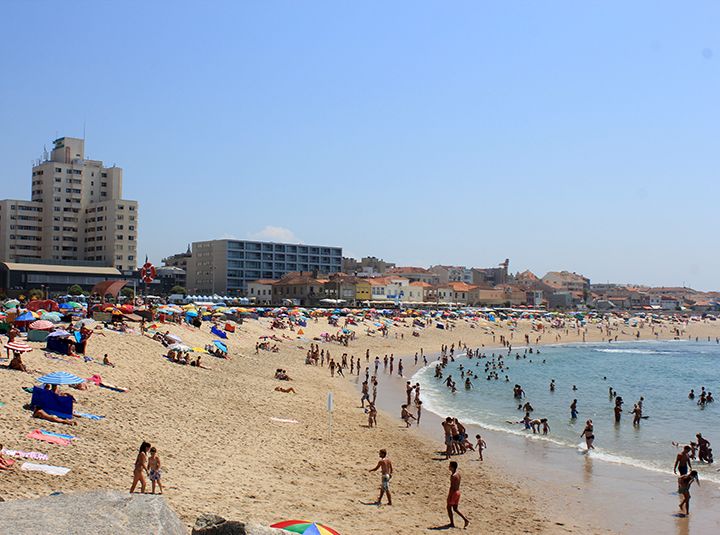
To observe this passage of the moon in front of the sun, and "weather permitting," the Planetarium team will be on the city's waterfront during the afternoon, also known as Avenida Maia Brenha, next to the main staircase of Praia da Baía, to "contextualise the phenomenon and welcome everyone who wants to experience this spectacle in complete safety."
The same professionals warn, however, that one should never look directly at the sun, even with improvised filters, due to the risk of eye injuries. Therefore, people should use specific glasses for this purpose – available in pharmacies, for example – or resort to alternative mechanisms.
"Sunglasses are not suitable," assure the Planetarium's astronomers.
The same professionals emphasise that, in the absence of specialised lenses, it is preferable to observe the phenomenon using methods such as a mirror, which, pointed at the eclipse and reflecting it onto a smooth wall, will project the movements of the sun and moon onto that surface.
 Add as a preferred source on Google





 Portugal Handbook
 English
 Nederlands
 Deutsch
 Français
 Español
 Italiano
 Svenska
 Pусский
 中文
中文 Türkçe
 Português
 Czech
Czech Hungarian
 Polski
 عربي
عربي Suomi
Suomi עִברִית
 Português (Brasil)
Follow us on social media