


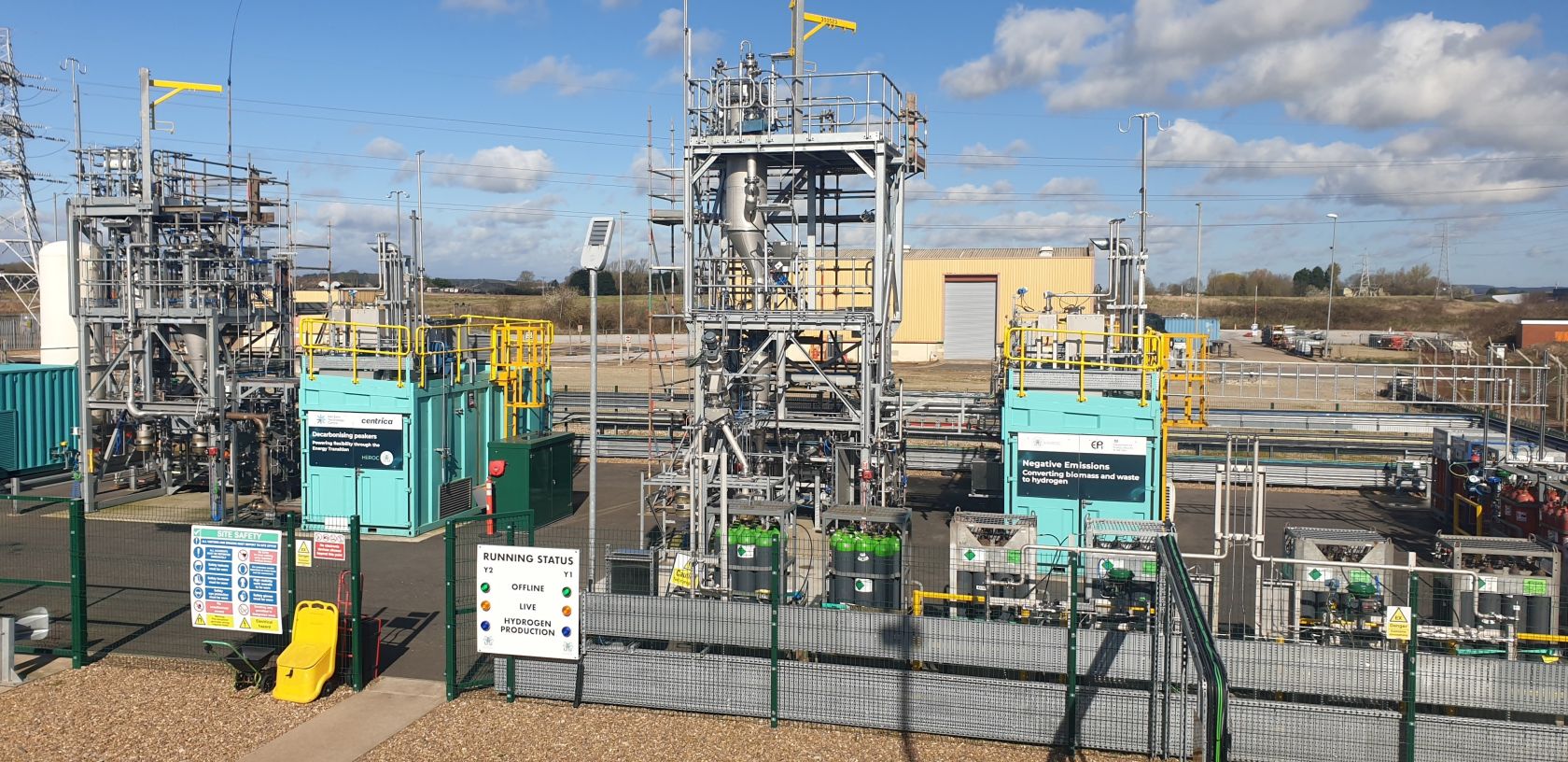
The technology, developed by British company HiiROC, separates methane into hydrogen and solid carbon, rather than producing carbon dioxide during the splitting process.
According to the company, its patented Thermal Plasma Electrolysis (TPE) process uses around one-fifth of the electricity required by conventional water electrolysis. It also produces solid carbon that could have commercial applications in several industries, creating an additional product alongside the hydrogen.
Founded in 2019, HiiROC has attracted backing from international businesses including Hyundai, Centrica and Cemex, and has begun demonstrating the technology in industrial settings. As countries look for new ways to reduce emissions, the process could also have potential applications in Portugal.
A different way to produce hydrogen
Hydrogen has long been considered a promising alternative to fossil fuels, particularly for industries such as cement production, chemicals and heavy manufacturing, where switching entirely from gas to green electricity is not always practical.
But producing hydrogen affordably and with minimal environmental impact remains a major challenge.
Most hydrogen today is made from natural gas through a process called Steam Methane Reforming (SMR), which releases significant amounts of carbon dioxide. Green hydrogen, meanwhile, is produced by using renewable electricity to split water into hydrogen and oxygen. Although the splitting process itself does not release carbon dioxide, it requires considerable amounts of electricity.
Thermal Plasma Electrolysis takes a different approach
A new patented technology uses innovative plasma torches to break down methane into two potentially valuable products: hydrogen and carbon.
The distinction is important. In conventional natural gas-based hydrogen production, carbon is generally released as carbon dioxide. With TPE, the carbon is separated in solid form, without directly generating carbon dioxide during the methane-splitting reaction.
Rather than necessarily becoming waste, that carbon could be put to use elsewhere.
One of the most interesting aspects of this technology is what happens to the carbon after the hydrogen has been produced.
Carbon is already used in numerous everyday products, from tyres and rubber goods to plastics, coatings, batteries and specialist industrial materials.
Depending on its properties and how it is processed, the solid carbon produced through TPE could potentially be used in some of these applications. According to HiiROC, its carbon output has already attracted commercial interest.
This opens up an interesting possibility: a process that produces hydrogen for energy and feedstockwhile also creating a second product with commercial value.
The ability to produce hydrogen using substantially less electricity, while creating a potentially marketable carbon product, represents a promising development in the search for cleaner industrial energy.
The TPE process can use natural gas or biomethane, although its overall environmental footprint depends on where the gas comes from, the type of electricity used and how effectively methane emissions are controlled. Producing solid carbon rather than directly releasing carbon dioxide does not automatically make the entire process emissions-free.
From innovation to industrial testing
Thermal Plasma Electrolysis has already moved beyond laboratory research into industrial trials.
In September 2025, HiiROC completed a trial with British energy group Centrica at Brigg Energy Park in North Lincolnshire.
Hydrogen produced on-site using the patented process was blended into the fuel supply of an existing gas-fired power plant.
The trial used a 3% hydrogen blend over one hour, demonstrating how hydrogen produced through this method could be introduced into existing power-generation infrastructure.
Another development came in 2025, when HiiROC demonstrated hydrogen production using biomethane through a project with its partner EPi.
The process involves producing biomethane from organic material that has absorbed carbon dioxide from the atmosphere as it grows. HiiROC’s technology then separates the biomethane into hydrogen and solid carbon.
If that carbon is then used in commercial applications, for example, in suitable construction materials, it could prevent some of the carbon originally absorbed by the plants from returning to the atmosphere.
According to HiiROC, this creates the potential for carbon-negative hydrogen production, where more carbon dioxide is removed from the atmosphere than is released across the process.
The company believes this could represent a first for carbon-negative hydrogen production using Thermal Plasma Electrolysis. However, its partner EPi has not completed a full independent lifecycle assessment, meaning the overall negative-emissions claim has not yet been independently established.
The technology has also attracted interest from the cement industry.
HiiROC has worked with Cemex, one of the world’s largest building materials companies, to explore the use of hydrogen and solid carbon in cement manufacturing.
Cement production is particularly difficult to make greener because it requires extremely high temperatures, traditionally generated using fossil fuels.
Hydrogen could potentially replace some of those fuels, while suitable forms of solid carbon may offer additional possibilities in cement materials, including improvements in certain product properties.
In January 2026, HiiROC announced an agreement to explore possible collaboration with Japanese energy company Tokyo Gas, including industrial applications and potential uses for the carbon produced during hydrogen generation.
These developments show how the technology is being explored across different industries, although proving its performance and economics at full commercial scale remains an important next step.
Could new hydrogen technology have a future in Portugal?
Portugal has made hydrogen an important part of its plans to reduce industrial emissions and develop cleaner energy.
Much of the country’s investment has focused on green hydrogen produced using renewable electricity, particularly around the industrial hub of Sines.
However, alternative production technologies could also have a role, especially in industries that already use natural gas or require hydrogen for manufacturing.
Northern and central Portugal are home to several established industrial centres where such technology could be relevant.
The Estarreja Chemical Complex, near Aveiro, for example, is already involved in hydrogen-related development through initiatives such as H2Enable, involving Portuguese chemical company Bondalti and other industrial and research partners.
The wider Porto region also has a strong manufacturing base, engineering expertise and universities involved in energy research.
One advantage of TPE is its modular design. Rather than requiring hydrogen to be produced at a large central facility and transported elsewhere, the equipment can be installed closer to where hydrogen is needed.
For factories and industrial plants, this could potentially reduce some of the costs and infrastructure associated with transporting and storing hydrogen.
Although HiiROC has not announced any plans to establish operations in Portugal, the company is open to exploring potential partnerships with Portuguese industrial and energy businesses to assess where the technology might have practical applications.
Mark Robertshaw, Chairman of HiiROC, believes technologies such as this could have a role in countries developing their hydrogen industries.
“Portugal is doing a number of exciting things in hydrogen, and we believe HiiROC’s patented technology could have an important role to play in developing practical hydrogen applications in Portugal. The country has a strong industrial base and a clear interest in cleaner energy, which makes it an interesting market for us to explore.”
The next chapter for hydrogen
The future of hydrogen is unlikely to depend on a single production method. Different industries have different requirements, and the most suitable technology will depend on cost, available infrastructure and environmental performance.
Thermal Plasma Electrolysis offers a different approach by addressing two challenges at once: reducing the electricity needed to produce hydrogen and converting the carbon contained in hydrocarbon gases into a solid material with potential industrial uses.
Early industrial trials have demonstrated how the process could work alongside existing infrastructure. The next challenge is establishing whether those advantages can be maintained as production expands.
For Portugal and other countries investing in cleaner industrial energy, technologies such as TPE could offer another way to produce hydrogen closer to where it is needed, potentially reducing some of the costs and infrastructure associated with conventional hydrogen supply.
The question now is how quickly emerging technologies such as this can move from successful demonstrations into widespread industrial use.
Set The Portugal News as your preferred source for news on Google
 Add as a preferred source on Google


 Portugal Handbook
 English
 Nederlands
 Deutsch
 Français
 Español
 Italiano
 Svenska
 Pусский
 中文
 Türkçe
 Português
 Czech
 Hungarian
 Polski
 عربي
 Suomi
 עִברִית
 Português (Brasil)

Follow us on social media