


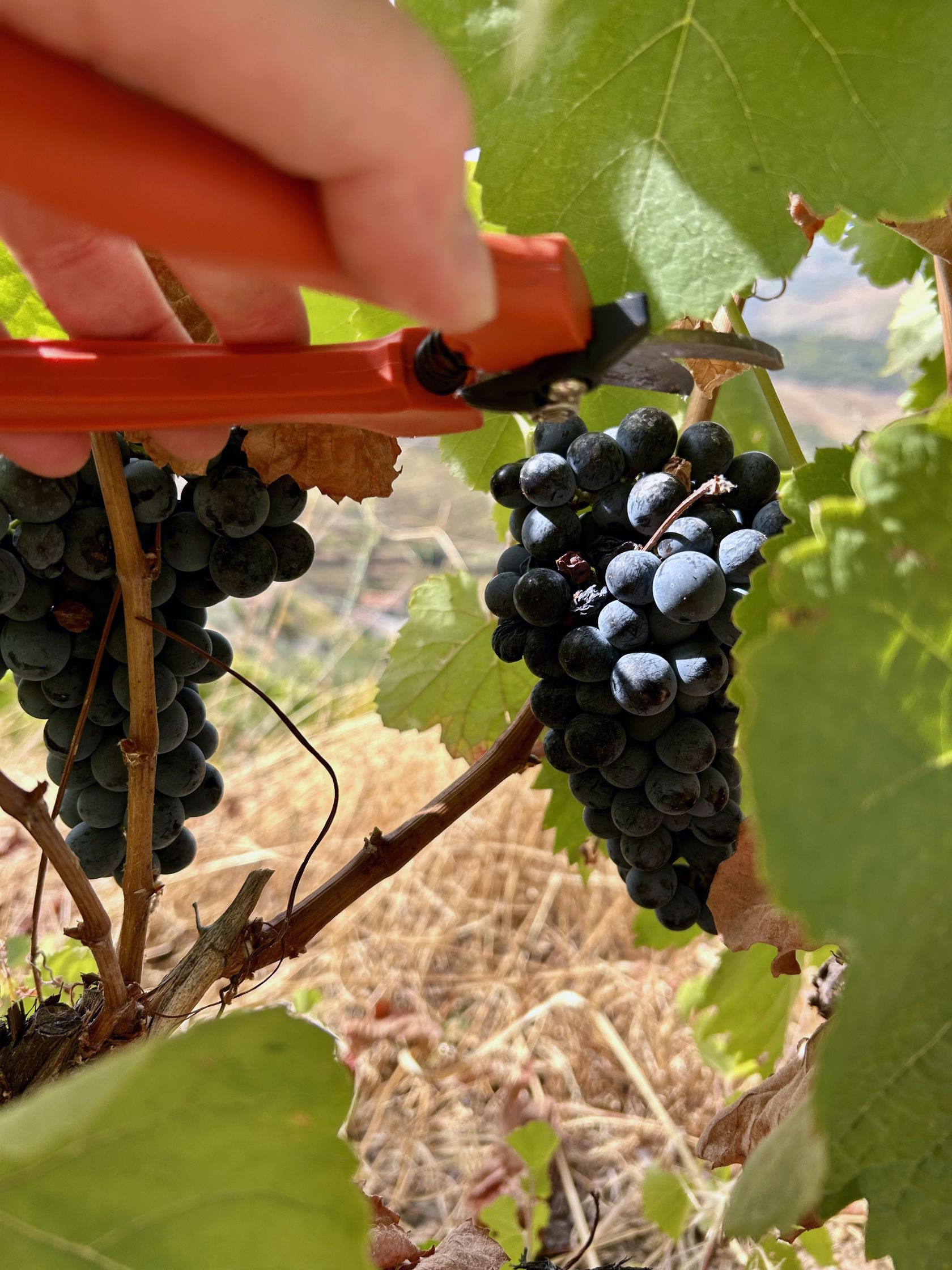
According to a statement sent to the news agency Lusa, the project is based on a method that involves “forcing the budbreak of dormant buds by placing them in controlled environmental conditions; this stimulates development and allows for the assessment of the number of inflorescences (flower clusters) that may emerge.”
The methodology was tested between 2023 and 2025 in the Dão Demarcated Region on approximately two hundred grapevines of the Jaen and Alfrocheiro varieties. Compared with actual outcomes, the laboratory-based estimates proved highly accurate: “in 90% of cases, the difference did not exceed two flower clusters per vine.”
The consistency of the results across three growing seasons and different grape varieties lends robustness to the work. Mário Cunha—a faculty member at FCUP and a researcher at INESC TEC (Institute for Systems and Computer Engineering, Technology and Science)—highlights the study’s value in its “anticipatory” capacity.
While this prediction of the number of inflorescences does not provide an exact estimate of the final yield—which is also influenced by weather conditions and other biological processes—the work paves the way for further tools to help producers navigate the variability that climate change has introduced to the sector.
“Even during the winter, we can obtain quantitative information on a crucial component of a grapevine’s productive potential. In a context of increasing climate variability, this ability to look ahead helps support agronomic and economic decisions that would otherwise have to be made with limited information,” he explained.
According to the university professor, these findings also led to the development of an optical sensor called BudScan—currently undergoing the intellectual property protection process—designed to “assess bud fertility directly in the vineyard, in a non-destructive manner.”
The results were published in the scientific journal *OENO One* in October.
The study brought together Mário Cunha and Germano Moreira—both from INESC TEC—along with other professionals, including Cláudia Cruz and Vanda Pedroso from the Dão Viticultural Research Centre, and Pedro Rodrigues from the Centre for Research in Natural Resources, Environment and Society.
The research consortium is part of the Wine4Cast project, led by the Faculty of Sciences of the University of Porto (FCUP) and involving other entities and companies from the sector.
Set The Portugal News as your preferred source for news on Google
 Add as a preferred source on Google






 Portugal Handbook
 English
 Nederlands
 Deutsch
 Français
 Español
 Italiano
 Svenska
 Pусский
 中文
 Türkçe
 Português
 Czech
 Hungarian
 Polski
 عربي
 Suomi
 עִברִית
 Português (Brasil)

Follow us on social media