The law, formulated by the EU, is called the Child Sexual Abuse Regulations (CSAR), with a controversial measure that allows companies to check private messages. In order to proceed with the message reading, a new technology will be used, allowing for reading messages in strong end-to-end encryption apps like WhatsApp.
The initial plans wanted to make the scanning mandatory; however, when the law’s draft made the scanning voluntary, the 27 EU countries agreed to approve the law on 26 November.
Is there a reason to celebrate?
Scientists and privacy experts say that the fact that the scanning is voluntary will not fix the issue. There is still the chance of the companies feeling pressured to check chats, to avoid fines, for example.
The measures
The new law states that a new EU agency, yet unknown, will be reviewing if companies are taking the right procedures.
There will be made a request to messaging and cloud services to inform the EU that their platforms can be misused.
The Danish Minister of Justice, Peter Hummelgaard ,appreciated the deal, highlighting that it forces companies to help stop the spread of child abuse material.
What happens next?
The EU governments will now have the chance to negotiate the final text, and decide if the new rules must be stricter, weaker or remain as it is now.
Tech giants like Google, Signal and Meta are afraid that the measure can affect the end-to-end encryption, which may enhance broader monitoring.
Countries’ opinion
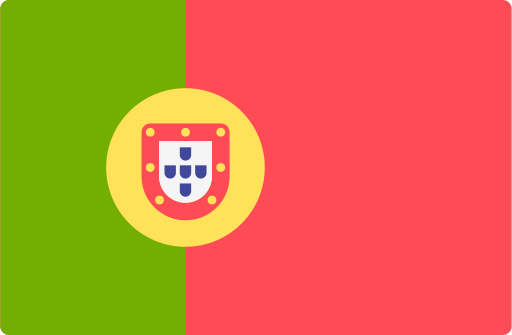
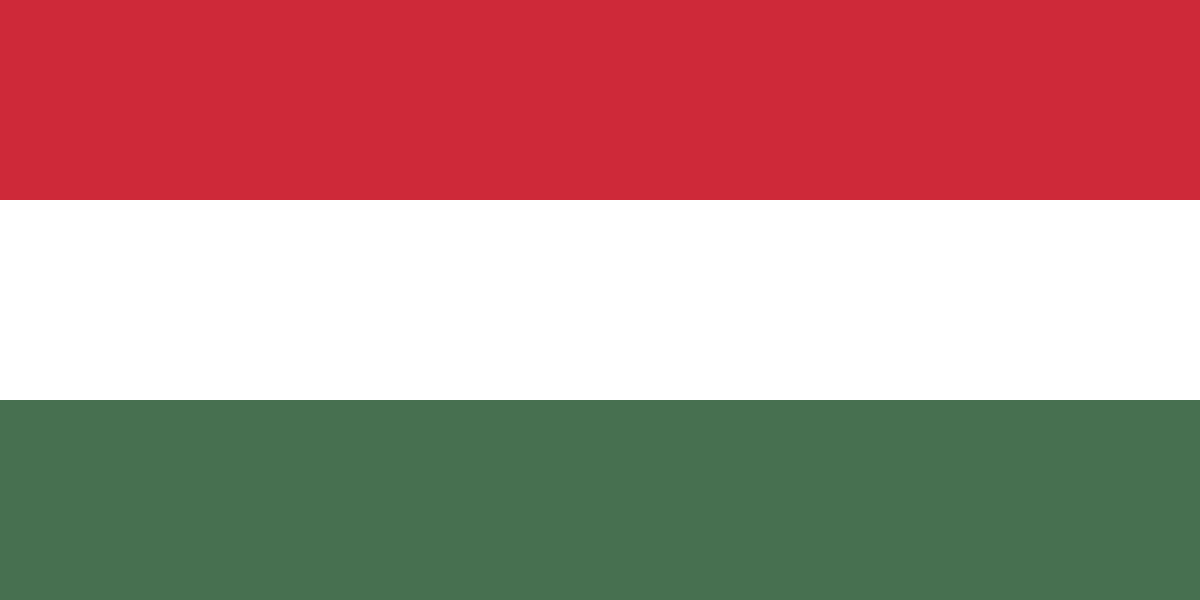
Not all countries share the same opinion regarding this Chat Control; however, Portugal is in the list of countries that think the control must be implemented. Portugal’s opinion has the support of other countries like Spain, Romania, Malta, Lithuania, Hungary, Ireland, France, Denmark, Croatia, Cyprus, and Bulgaria.
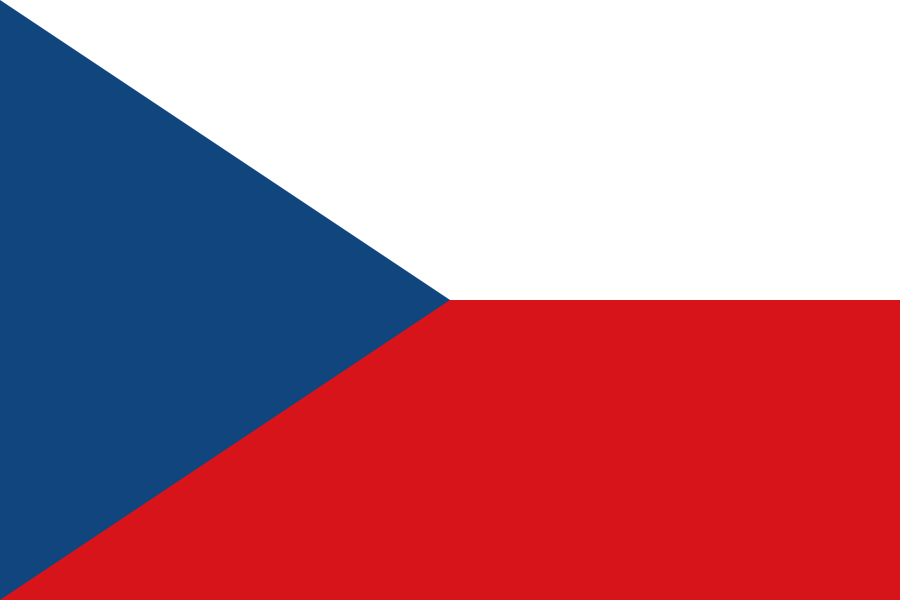
Against the measure are Slovenia, the Netherlands, Poland, Luxembourg, Germany, Estonia, Finland, the Czech Republic, and Austria. However, there are six countries that have not yet decided if they will approve the law, or not, being them: Belgium, Greece, Italy, Latvia, Slovakia, and Sweden.