


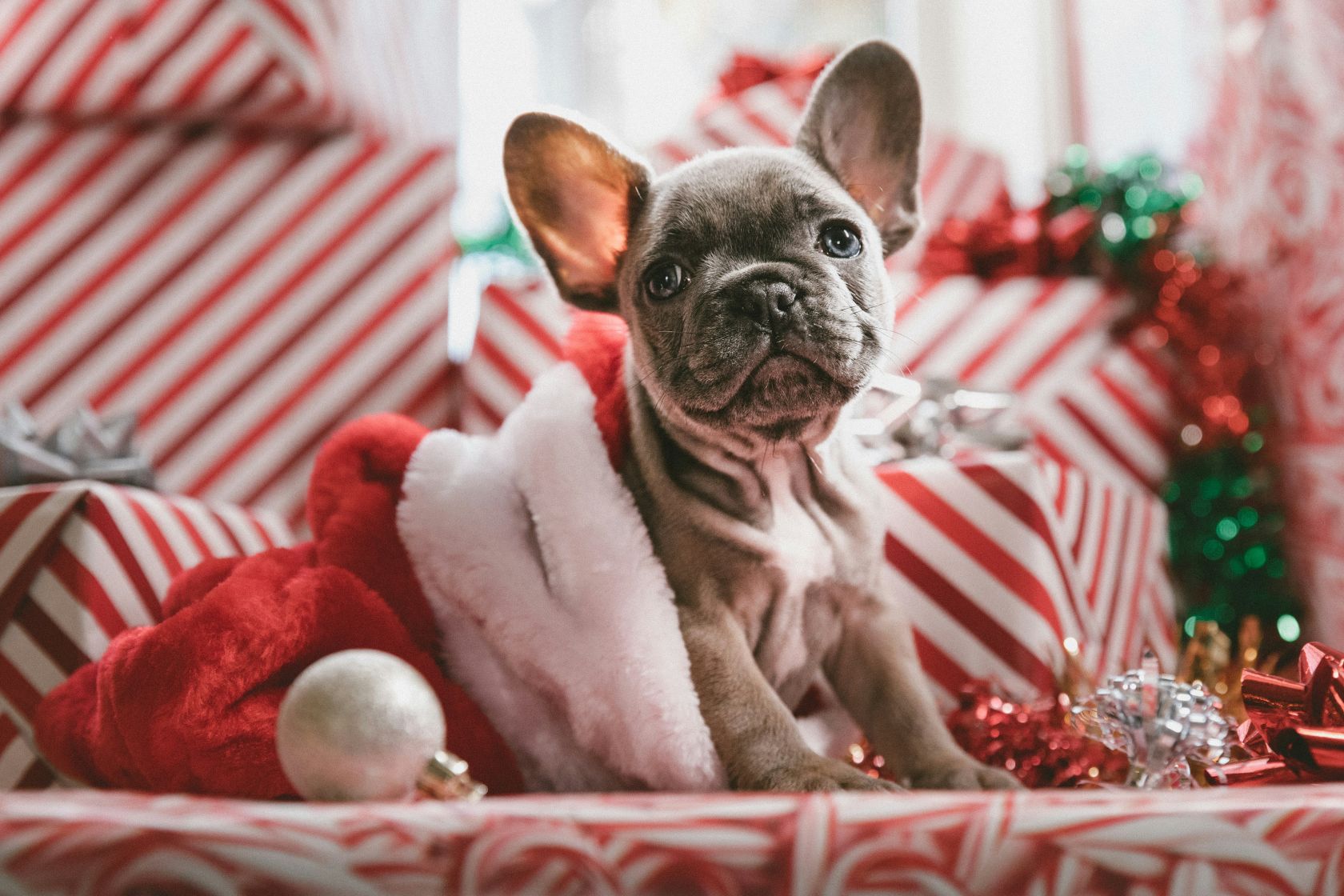
Try to see Christmas through the eyes of your pet for a minute, and see how disturbing it might be. It’s all exciting stuff to us and our families, but how confused pets - particularly dogs and cats - might find it.
Xmas Tree
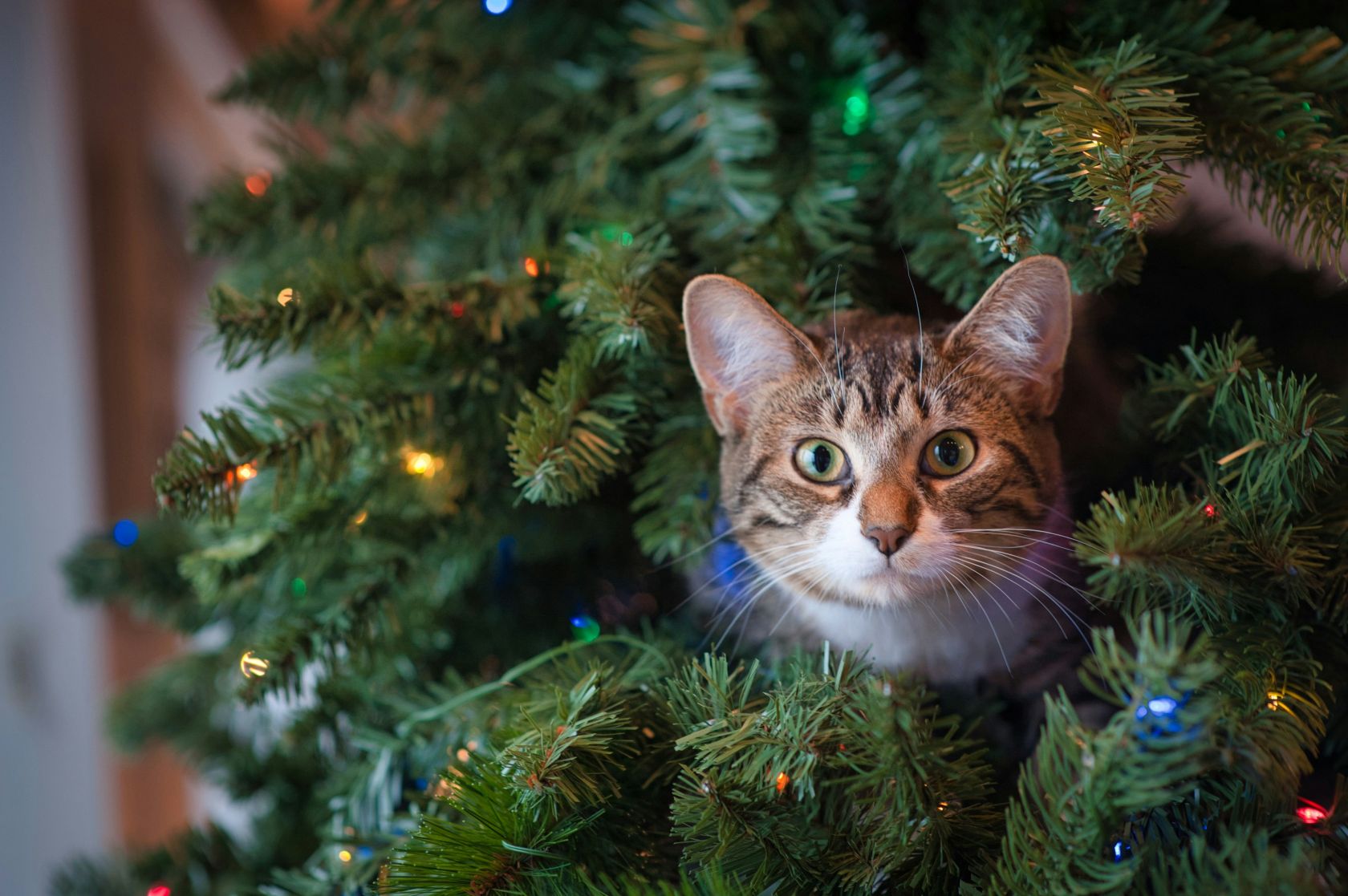
A tree, so familiar outside, is confusingly brought indoors, but heaven help them if they try to run up it. Many a Christmas tree has been felled by climbing cats or jumping dogs! It must deserve a smell at the very least, and those little toys swaying and shining on it are just begging to be attacked. Dogs in particular face a fate worse than death if they cock a leg and pee anywhere near it, chew or pull branches or try to steal any of those sweet treats temptingly dangling at head height.
Enticing parcels might be laid out, and after your animals have finally learned not to touch them, on The Special Day, another one is laid in front of them where they are expected to tear it apart for the treat they can smell inside it. Confusing to say the least.
Snow spray is popular for trees and window panes to simulate frost and snowflakes, but pets can be tempted to lick it off, which isn’t good. While the chemicals may be of low toxicity, they can cause a mild stomach upset (vomiting and diarrhoea are not welcome at Xmas!), and a large amount could lead to a dangerous intestinal blockage. And if you have a water-retaining tree stand, beware of pets drinking out of it, which could also be another stomach upset to deal with.
Extra people
Christmas for pets is a combination of different sights, smells and sounds, alongside the emotional energy of their humans all determining whether Christmas is a positive or negative experience for them, and a whole host of guests being either wonderful or stressful. The extra people around would guarantee my dogs going into hiding to view the whole procedure from the bushes, where they will linger until they perceive it safe to come indoors to lick a few plates! Cats can go either way – they may also go into hiding somewhere, but equally they might relish more laps to sit on, and ultimately enjoy the attention.
Keep up the normal routine
Changes in routine, unfamiliar people, noises and the decorations all might cause stress. Try to maintain their normal feeding, walking, and sleeping schedules as much as possible, and ensure their ‘safe space’ is accessible. Keep them away from potentially toxic plants (poinsettias, holly, mistletoe), and even tinsel – those slivers of shiny metallic foil. Unsuitable festive foods - including both chocolate and mince pies - shouldn’t be offered, or be within ‘steal’ range either! Let your guests know if you think your pet may be anxious and shouldn’t be approached, especially while they are eating or sleeping. Sometimes, ignoring them is the best policy to let them find their own level of comfort around strangers.
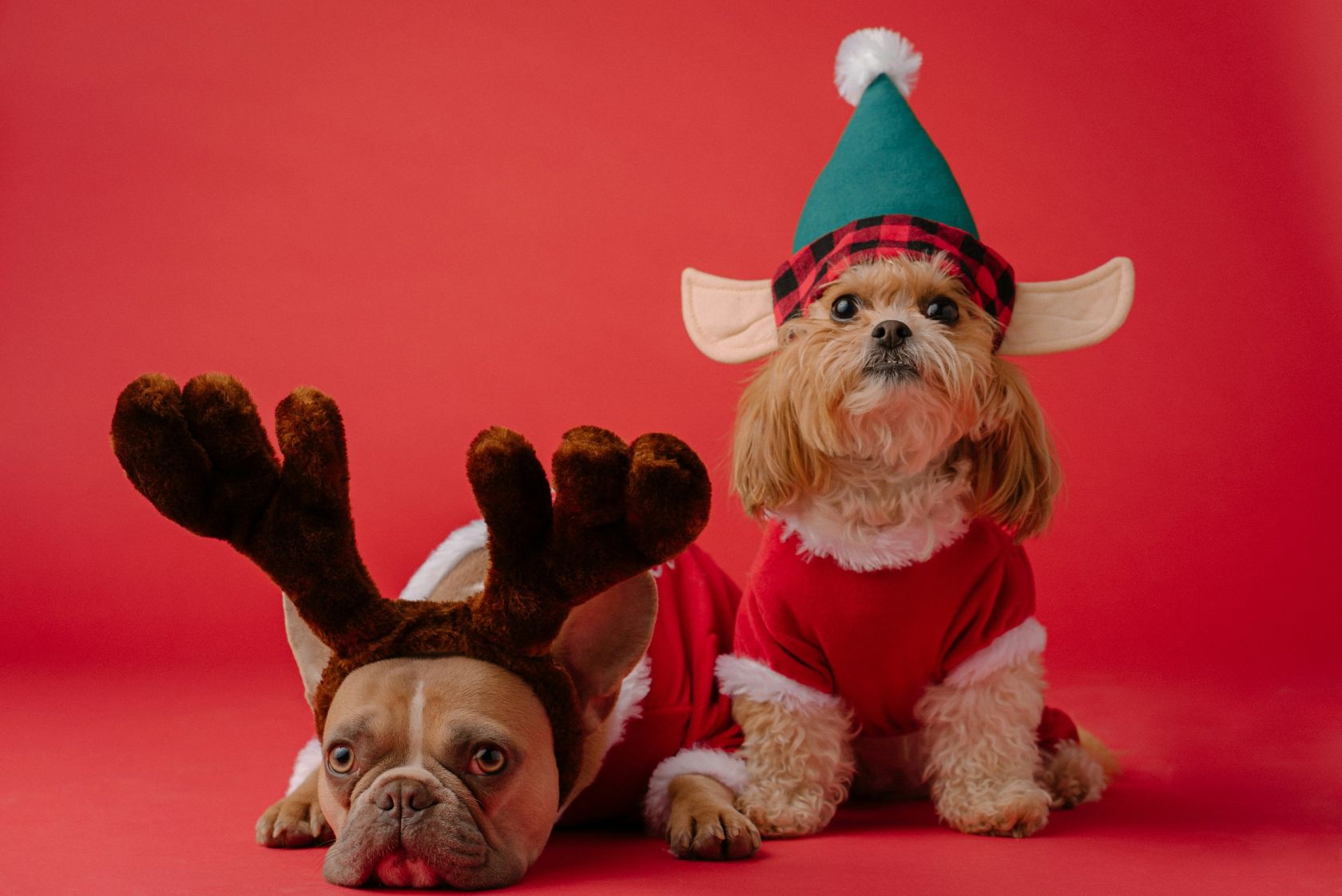
If children are involved, supervise gift-giving and any play with new toys - clear up wrappings promptly, as these can be hazardous if swallowed, and keep an extra close eye on any new puppies or kittens who might be experiencing Christmas for the first time.
Why a pet should not be a surprise gift
And talking of puppies and kittens, the term ‘a pet is for life, not just for Christmas’ should be heeded, and they aren’t generally recommended as a gift – surprise or otherwise. A pet is a lifelong undertaking that requires time, money, and energy for their whole lives. A surprise could be overwhelming for young children, who may not understand the essence of responsibility - and it all could end badly, with the poor creature ultimately being surrendered to a shelter.
Xmas Day food for your pets
There are plenty of Xmas tidbits that your pets can share in small doses – turkey, beef, fish (no ham) and most veggies, but nothing with onions or garlic, grapes or raisins - just don’t share it from the table!








 English
 Nederlands
 Deutsch
 Français
 Español
 Italiano
 Svenska
 Pусский
 中文
中文 Türkçe
 Português
 Polski
 عربي
عربي Suomi
Suomi עִברִית
 Português (Brasil)
Only human beings here.
By Colin Moss from Algarve on 22 Dec 2025, 11:46