


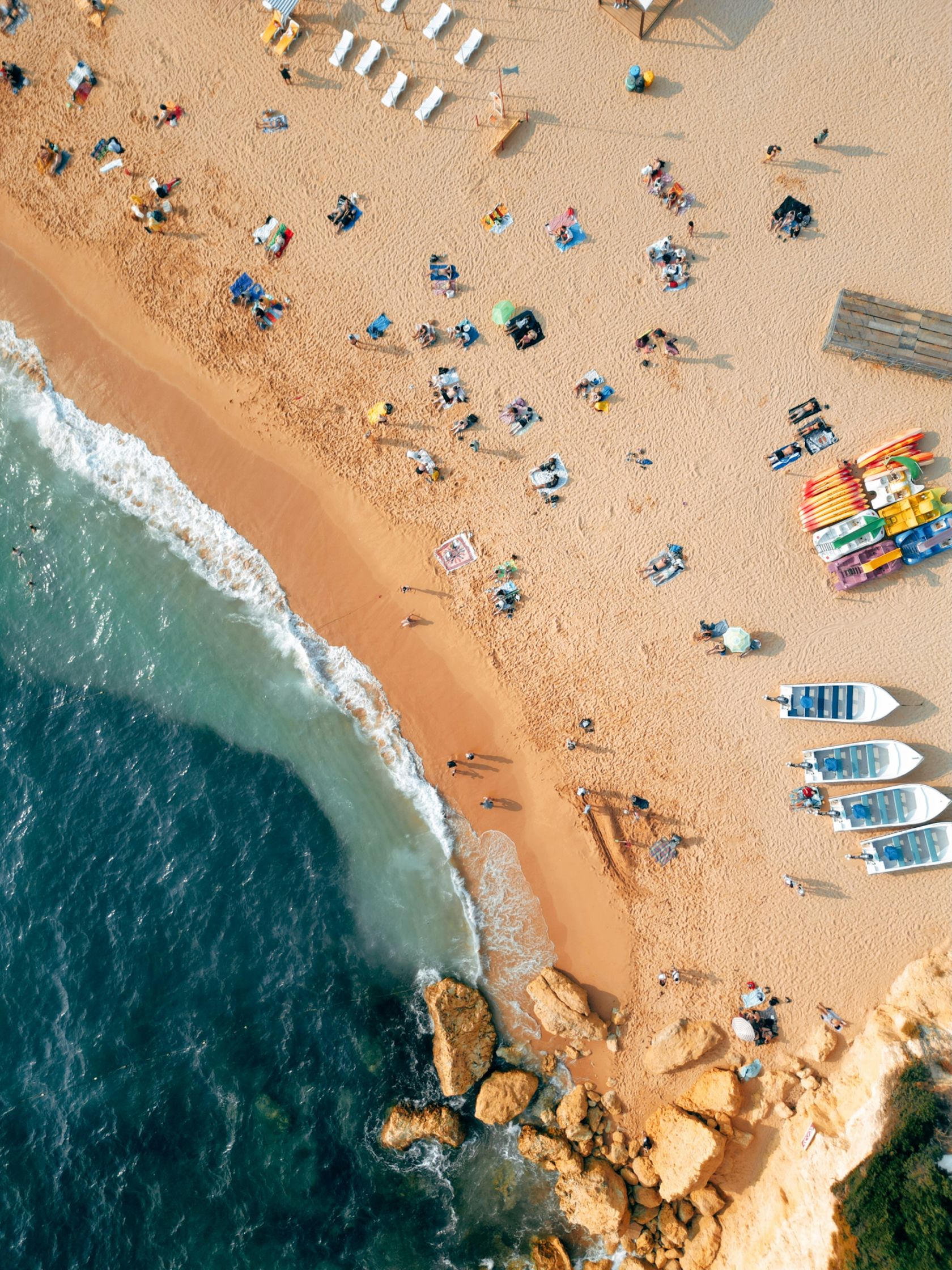
The intense storms that hit the Portuguese coast between January and February caused erosion and significantly altered the morphology of the sandy areas, modifying deep areas, slopes and the dynamics of the currents.
According to the Portuguese Federation of Lifeguards, these changes have completely altered the dynamics of the sea, aggravating hidden dangers and making the beaches more treacherous for bathers this season.
Rip currents continue to be the main cause of death by drowning in Portugal, being responsible for a large part of the 76 fatalities recorded in the last five years.
The National Maritime Authority (AMN) emphasises that although these currents are marked on guarded beaches, the risk is extreme in unguarded areas, where almost half of last year's deaths occurred. This danger is illustrated by the loss of two lives on unguarded beaches even before the official start of the season.
To mitigate these risks, the Navy will reinforce surveillance in unguarded areas with 25 vehicles, 6 quad bikes, and 62 military personnel, dynamically deployed as needed. Although complete coverage of the coastline and river beaches is only ensured by mid-June, municipalities such as Albufeira, Cascais, and the Madeira region guarantee surveillance from the first deployment.
To address the shortage of professionals, with an estimated 6,500 lifeguards needed nationwide, the hiring of foreign professionals has been used, with Fepons simultaneously advocating for the urgent creation of legal incentives and special statuses for students to ensure safety throughout the bathing season.
 Add as a preferred source on Google







 Portugal Handbook
 English
 Nederlands
 Deutsch
 Français
 Español
 Italiano
 Svenska
 Pусский
 中文
中文 Türkçe
 Português
 Czech
Czech Hungarian
 Polski
 عربي
عربي Suomi
Suomi עִברִית
 Português (Brasil)
Follow us on social media