


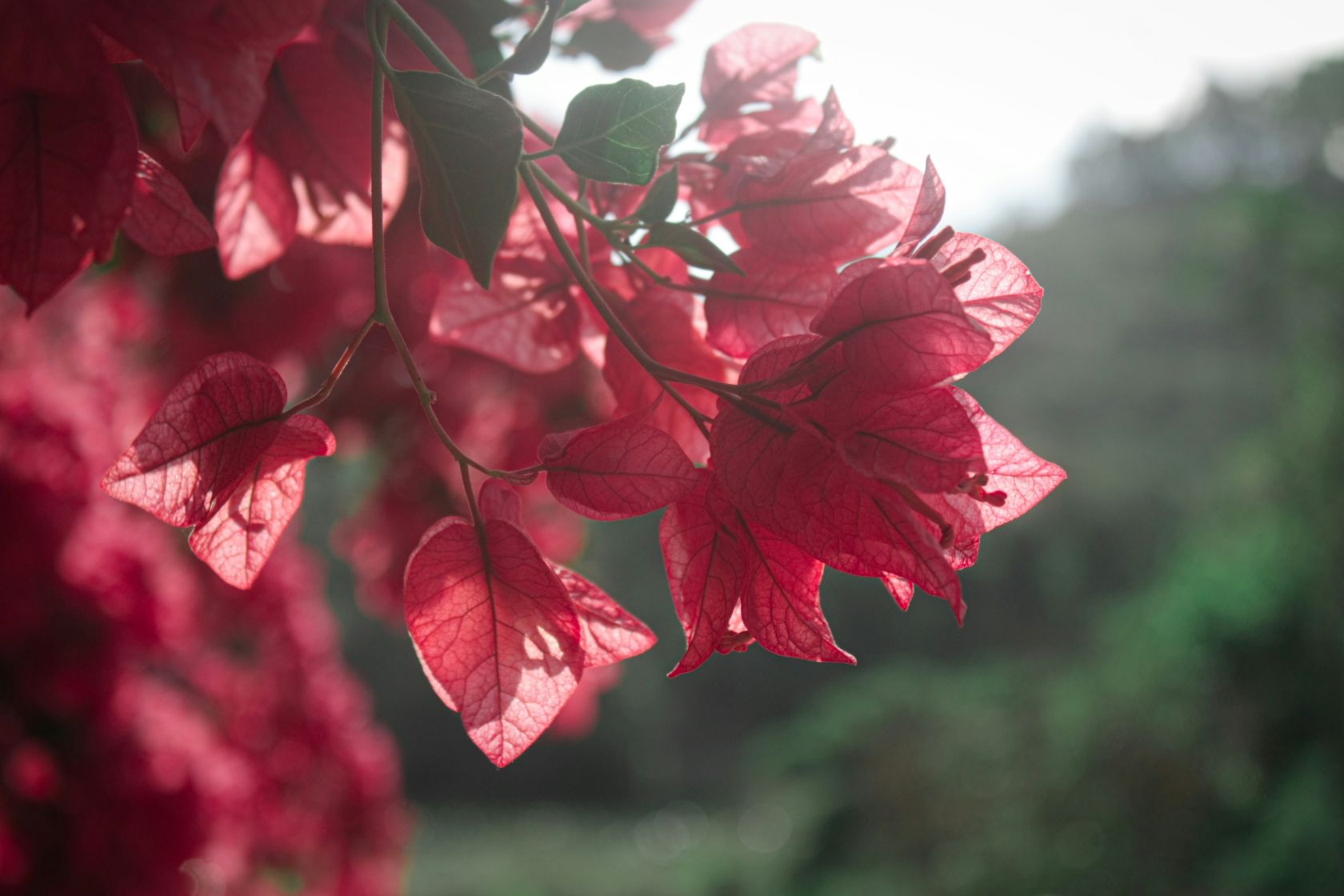
In this case, it isn’t a dance, but a small bougainvillaea, guaranteed to give colour to small spaces such as a balcony or a terrace where a full-sized bougainvillaea would be just too big. These bougainvillaeas are dwarf varieties that are small enough to be grown in pots and will give you a beautiful mass of blooms on your balcony, terrace or patio. If you love bougainvillaea but haven’t got much space, try growing a dwarf or miniature one.
Typically reaching a height and spread of only 1m to 1.5m, they are easy to maintain and are often marked as ‘mini bougainvillaea’ if you go looking for one. Some can be pruned to a more controlled shrub, and when potting them up, it’s always better to use a good-quality potting mix that’ll provide good drainage, and some slow-release fertiliser to keep them happy. Position them in full sun, as they’ll bloom less in part-shade.
Showy Blooms
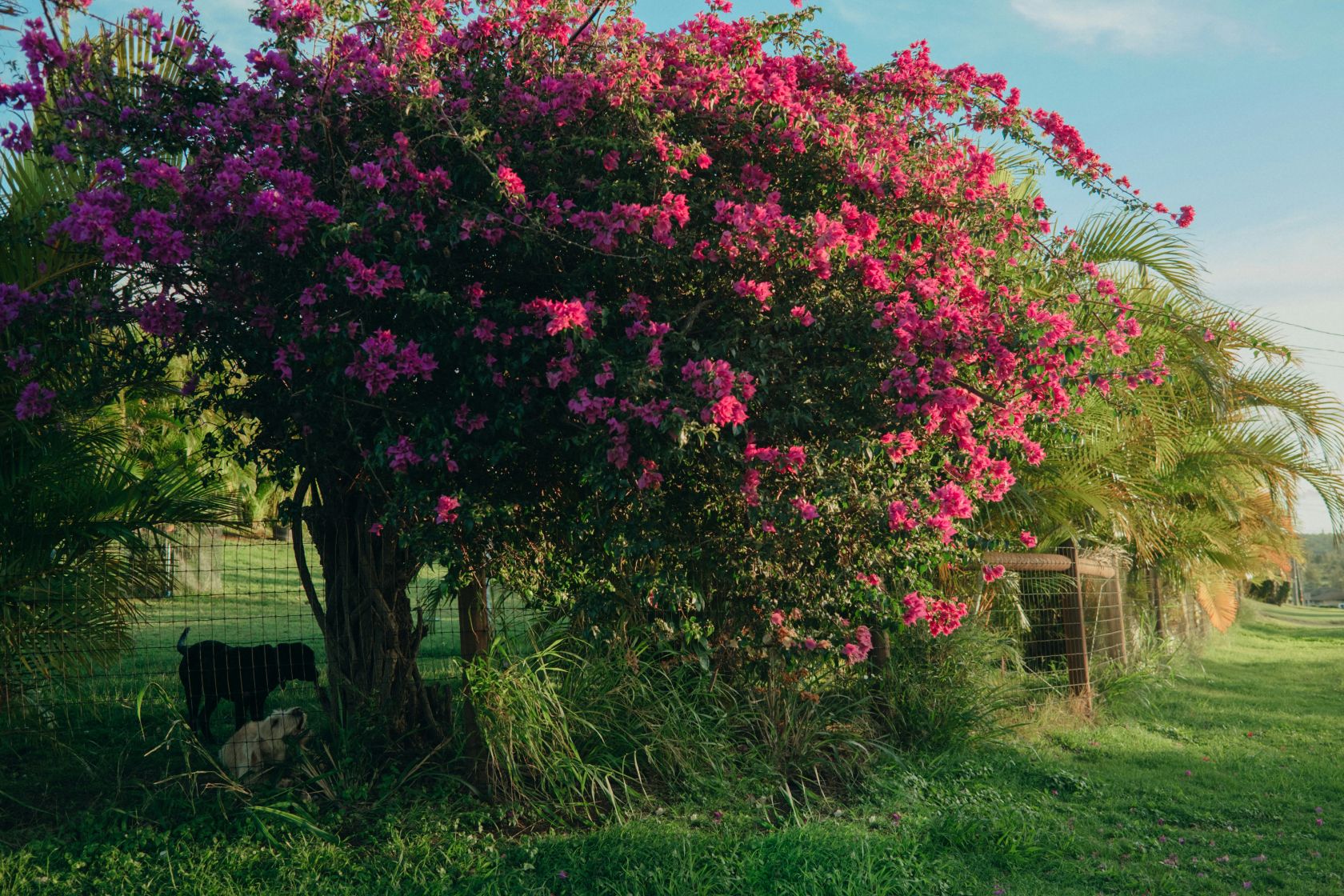
Bougainvillaea, from within a genus of around 18 species of shrubs, vines, or small trees, belongs to the Nyctaginaceae family, is native to eastern South America, and is found in Brazil, Peru, and southern Argentina. These diminutive bougainvillaeas are just as flamboyant as the larger varieties and are available in a wide range of colours, but will stay small and compact. And exactly the same as their full-size relatives, the showy colourful blooms on the bougainvillaea aren’t actually the flowers at all, but are brightly-coloured ‘bracts’ – or modified stems, that surround and protect the tiny white flowers found in the centre. Most species are thorny, but a feature of dwarf varieties is that the thorns – which are found on the stems – are smaller and not as sharp as the full-sized ones, or might even be non-existent. Bract colour ranges from shades of pink and purple to yellow, orange and white.
A few to look for
One true dwarf is ’Helen Johnson’ and reaches a height of around 1m with a profusion of coppery bracts that mature to bright pink blooms with a tinge of purple. It prefers either full sun or light shade and grows best in acidic, well-drained soil. To keep it in shape, prune lightly after blooming.
‘Sunvillea Rose’ produces brilliant pink or magenta bracts and will continue to bloom throughout the summer. Reaching heights of around 1m with a spread of ½m to 1m, it is evergreen in frost-free areas. It prefers full sun and requires only occasional watering.
Slightly larger, ‘Imperial-Delight’ is a showy white variety that turns delicate pink at maturity, creating the illusion of bicoloured flowers. They produce the showiest display of colour in the spring and early summer, but they do repeat blooming throughout the year. This variety can reach heights of 3m to 6m but can be easily maintained to a size of 1½m to 2½m with light pruning.
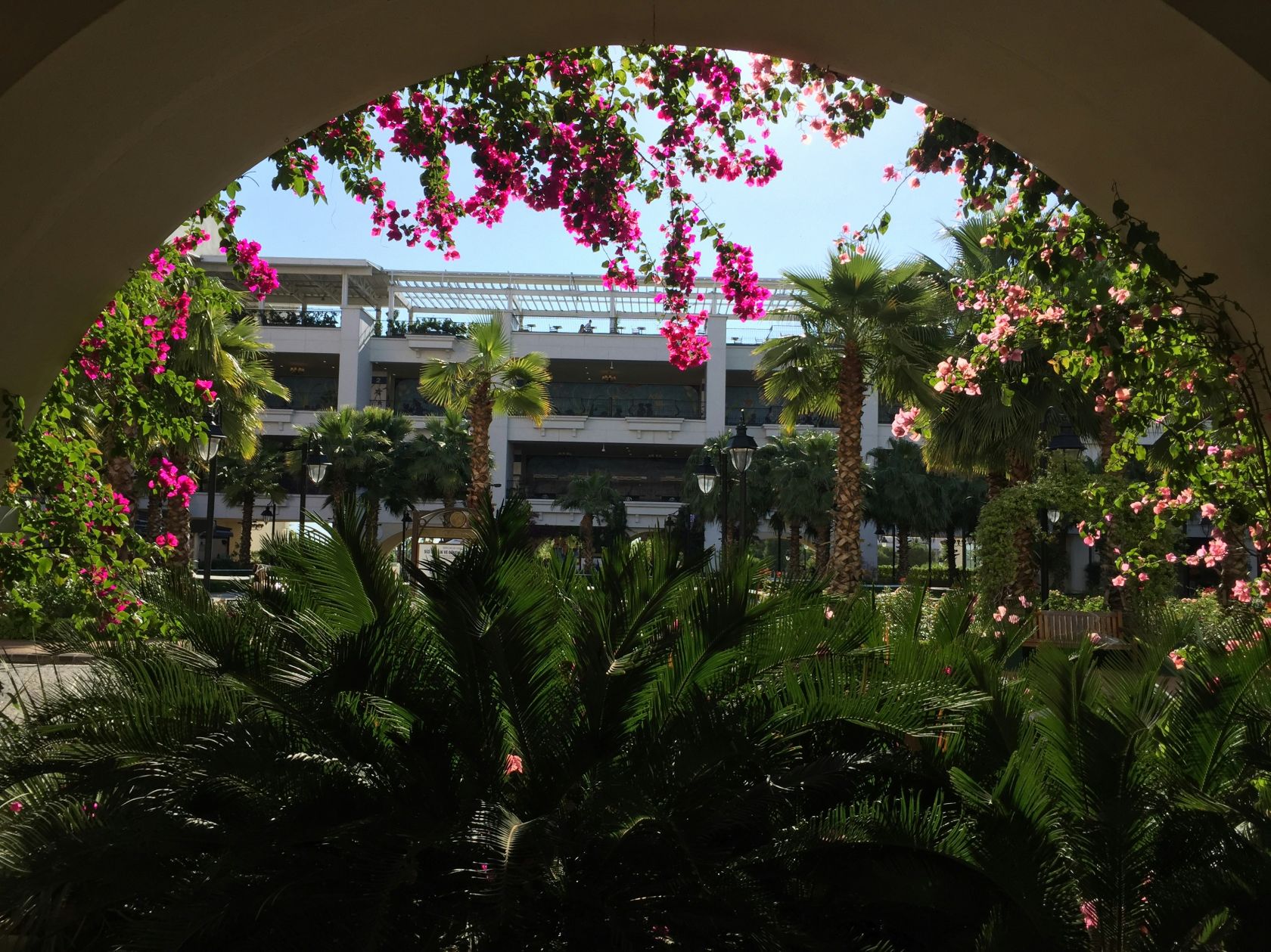
A thornless variety, ‘Miss Alice’, is known for its brilliant white clusters of flowers and semi-dwarf size, reaching a mature height of around 1m tall. ‘Singapore Pink,’ a sister variety of ‘Miss Alice’, is semi-thornless, with pale pink blooms.
Transplant Shock
Bougainvillaea perform well in relatively small containers where their roots are slightly restricted. When the plant eventually grows big enough to need repotting, move it to a container only one size larger, and use a regular potting soil with a low level of peat moss, as too much peat retains moisture and may result in root rot. But beware, all bougainvillaea, whether large or small, are highly sensitive to repotting and often suffer from transplant shock if their roots are disturbed. They possess delicate, thin root systems that do not tolerate having the root ball broken or teased, so take great care not to damage this when repotting. They will love your sunny balcony, but won’t do so well in strong winds, particularly in coastal areas, which can break branches, damage delicate flowers, and damage roots.
So good luck with growing your ‘dwarf boogies’ - they may be small, but the pleasure will be massive!
 Add as a preferred source on Google







 Portugal Handbook
 English
 Nederlands
 Deutsch
 Français
 Español
 Italiano
 Svenska
 Pусский
 中文
中文 Türkçe
 Português
 Czech
Czech Hungarian
 Polski
 عربي
عربي Suomi
Suomi עִברִית
 Português (Brasil)
Follow us on social media