


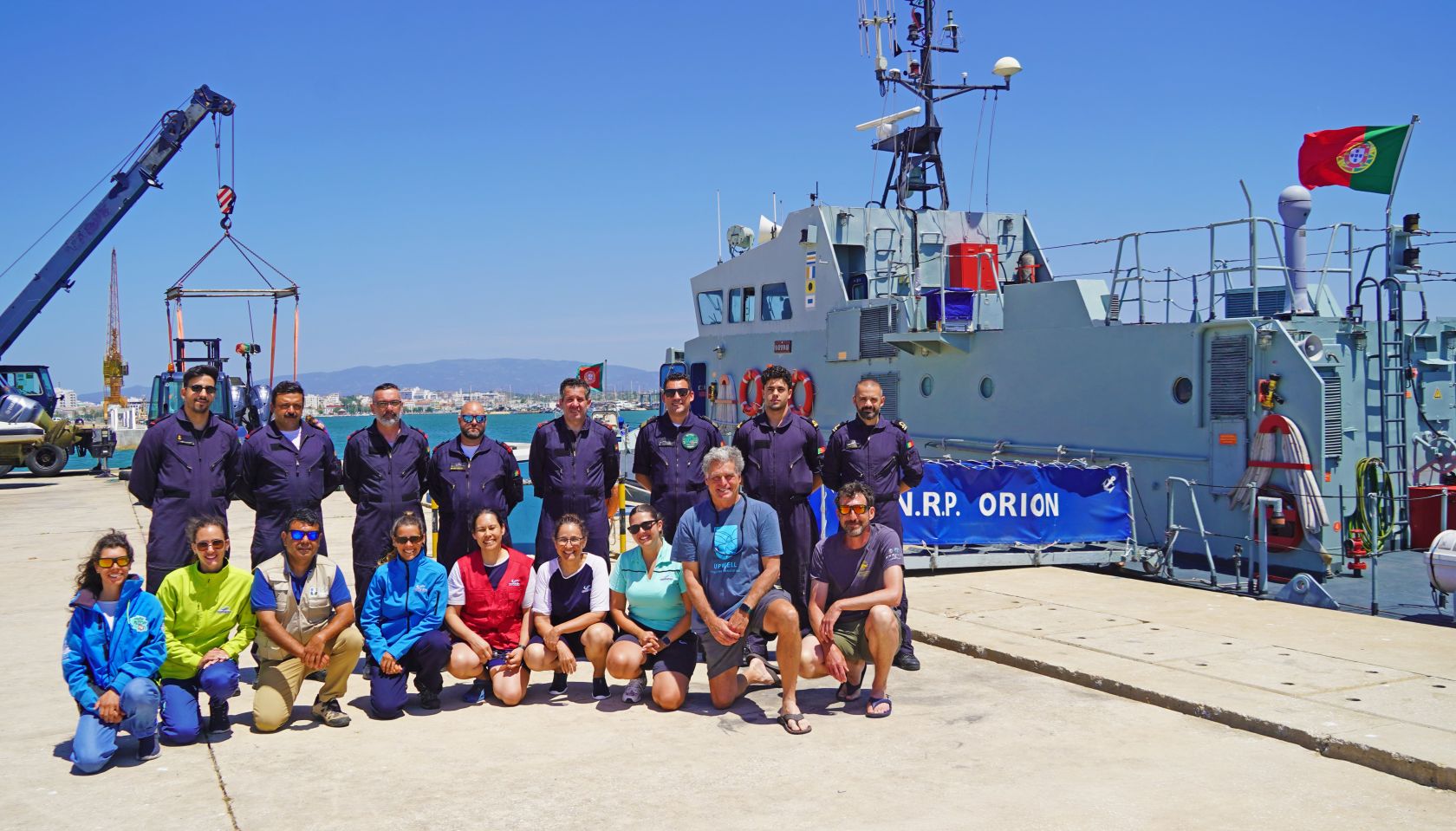
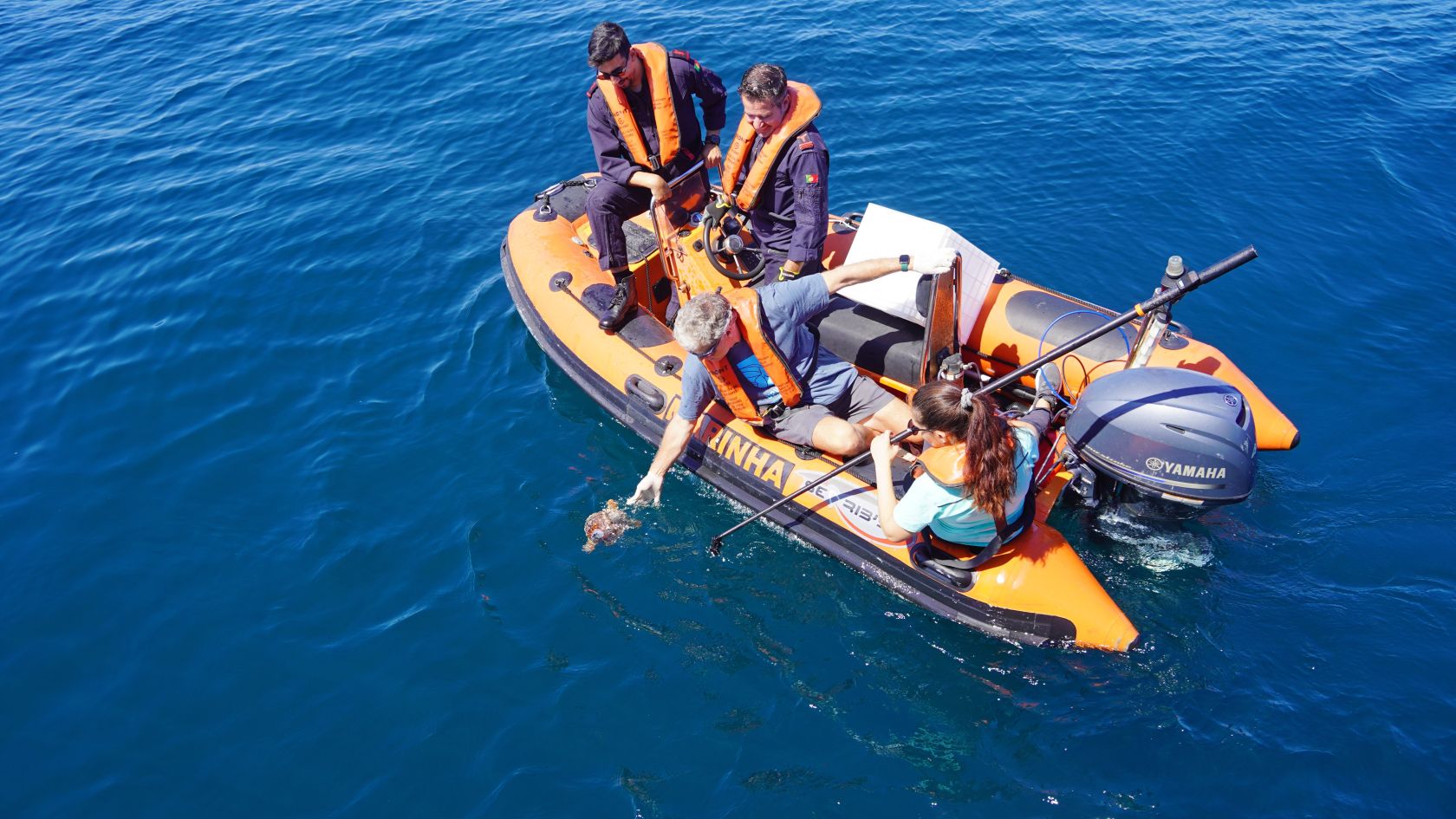
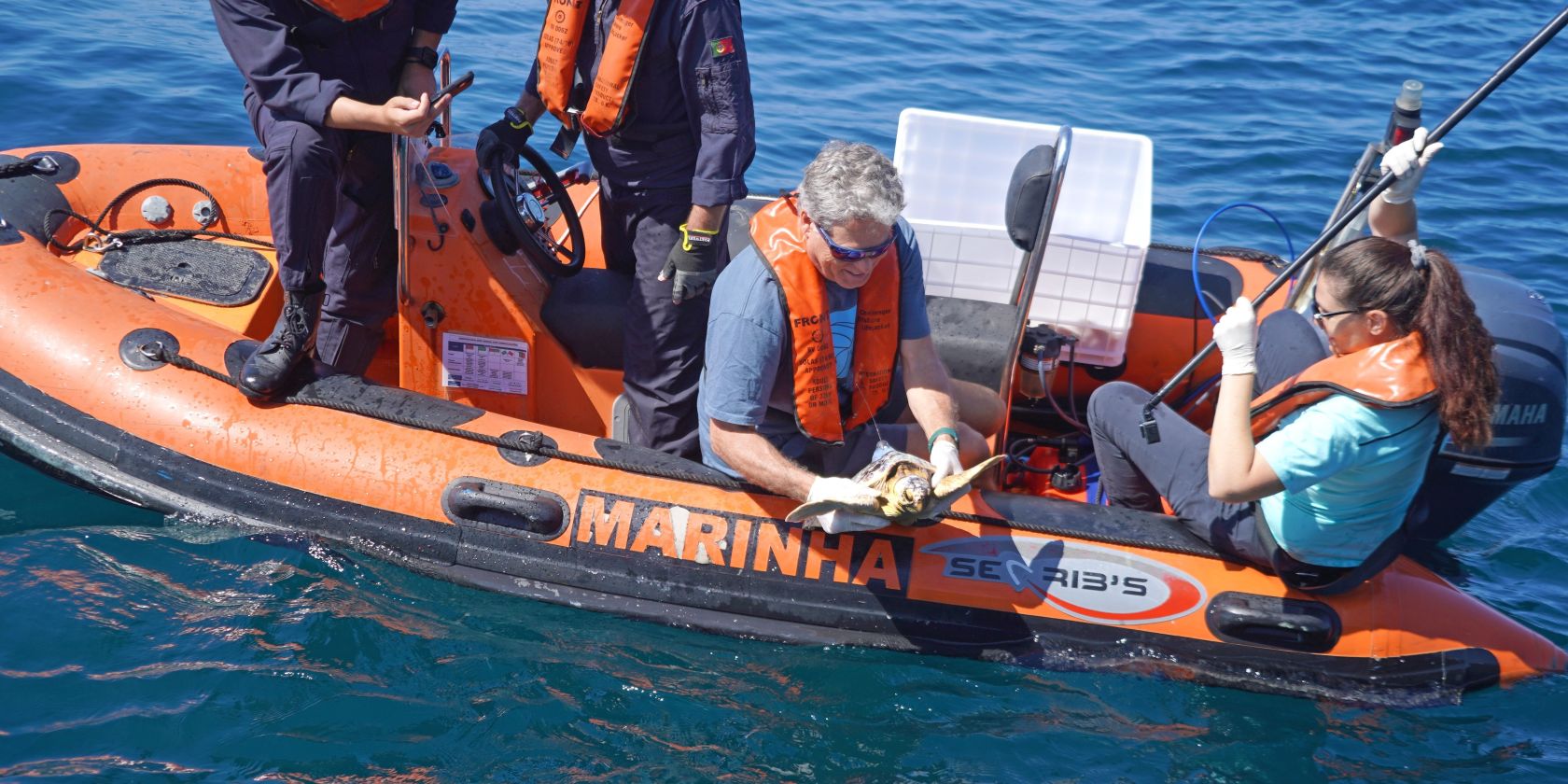
The release, led by Second Lieutenant Farinha Martins aboard the NRP Oríon from the Portimão Naval Support Point on Thursday, 11 June, took place about 6 nautical miles off the Algarve coast, outside major fishing areas to ensure the turtles’ safety and survival.
The six turtles, Xena, Xerém, Xerazade, Xénia, Xamã, and Frankie, each embody stories of resilience and survival along the Atlantic. Five out of the six turtles were rescued from the Portuguese coast in a weakened state, while Frankie was first rescued near Ireland and later transferred to the Algarve facilities to join this release into warmer, species-appropriate waters.
Arriving rehabilitation centre
On arrival at the rehabilitation centre, the animals showed extreme malnutrition, traumatic injuries, respiratory and digestive problems, and evidence of plastic ingestion.
Among the most notable recovery cases is Xena, who was found stranded on the rocks of Praia da Mareta, in Sagres, with multiple bodily wounds, exposed bone tissue, and serious pulmonary alterations. Over four months of hospitalisation, the turtle recovered physically and saw her weight increase from 2.9 kg to 4.7 kg.
Overcoming adversity
Another example of overcoming adversity was Xerém. Xerém was rescued on São Torpes Beach in Sines, with a healed amputation of her right front flipper and plastic fragments in her intestinal tract. Despite having only three limbs, the animal demonstrated an excellent capacity for mechanical adaptation, progressing from 870 grams to 1.4 kg.
Xerazade was collected on Malhão Beach, in Vila Nova de Milfontes. Xénia was detected floating unresponsive off Porches, Lagoa. Xamã was rescued by the AIMM Portugal association due to buoyancy problems.
Clinical progress
All three also showed robust weight and clinical progress. Frankie, who had been admitted to a facility in Ireland in November 2025, had pneumonia and dehydration. He completed his final rehabilitation at the Porto d'Abrigo starting in May and reached 4.7 kg and a carapace length of 30.1 centimetres before returning to the sea.
Sense of accomplishment
Antonieta Nunes, veterinary nurse and head of the Zoomarine Porto d'Abrigo, emphasised the team's sense of accomplishment. She also highlighted the importance of institutional cooperation between citizens, scientists, and authorities in safeguarding these endangered species.
In agreement, the Commander of the Southern Maritime Zone, Commander Conceição Dias, praised the long-standing partnership with Zoomarine. He classified the joint mission as a remarkable example of protecting marine natural heritage and preserving ocean biodiversity for future generations.
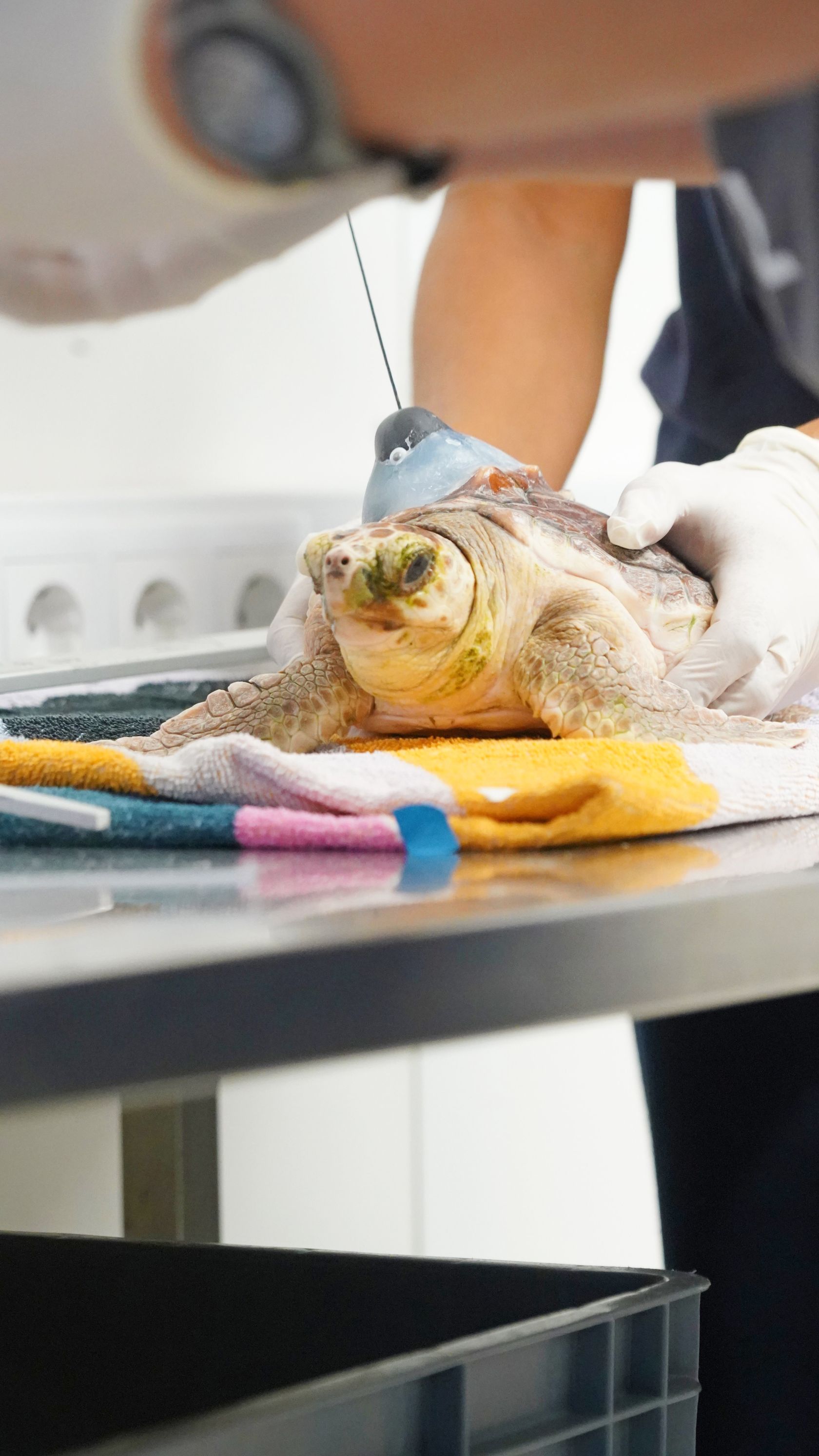
From a scientific and post-release monitoring perspective, the operation had a high technological component. Before contact with the water, all turtles were individually identified by inserting microchips into their front flippers.
Additionally, in an action involving the collaboration of researchers Frédéric Vandeperre from the COSTA project at the University of the Azores and George Shillinger from the international organisation Upwell, ultralight satellite transmitters were installed on the animals' shells.
These non-invasive devices communicate directly with the ARGOS satellite system. This allows the scientific community to map migratory routes, identify preferred habitats, and collect environmental data in real time.
The transmitters are programmed to detach naturally as shells grow and marine life deteriorates.
 Add as a preferred source on Google







 Portugal Handbook
 English
 Nederlands
 Deutsch
 Français
 Español
 Italiano
 Svenska
 Pусский
 中文
中文 Türkçe
 Português
 Czech
Czech Hungarian
 Polski
 عربي
عربي Suomi
Suomi עִברִית
 Português (Brasil)
Follow us on social media