


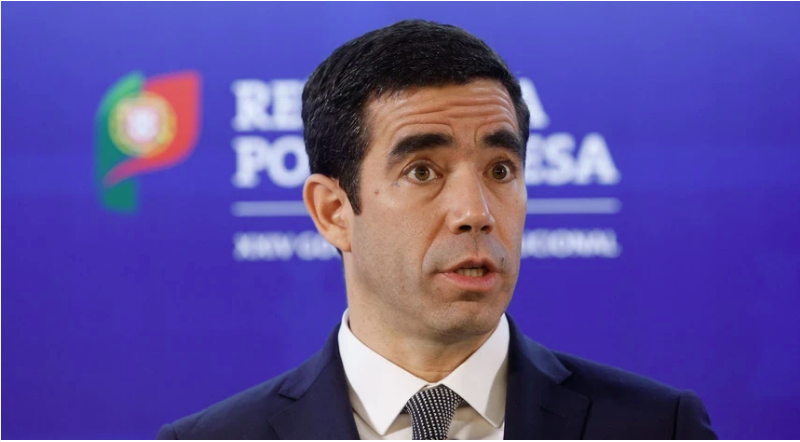
"If the Government had not, at the beginning of the summer of 2024, ended the expression of interest and then regulated the other flows, today we would be talking about a reality in which the immigrant population would represent 20% of the total population," said António Leitão Amaro, on the sidelines of the opening session of the conference 'Libraries and Local Power: citizenship, networks and future', at Torre do Tombo, in Lisbon.
The Minister of the Presidency's reaction came in the wake of the publication of INE data, which updated the number of residents in Portugal to 11,424,031 people, thanks to the inclusion of 1,597,539 foreign nationals.
In 2024, instead of 1.6 million foreign residents, INE had counted only 177,557 people.
António Leitão Amaro reiterated that the Government did not govern based on perceptions, stressing that "it was right in its description of reality," also denying that there was an exodus of the population.
IBGE also revealed today that it will review all 'per capita' indicators, such as Gross Domestic Product (GDP), employment, or issues related to justice, education, or health, with the Minister of the Presidency saying that, "if in 2023, after all, the evolution and GDP 'per capita' grew less than was being said, in 2025 GDP 'per capita' rose more."
"The economy is in a phase, in 2025 and after the various policies that this Government introduced in various areas, growing more per person than it was growing before," he added.
According to the INE, the previously released data has been updated, concluding that, “between 2021 and 2025, the resident population increased by 824,914 people, with the years 2022, 2023 and 2024 standing out, in which exceptionally high migratory flows were observed, resulting in population increases”, respectively, of 330,000, 275,000 and 183,000 people.
On the other hand, “demographic ageing in Portugal continued to intensify, although mitigated by the relative increase in the working-age population” and in 2025, the ageing index reached almost double the number of elderly people than young people, “19 elderly people for every 10 young people”, when in 2021 the values were 18 per 10.
 Add as a preferred source on Google








 Portugal Handbook
 English
 Nederlands
 Deutsch
 Français
 Español
 Italiano
 Svenska
 Pусский
 中文
中文 Türkçe
 Português
 Czech
Czech Hungarian
 Polski
 عربي
عربي Suomi
Suomi עִברִית
 Português (Brasil)
Follow us on social media