


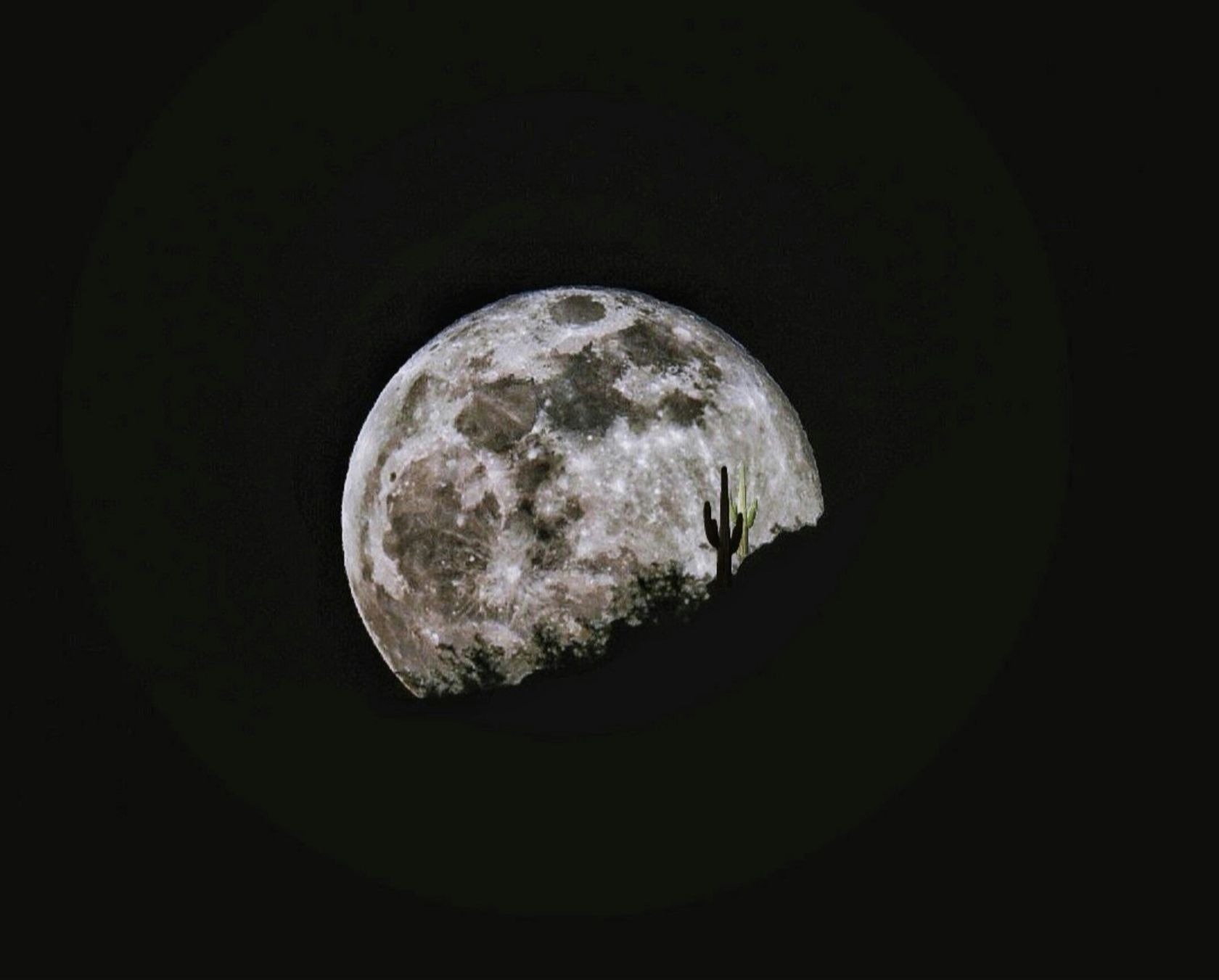
It is on 29 July that the Deer Full Moon reaches its peak, offering a spectacle that can be seen with the naked eye. Although the peak occurs in the afternoon, in Portugal the Moon will rise above the horizon at dusk, providing the best conditions for taking photographs and enjoying the phenomenon.
In addition to the brilliance characteristic of a Full Moon, the phenomenon is also notable for the symbolism behind its name. The name stems from ancient traditions linked to nature and the visual effect of the Moon’s rise, which will appear much larger when it rises close to the horizon.
Peak in the afternoon
The July Full Moon will reach its peak on 29 July at 15:36 in mainland Portugal. However, this merely corresponds to the moment when the Moon is fully illuminated from an astronomical perspective.
For those who are curious and wish to observe the phenomenon, there is no need to do so at the exact time mentioned, as the Moon will remain in these astronomical conditions until 30 July.
Best time for observation
In the Lisbon region, the Moon is expected to rise at 9.03 pm, and it is precisely at that moment that the Moon will appear larger than usual, particularly near the horizon. The phenomenon is known as the lunar illusion and results from an optical effect caused by how the brain perceives the Moon alongside human or natural features of the landscape.
As it rises higher in the sky, the Moon returns to its usual size, retaining only the normal brightness of the full moon phase.
The Deer Moon phenomenon
The name ‘Deer Moon’ originates from the indigenous peoples of North America and is linked to the growth cycle of young male deer.
It is at this time of year that the antlers of male deer grow most rapidly, following an early summer during which the antlers retain a soft layer, full of blood vessels, which gradually hardens by the end of July.
Thus, the name of this astronomical phenomenon is not linked to a physical change in the Moon, but rather to the time of year when another natural phenomenon occurs.
A much-anticipated spectacle
The combination of the full moon’s intense brightness, the visual effect of its rise near the horizon, and the historical symbolism associated with its name makes this night a special opportunity to observe the sky.
Although it is not the same as a supermoon, the Stag Moon is one of the most eagerly awaited astronomical phenomena of the year.
Provided the weather is favourable, the Portuguese will be able to see this natural spectacle with the naked eye, and it is expected to remain visible until 30 July.
 Add as a preferred source on Google







 Portugal Handbook
 English
 Nederlands
 Deutsch
 Français
 Español
 Italiano
 Svenska
 Pусский
 中文
中文 Türkçe
 Português
 Czech
Czech Hungarian
 Polski
 عربي
عربي Suomi
Suomi עִברִית
 Português (Brasil)
Very interesting choice sending this out in a newsletter on the 30th...
By Jon Sigurd Smith Johnsen from Lisbon on 30 Jul 2026, 16:35