


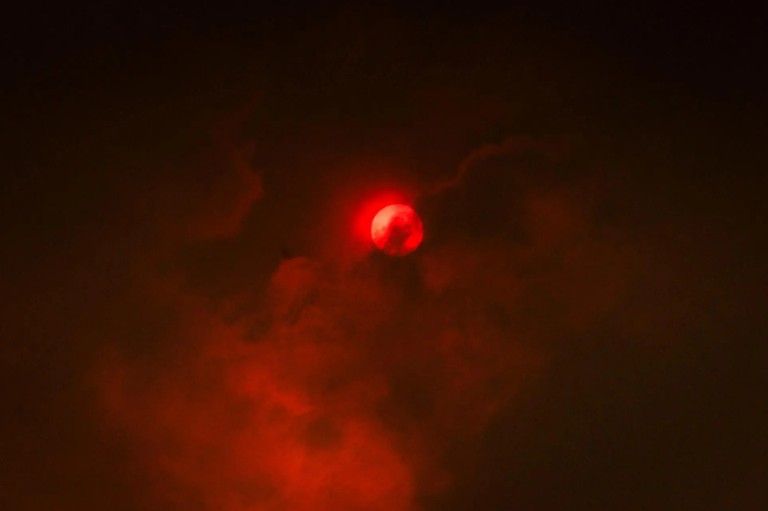
“During the night we had about 70% of the fire perimeter consolidating and 30% yielding to the firefighting resources. During the morning [30 July] we established a strategy supported by the use of 12 aerial resources that could not be implemented, that could not operate, for safety reasons,” Commander Luís Araújo told Lusa.
In a situation update at 1:50 pm, the officer said that resources were being positioned and reinforced, at a time when five aerial resources were already fighting the flames.
“We are now positioning resources, reinforcing the theatre of operations with ground resources and trying to deploy aerial resources and trailing machines, looking for a window of opportunity that is taking time. Probably, when it appears, the effect that allows aerial resources to act will create very complex conditions for us, from a meteorological point of view, with high winds that will take the fire back to where we managed to contain it last night,” he warned.
In a provisional assessment of the burned area, the second regional commander of Emergency and Civil Protection of the North said that, at the time, it will be “above six thousand hectares”.
A source from the Vila Real Territorial Command of the GNR (National Republican Guard) stated that at 2 pm there were no roads closed or cut off to traffic in the area of the fire.
The information available on the website of the National Emergency and Civil Protection Authority (ANEPC), at 2 pm, mentions that 788 personnel, 258 land vehicles and eight aerial resources were mobilised at the site of the rural fire.
The fire started in Ervões, in the district of Vila Real, around 3 pm on 28 July, and more than a day later it crossed the Rabaçal River and reached the municipality of Mirandela.
The fire has already caused damage to at least 21 houses, an agricultural warehouse, two industries, and left five people injured.
 Add as a preferred source on Google







 Portugal Handbook
 English
 Nederlands
 Deutsch
 Français
 Español
 Italiano
 Svenska
 Pусский
 中文
中文 Türkçe
 Português
 Czech
Czech Hungarian
 Polski
 عربي
عربي Suomi
Suomi עִברִית
 Português (Brasil)
Follow us on social media