


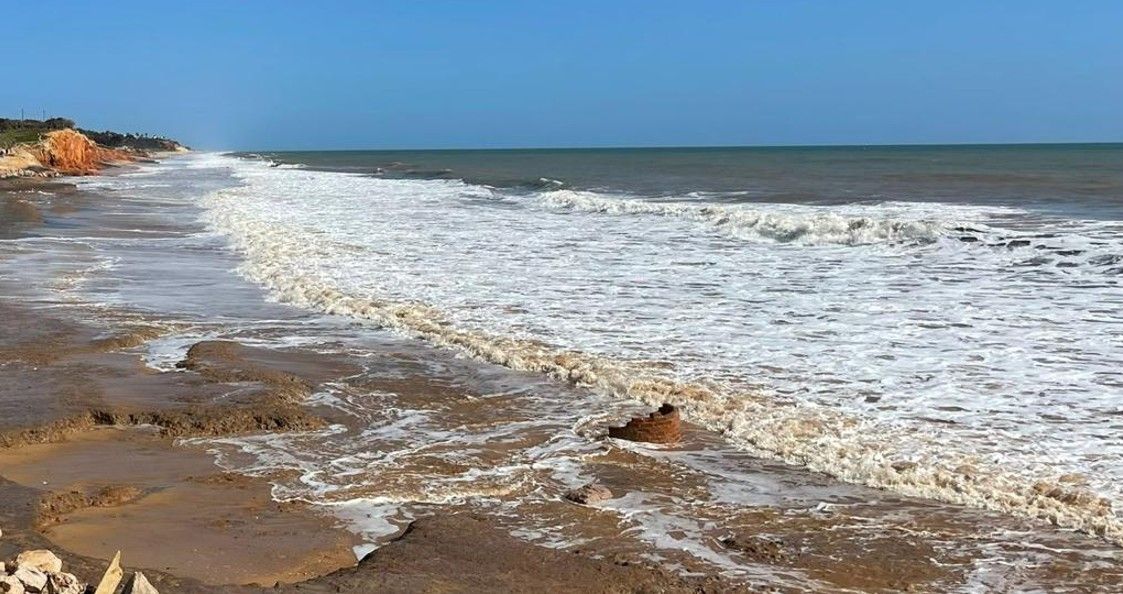
“The most urgent ones have been done. They were done before the summer season. There are several works that were considered not so urgent that will continue,” Maria da Graça Carvalho told reporters, recalling the previously defined schedule.
Among the most urgent works already completed, the Minister highlighted the works in Quarteira, municipality of Loulé and district of Faro (€15 million) and on the Costa da Caparica (€10 million), in the municipality of Almada, district of Setúbal.
Asked about the report released on Thursday by the State Environment Agency, according to which “41% of the monitored beaches have recovered or exceeded the average values of width and sediment volume, while 59% remain below these reference values, evidencing the persistence of sediment deficits in a significant part of the analyzed locations”, the Minister clarified that there are works planned until 2028, with funding from the Operational Program for Climate Action and Sustainability 2030.
“We expect most of them to be executed next year. But this year we have already done a lot, and those who go to the beaches can already see it. Someone said that I was very concerned about giving the Portuguese people a good summer and I am,” she said.
There are less priority interventions with lower associated costs underway, including the one on Algodio beach, in Ericeira, in the municipality of Mafra (Lisbon district), which she visited.
“That is one of the ones that worried us the most, and now it will be much safer,” she stressed.
In addition to "remedying past mistakes," the Minister explained, the works aim to "provide greater safety to all the houses that are on top of the cliff" and to those who frequent the beach.
The intervention, which began in May, costs €1.1 million and is expected to be completed in October.
In the south of the country, after the emergency intervention to replenish sand on the Algarve beach of Fuseta, another "more structural" one is planned from October onwards, with an investment exceeding "one million euros."
The Minister of the Environment stressed that the works, in addition to ensuring safety conditions on many beaches, are essential to attract tourists and thus contribute to the local economy.
The storms that hit the mainland for about three weeks, between the end of January and February of this year, caused at least 19 deaths and several hundred injuries, displaced and displaced people, causing the total or partial destruction of thousands of homes, businesses and equipment, the fall of trees and structures, the interruption of energy, water and communications, floods and inundations, with losses of billions of euros.
The municipalities in the Central, Lisbon and Tagus Valley and Alentejo regions were the most affected.
 Add as a preferred source on Google





 Portugal Handbook
 English
 Nederlands
 Deutsch
 Français
 Español
 Italiano
 Svenska
 Pусский
 中文
中文 Türkçe
 Português
 Czech
Czech Hungarian
 Polski
 عربي
عربي Suomi
Suomi עִברִית
 Português (Brasil)
Good news that works have been completed for the summer period. It's just shifting sand. Loads of it. But what is being done to prevent the effects of the next period of storms? I suspect very little. With climate change increasing the likelihood of more and stronger events I suspect that will continue to spend millions just shifting the sand again - and again.
By David Clark from Algarve on 10 Aug 2026, 05:58