


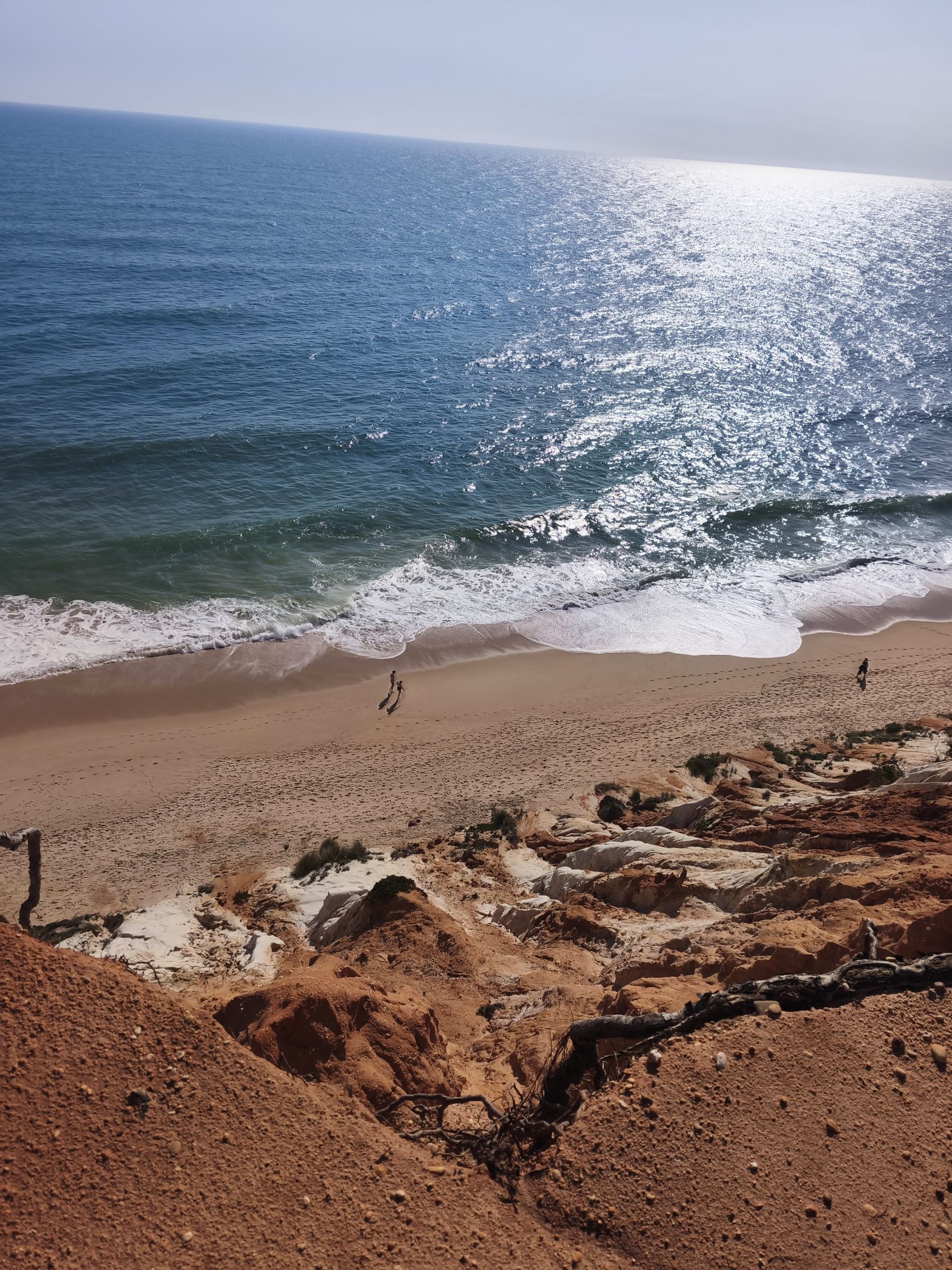
The Portuguese coastline is increasingly exposed to erosion, rising sea levels and urban development pressure, with thousands of people and several coastal areas at risk in the coming decades.
The report “Destruction All Along the Coast – A Portrait of a Portuguese Coastline at Risk” estimates that 40 per cent of Portugal’s beaches could disappear by 2100, whilst also warning of the effects of climate change, urban development and the destruction of natural barriers.
To reach this conclusion, Greenpeace analysed around 2,500 kilometres of the Portuguese coastline, concluding that beaches are receding by between 10 and 20 metres, reaching 40 metres in some areas.
Nevertheless, January’s storms, such as Storm Kristin, are thought to have exacerbated an already visible problem, reducing the amount of sand on the beaches – something that Portuguese beachgoers have been noting this summer.
Impact on the population
Greenpeace emphasises that, at present, around 100,000 people live in coastal areas at risk of flooding. Toni Melajoki Roseiro, director of Greenpeace Portugal, also states that the country cannot sit back and wait for the beaches to disappear or for the cliffs to start collapsing. He therefore calls for immediate action by the authorities, who must protect not only the population but also the ecosystems.
Rising sea levels
Data from the Portuguese Environment Agency indicate that 25 per cent of the mainland coastline is already receding, with the sea advancing by up to two metres per year in some regions.
Nevertheless, the report does not attribute the causes of the problem solely to climate change. Greenpeace states that the massification of tourism and property development in sensitive areas, combined with coastal development, are the main causes leading to the territory’s increased vulnerability.
Furthermore, the destruction of dunes and salt marshes reduces the natural capacity to defend against erosion, flooding and saltwater intrusion.
Most critical areas
In its report, Greenpeace has identified the areas where the phenomenon is most critical, highlighting beaches in the North, the Centre and the Lisbon Metropolitan Area as the most problematic cases.
In the north of the country, Espinho is already experiencing a coastline retreat of 5.2 metres per year. In the case of Viana do Castelo, the district is reported to have lost 30 per cent of the beach area it had in 1990; in the case of Póvoa do Varzim, the region faces a high risk of erosion and flooding.
In the central part of the country, the district of Aveiro is the area of greatest concern in the region, as at Costa Nova, the retreat could reach as much as 40 metres over the next 20 years. Also in the centre of the country, but concerning rivers rather than the coast, the report predicts that 18 per cent of the Mondego estuary could be flooded by 2100. In Figueira da Foz, on the Lavos Coast, the coastline is estimated to have receded by 50 metres over the last 10 years.
In the Lisbon Metropolitan Area, the Costa da Caparica is estimated to have lost 200 metres of beach since 1960. In urban areas such as Almada, 12 per cent of the urban area is exposed to a high risk of flooding, based on an analysis of natural events recorded over recent winters.
Beaches may disappear in the south of the country
As one of the regions experiencing the highest levels of mass tourism and urbanisation, the Alentejo coast is one of the areas of concern. Greenpeace estimates that up to 50 per cent of the beaches along the Alentejo coast could disappear by the end of the century.
As for the Algarve, forecasts suggest that 40 per cent of its beaches could disappear, with areas such as Vilamoura, Quarteira, Vale do Garrão and Praia da Rocha identified as being most vulnerable to coastal erosion and cliff instability.
The island of Tavira, Ria Formosa, Barrinha de Alvor and Praia do Ancão are identified as areas with vulnerable ecosystems. Nevertheless, it is important to note that Faro beach has already lost 25 metres in width since 1950.
Luxury construction exacerbates the problem
Although the report notes that Portugal has legislation to protect the coastline, Greenpeace points out that Portugal does not strictly enforce the rules, citing insufficient monitoring and poor coordination between public bodies.
Although the law stipulates a 500-metre protection zone from the seashore, and one kilometre where coastal ecosystems are significant, Greenpeace considers that building close to the sea is a risk factor for rising sea levels. As an example, Greenpeace cites the municipalities of Sesimbra and Grândola. In the case of Sesimbra, the Pinhal da Prata, Pinhal do Atlântico and Etosoto projects occupy more than 260 hectares of protected areas, with construction taking place without adequate environmental assessments.
Criticism of projects in Tróia and Comporta
The environmental organisation has also criticised projects in Tróia and Comporta, which proposed the construction of luxury developments – in the case of Tróia, including villas, a spa and a heliport – in an area containing protected coastal zones.
In Comporta, the ‘Torre’ project – comprising two hotels and a golf course across an area of over 1,000 hectares – was also criticised.
Greenpeace views the projects in both locations as examples of urban development pressure on sensitive coastal areas.
Nevertheless, Greenpeace is also calling for public access to the beaches in the area, which are reported to have been fenced off by private owners.
 Add as a preferred source on Google







 Portugal Handbook
 English
 Nederlands
 Deutsch
 Français
 Español
 Italiano
 Svenska
 Pусский
 中文
中文 Türkçe
 Português
 Czech
Czech Hungarian
 Polski
 عربي
عربي Suomi
Suomi עִברִית
 Português (Brasil)
Yes, yes, and the Arctic was supposed to be a lake by year 2000 and Antarctica denuded of ice as well. What happens when reality does not conform to fake science? Naturally, just increase the alarmism and double down even more on the questionable "science". I really think that these organizations, like Just Stop Oil, ought to show us how brave they are and go over to China, India, and Russia and start street demonstrations. But the results wouldn't be pretty for the boys and girls.
By Tony from USA on 05 Aug 2026, 22:32
I'm old enough to clearly remember being told in the 90s in school, that by 2012 the following places would be under water: the Maledives, Amsterdam, Venice, London.
Banks are probably the most powerful entities on the planet. And insurance companies are pretty powerful too, responsible for trillions around the globe.
People can get mortgages for 20 years, even 30 or 40 years, on beachfront property everywhere. Meanwhile insurance companies will insure them.
Use your brains people - if you have any. Those who don't: keep believing everything telly tells you. It makes you very clever.
By Hart from Lisbon on 06 Aug 2026, 06:47
Citizens in affected communities are becoming more active in demanding a voice in development and urban planning. In Lagos, the beginning of a major hotel development on sensitive dunes land of our beautiful Meia Praia has taken people by shock and surprise. A major campaign to arrest this is underway. If you want to know more you can email us at savemeiapraia@gmail.com
By Rebecca from Algarve on 06 Aug 2026, 10:23