


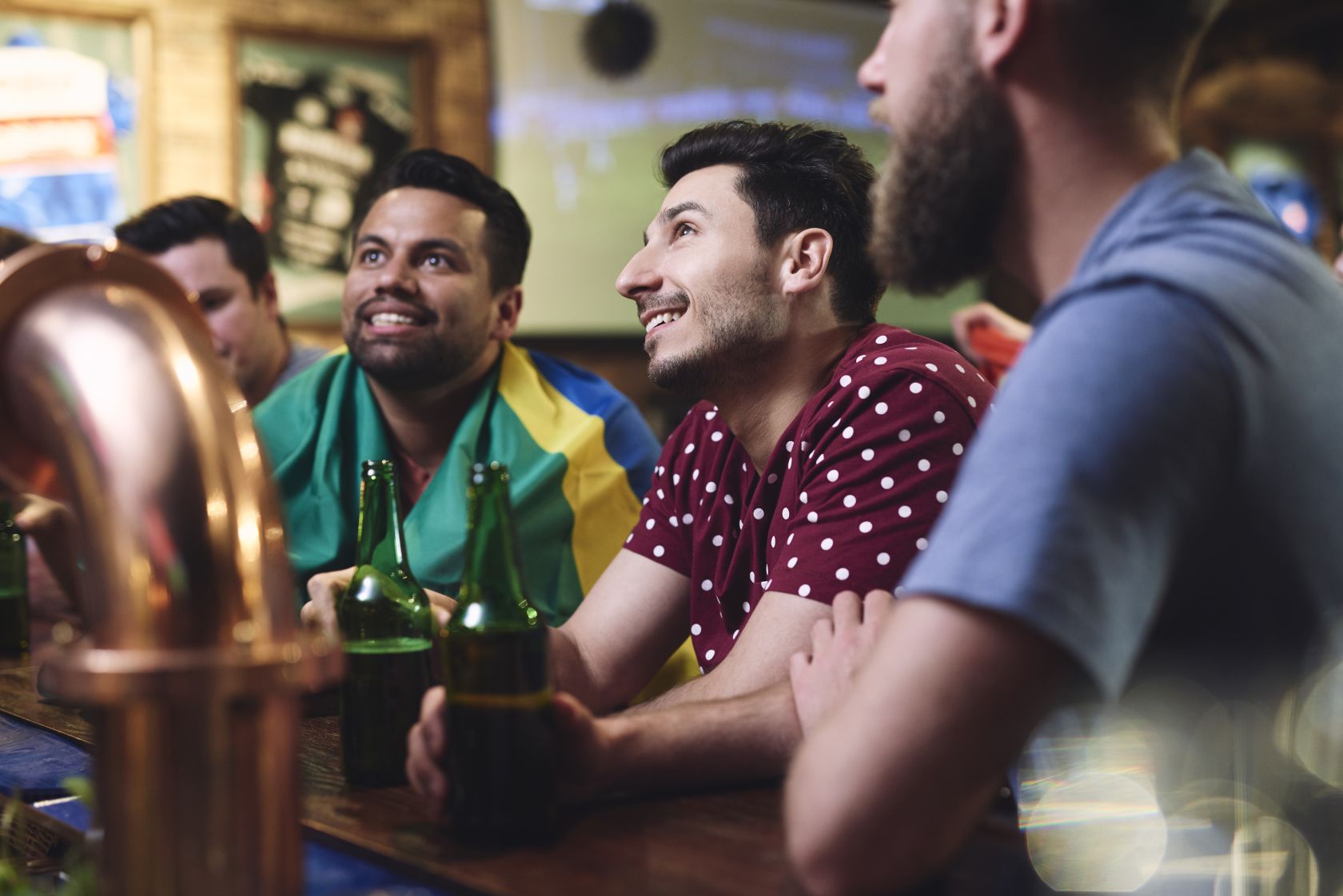
An Analyst's View of Where Forecasting Culture Meets Structured Platforms
Tomas Augustis has spent more than a decade working in sports analytics and commentary, and he's watched forecasting culture develop across different European markets. What he notices about Portuguese fans, he says, is the habitual seriousness of their engagement: not just watching matches, but studying them.
“Portuguese fans don't wait for the post-match pundit to tell them what happened. They've already worked it out. That level of engagement isn't casual — it's trained, week after week, through a league that constantly rewards paying attention.”
Augustis draws a direct line from this analytical habit to the platforms that have grown up to serve it. He points to his own Lithuanian market as a parallel: fans there bring the same study-the-form instinct to football, and LazybuGuru Lithuania gives that audience a structured, data-informed space to apply their forecasting interest. The pattern, he notes, is consistent across European football cultures where the analytical habit runs deep: supply follows demand, and the demand here is knowledgeable.
Liga Portugal as the Engine of Daily Football Culture
Liga Portugal, Portugal's top professional division and one of the oldest continuously running national leagues in Europe, provides the constant pulse around which fan attention organises itself. Week after week, the fixture list gives fans something to study, argue over, and forecast.
Much of that energy flows through the rivalry at the top. Benfica, Porto, and Sporting CP, known collectively as Os Três Grandes, have historically dominated the league and generated the kind of intense national allegiance that makes every head-to-head fixture a major event. Whether you support one of the big three or a club pushing against them for European spots, the stakes feel real most weeks.
That's partly because Liga Portugal genuinely rewards close attention. Title races run deep into the season, European qualification battles shift with each round of fixtures, and the unpredictability of results gives fans a concrete reason to track form rather than assume outcomes. In a more predictable league, casual observation might be enough. Here, it isn't.
The Analytical Toolkit Portuguese Fans Actually Use
The tools fans reach for when sizing up a fixture combine traditional instinct with modern metrics. Head-to-head records between clubs have always been part of the conversation — experienced fans know the historical patterns between Benfica and Porto the way a chess player knows common openings, and they factor those patterns into their thinking before a big match.
Alongside that, form guides have become standard reference. Tracking a team's results across the last five or six matches tells you something head-to-head history can't: which version of the club you're actually dealing with right now. A club that won the corresponding fixture two seasons ago but has lost four of its last six is a different proposition.
Expected goals, or xG, has moved from the professional analysis world into everyday fan conversation faster than most metrics do. The idea is accessible once you grasp it: not all shots are equal, and xG measures the quality of chances created based on factors like shot location and angle. A team that's losing matches but consistently generating high-quality chances may be due a correction. Fans who use xG think probabilistically, not just in terms of results. Home advantage rounds out the picture. It's a documented phenomenon rather than folk wisdom, and serious forecasters account for it when weighing up an away trip for a team in poor road form.
Cafés, Terraces, and the Social Life of the Prediction
The analytical habit didn't develop in isolation. It grew in the café, which has functioned for generations as a genuine social institution in Portuguese life. Football debate, including predictions before a match and post-mortem analysis after it, has always been part of what cafés are for. League standings get discussed with the same regularity as local news. The prediction is a social act, not a private calculation.
What digital life changed wasn't the instinct but the reach. Online football communities and fan forums have extended the café conversation beyond geography, giving fans the ability to share detailed analysis and statistics with audiences they'd never meet in person. The debate is the same; the room is just much larger.
Digital Tools and the Sharpening of Fan Analysis
The growth of digital media has handed fans something they didn't have a generation ago: access to the same live statistics, squad data, and injury reports that professional clubs once kept to themselves. A supporter checking injury updates and pressing statistics before a Liga Portugal fixture is working with data that, not long ago, only a scout with club access could see.
That shift has deepened the analytical habit rather than replaced it with passive consumption. Fans who already tracked form and head-to-head records now layer in possession maps, shot charts, and real-time fitness data. The conversation in forums and comment threads reflects it: the level of detail has risen, and the collective knowledge base that fans draw on when forecasting outcomes is more sophisticated than it's ever been. The tools got better, but the habit was already there.
Portuguese football fandom has always been emotionally intense, but intensity alone doesn't explain the forecasting culture. What runs through it is something more deliberate: a trained, socially reinforced habit of studying the game, reading the data, and committing to a view before the whistle goes. That's not passion in spite of analysis. That's what passion looks like when it's had generations to develop.
Set The Portugal News as your preferred source for news on Google
 Add as a preferred source on Google






 Portugal Handbook
 English
 Nederlands
 Deutsch
 Français
 Español
 Italiano
 Svenska
 Pусский
 中文
中文 Türkçe
 Português
 Czech
Czech Hungarian
 Polski
 عربي
عربي Suomi
Suomi עִברִית
 Português (Brasil)
Follow us on social media