


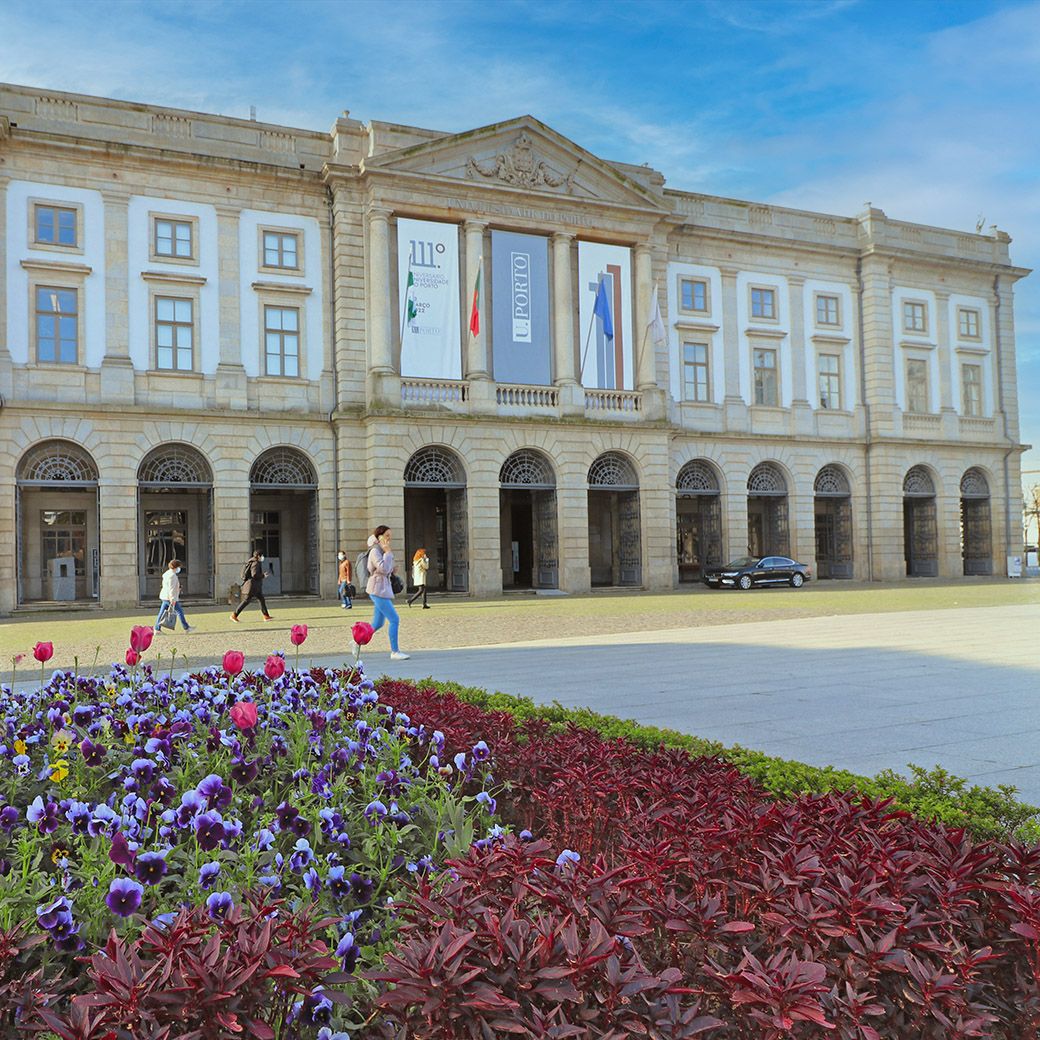
"Tuition fees should be updated according to the inflation rate, because they have, in fact, been decreasing in recent years. They are frozen, but they have been decreasing because we have inflation," argued the Minister of Education, Science and Innovation, at the end of a meeting with student associations and federations from across the country.
Fernando Alexandre recalled the government's "very clear" position, which views tuition fees as "a relevant form of financing" for higher education institutions, as they strengthen their autonomy and reduce their dependence on the government.
Representatives of the students who demonstrated in Lisbon on National Student Day for free education and a strengthening of social action also reiterated that the end of tuition fees has "historically" been one of their main demands.
Creation of free higher education
“The University of Coimbra has historically always defended the end of tuition fees and the creation of free higher education,” said the president of the Academic Association of Coimbra (ACC), José Machado, in statements to journalists at the end of the meeting held at the Thalia Theatre in Lisbon.
Despite this point of contention between students and the Minister, the other issues received support from the student representatives, who are calling for more social support, especially in housing.
More university residences
The Minister guaranteed that in September, there will be “14,000 more beds” in university residences than currently exist, although he acknowledged that this increase will not solve the problem.
In the coming months, “accommodation will see a significant increase in the number of beds with the completion of dozens of university residences throughout the country,” he told journalists, referring to the National Plan for Accommodation in Higher Education (PNAES).
According to Fernando Alexandre, residences will be inaugurated "throughout the territory," from Bragança to the Algarve and in the autonomous regions, allowing for "significantly alleviating access to accommodation."
However, the PNAES exceeds 18,000 beds in a country where around 175,000 students study far from home.
"Accommodation is the main obstacle to attending higher education," said the president of the Porto Academic Federation, recalling that a room in Porto or Lisbon can cost 400 or 500 euros, which means "that higher education and success depend not only on the talent and commitment of students, but also on their pocket and their postal code."
With the PNAES coming to an end, Fernando Alexandre said he is studying the next steps, but for now he is more concerned with the management model for the residences.
It is necessary to “ensure that they are occupied,” he warned, recalling the case of the Polytechnic of Beja residence, which remains empty despite having been inaugurated at the beginning of the academic year, furnished and “ready for use.”
The minister revealed that he has “called the attention” of the Polytechnic's management: “We ourselves have been questioning them for several months (…) we have already asked what they need from us, but that is a responsibility of the Institute.”
In general, the proposed reform of the social action model “was very well received by the students,” assured Fernando Alexandre.
In statements to journalists, the presidents of the Academic Federations of Lisbon, Porto and ACC confirmed this position.
“From a conceptual point of view, we consider that it meets our expectations, to promote above all equity in the territory and in higher education,” defended the president of ACC, adding that the important thing is that the document is approved quickly.
Regarding the students' demonstration, Fernando Alexandre applauded the initiative: "When students stop being critical and start demonstrating, I think we have a problem in our democracy (...) It's good that they tell society what they want."
 Add as a preferred source on Google





 Portugal Handbook
 English
 Nederlands
 Deutsch
 Français
 Español
 Italiano
 Svenska
 Pусский
 中文
中文 Türkçe
 Português
 Czech
Czech Hungarian
 Polski
 عربي
عربي Suomi
Suomi עִברִית
 Português (Brasil)
Follow us on social media