


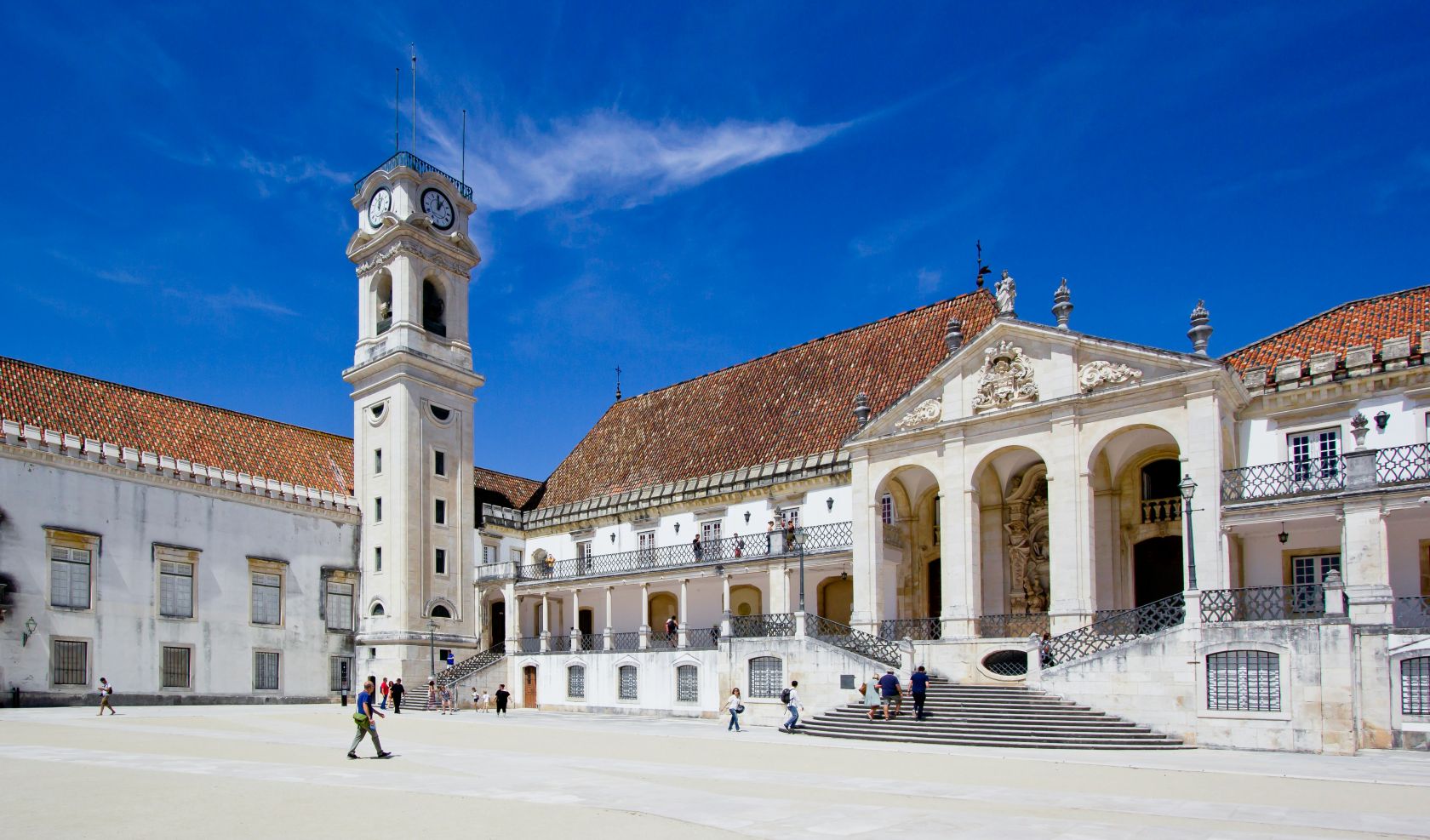
Speaking to journalists, Fernando Alexandre highlighted that “this is an important project for the UC and the region, as establishing decentralised hubs outside the city of Coimbra is highly positive.”
“It also offers an opportunity for a territory like Figueira da Foz, which has always had a connection to the sea, to develop courses and research capabilities in marine biology and naval engineering, fields that are crucial for the country,” he emphasised.
Noting that the country is currently discussing major strategic priorities for research and innovation, the Minister stressed that the ocean and the sea “will be at the heart of these strategies, as they represent a key part of our identity and an extraordinary resource for the nation.”
“The fact that the UC is establishing a presence in Figueira da Foz in these maritime-related fields is vital for the development of both this region and Portugal as a whole,” he asserted.
Building 2 of the UC campus in Figueira da Foz is located in the city’s former bus terminal, a facility ceded by the municipality and extensively renovated. It features state-of-the-art laboratories equipped with the latest research technology.
UC Rector Amílcar Falcão highlighted the strategic importance of the presence in Figueira da Foz, noting a “blue economy vision” focused on education, research, and support for both existing local businesses and those looking to set up in the municipality. He emphasised that the new facility reflects the institution’s investment in areas such as marine science, sustainability, climate change, coastal erosion, and global marine resources.
The establishment of the UC campus, which has been operating at Quinta das Olaias since 2022, is the result of a partnership with the City Council led by Pedro Santana Lopes.
Since then, it has offered a bachelor’s degree in Marine Biology and master’s degrees in Artificial Intelligence and in Musical Computing and Sound Design, among other non-degree programs such as a specialisation course in International Ocean Policy.
At the start of the next academic year, the educational offering will be expanded to include a new bachelor’s degree, Naval and Ocean Engineering, and three new master’s degrees: International Relations/International Ocean Policy, Sustainable Coastal Systems, and Marine Biology and Global Change.
In 2027, UC plans to launch master’s programs in Coastal and Ocean Conservation (in collaboration with the University of the Azores) and in Naval and Ocean Engineering; a doctoral program in Marine Science and Technology is scheduled to open in 2028.
According to campus director Miguel Pardal, the expansion of the site at Quinta das Olaias will begin before the end of the summer. This project involves the construction of classrooms, a laboratory, and other spaces, with an investment of €2.25 million expected to be completed next year.
The UC campus is part of the European consortium Allwaters, which aims to commercialise 247 innovations, support the creation of 58 startups, and prevent €1.2 billion in losses associated with ecosystem degradation by 2033.
Its scientific strategy also relies on the SeaPower Technology and Innovation Centre (focused on developing the blue economy) and UC BLUE, a structure uniting all of the university’s marine-related research centres, with the ambition of becoming a national and international benchmark in fields linked to the sea, coastal sustainability, and the blue economy. Figueira da Foz Mayor Santana Lopes highlighted his municipality’s “firm commitment and total dedication” to establishing the University of Coimbra (UC) campus, evidenced by the provision of three sites for the university hub: Quinta das Olaias, the former bus terminal, and a plot of land in the parish of São Pedro, located in the southern part of the municipality on the left bank of the Mondego River.
 Add as a preferred source on Google





 Portugal Handbook
 English
 Nederlands
 Deutsch
 Français
 Español
 Italiano
 Svenska
 Pусский
 中文
中文 Türkçe
 Português
 Czech
Czech Hungarian
 Polski
 عربي
عربي Suomi
Suomi עִברִית
 Português (Brasil)
Follow us on social media