


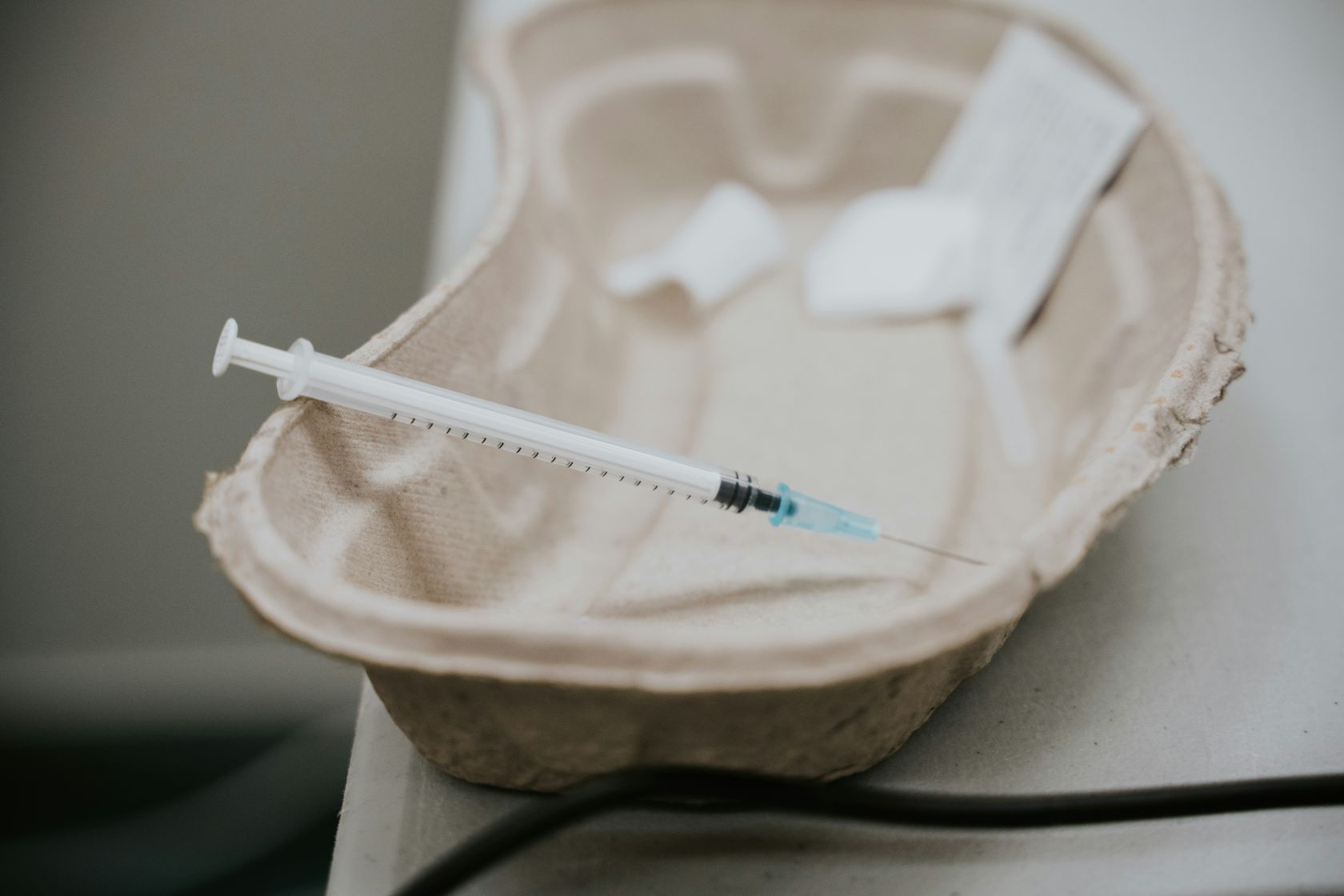
“The decisions were made based on real-world evidence (…) and studies show that the vaccines have a very good safety profile and are suitable for their use,” stated Rui Ivo, speaking at a hearing before the parliamentary health committee.
Also heard at this hearing, at the request of Chega (a Portuguese political party), regarding contractual transparency, public communication of risk, pharmacovigilance, and the potential responsibility of the State in the context of COVID-19 vaccination, the former Director-General of Health, Graça Freitas, corroborated Infarmed's position.
Vaccines authorised on the market
Graça Freitas recalled that, when administered, the vaccines had marketing authorisation, based on a risk-benefit assessment, and that the acquisition process was conducted by the European Commission.
Both officials emphasised that communication with the public has always been transparent, continuous, and coordinated.
Correct assessment
Rui Ivo said that the evaluation of the vaccines was done in the same way as for other medications, "with the need for adaptation to the circumstances."
As examples of this adaptation, he pointed to more regular safety reports: "The scrutiny was more frequent."
Regarding the request, he cited the changes made to the age groups for which the Pfizer vaccine was recommended: "When the risk is greater than the benefit, the authorities act."
Transparency of information
Rui Ivo also guaranteed transparency in the information disclosed to citizens, emphasising that everything available at any given moment "was always the subject of communication."
Regarding the contracts signed with the pharmaceutical companies, he said they were made "without the approved vaccines" and with "risk sharing," in which the companies prepared in advance for supply, knowing that this would only happen after the authorities' green light.
Pandemic numbers
After Rui Ivo, Graça Freitas was heard, who began by recalling the pandemic numbers to support the risk-benefit assessment, highlighting that it lasted 1,150 days and had serious social, economic and health impacts.
26,655 people died due to Covid-19, and “at the peak of peaks” of the pandemic, in January 2021, almost 6,000 people died, she elucidated.
“Therefore, it is good to see that, on the one hand, we had a risk that was an appreciable and not negligible risk and that, in some circumstances, this risk was further aggravated depending on age or, for example, sex, namely in some contraindications or in some precautions, such as thromboembolic phenomena, myocarditis and pericarditis,” explained Graça Freitas.
Timely access
According to him, the European vaccine purchasing mechanism allowed countries, in an equitable manner, to obtain timely, sufficient access to what he considered to be "the best and greatest 'weapon'" against the pandemic, which was "absolutely devastating" before vaccines were available.
He stressed that the technical standards on vaccination issued by the authorities were "adapted, updated and refined countless times based on epidemiology, adverse reactions that were being reported," virus variants and vaccines that were being manufactured.
Acknowledgement of imperfections
He acknowledged that the process "was not without imperfections," but relied on "enormous collaboration and cooperation between agencies and institutions," which does not usually happen with the same intensity.
Graça Freitas also defended the need to emphasise, in future crises, that there is no zero risk and that "the risk of not vaccinating is not a null act."
"This was said to people at the vaccination site; they had the opportunity to get up and leave, and they were informed that if they didn't get vaccinated, they would run the risk of becoming infected, and that the complication of an infection would be greater than the expected complication from the vaccine," he explained.
 Add as a preferred source on Google





 Portugal Handbook
 English
 Nederlands
 Deutsch
 Français
 Español
 Italiano
 Svenska
 Pусский
 中文
中文 Türkçe
 Português
 Czech
Czech Hungarian
 Polski
 عربي
عربي Suomi
Suomi עִברִית
 Português (Brasil)
Follow us on social media