


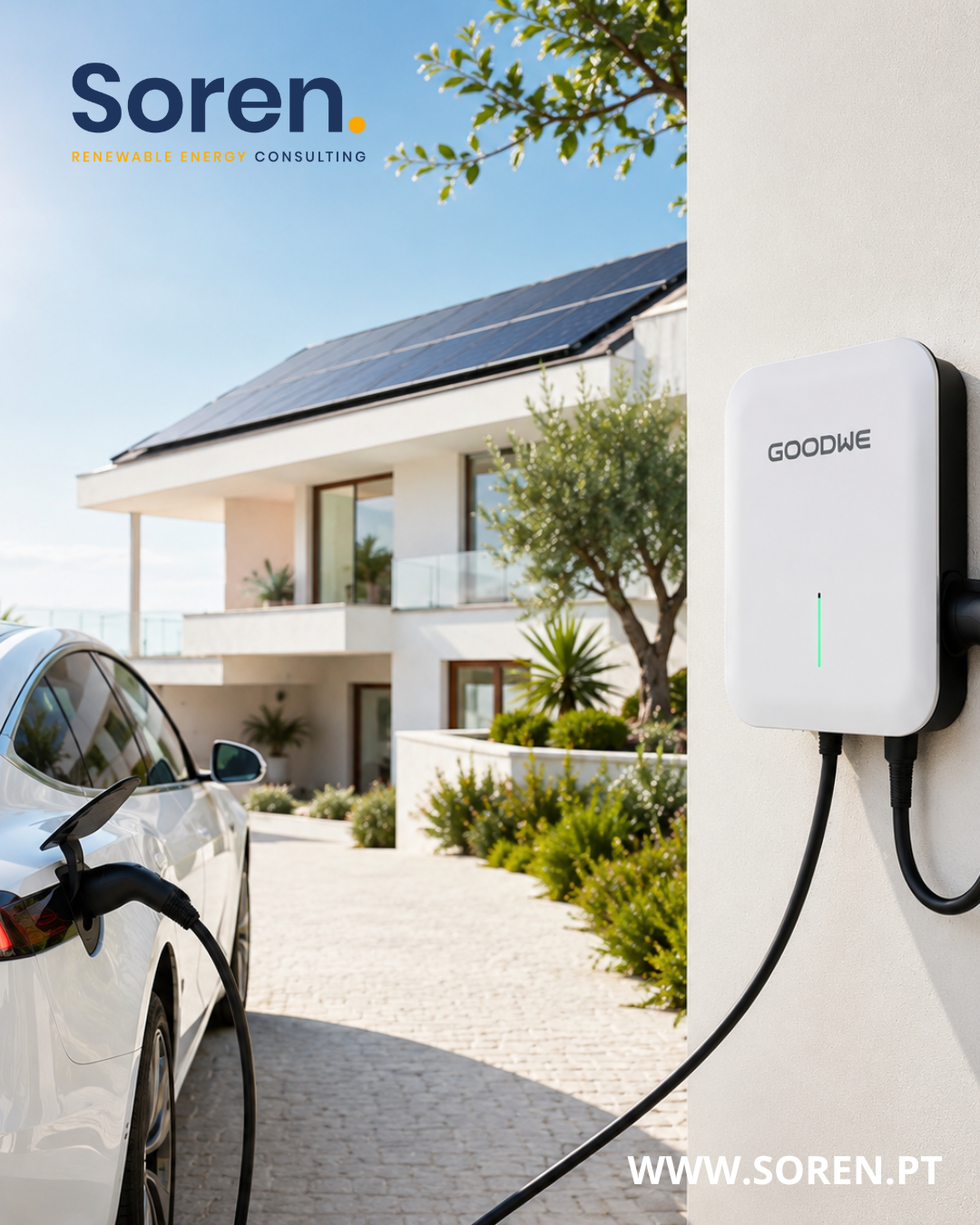
So the real question is not, "What is the most powerful charger?" but rather "Which charger is best suited to my vehicle and my home?"
As electric vehicles become more common, many homeowners are asking the same question: which charging solution is right for them?
The answer starts with understanding one important fact:
The Most Important Charger Is Already Inside Your Vehicle
Every electric vehicle contains an On-Board Charger (OBC) that determines the maximum AC charging power the vehicle can accept, regardless of the charger installed.
For example, some versions of the Renault Zoe can charge at up to 22 kW AC, while a Tesla Model Y is limited to 11 kW AC and a Nissan Leaf to 6.6 kW AC.
This means that a Tesla Model Y connected to a 22 kW charger will still charge at a maximum of 11 kW, while a Nissan Leaf will remain limited to 6.6 kW.
The charging speed is ultimately determined by the vehicle’s onboard charger and the electrical infrastructure available, not just by the power rating displayed on the wallbox.
Single-Phase or Three-Phase: Why It Matters
Another important factor is how the vehicle receives power.
Some electric vehicles are designed to charge using a single phase, while others can take advantage of a three-phase electrical supply.
This means that even if a property has a three-phase installation and a high-powered charger, the vehicle may not necessarily be able to use all the available power.
Fortunately, modern EVs automatically adapt to the charging conditions available, ensuring safe and efficient charging.
What Charging Solutions Are Available?
Single-Phase Charging Solutions
For homes with a single-phase electrical supply, the most common options are a dedicated protected socket or a 7.4 kW wallbox.
A dedicated protected socket provides a simple and cost-effective charging solution, typically delivering between 2.3 kW and 3 kW, making it suitable for overnight charging.
For faster charging, a 7.4 kW wallbox offers significantly shorter charging times and additional features such as energy monitoring and smart charging functions. For most EV owners, it provides more than enough power to fully recharge the vehicle overnight.
Three-Phase Charging Solutions
For properties with a three-phase electrical supply, 11 kW and 22 kW wallboxes are the most common options.
An 11 kW wallbox is often the ideal balance between charging speed and cost, particularly as many electric vehicles currently sold in Europe are limited to 11 kW AC charging.
A 22 kW wallbox can provide even faster charging, but only when the vehicle, charger and electrical installation are all capable of supporting 22 kW. Otherwise, the charging power will automatically be limited by the weakest element in the system.
Where Do Solar Panels Fit In?
Smart chargers can be integrated with solar PV systems, automatically adjusting charging power to make use of available solar energy.
Instead of exporting excess electricity to the grid, homeowners can use it to charge their vehicle, increasing self-consumption and improving the return on their solar investment.
For many households, the electric vehicle has become a natural extension of their home energy system.
So, Should You Choose the Charger Based on the Vehicle or the House?
The answer is simple: both.
The right charging solution depends on the vehicle, the property's electrical installation and the driver's daily needs.
The most powerful charger is not always the best choice. In many cases, a properly sized system will deliver the same result more efficiently and at a lower cost.
At the end of the day, charging an electric vehicle is not just about power – it is about choosing the right solution for your home and your vehicle.
Isa Conceição
Renewable Energy and Energy Efficiency Consultant
Postgraduate in Renewable Energy Management
CEO, Soren – Renewable Energy Consulting
For homeowners in the Algarve looking to reduce energy costs and improve efficiency, the right solution starts with the right advice.
Soren supports homeowners and businesses across Portugal in designing and implementing tailored renewable energy solutions, from initial analysis to installation and ongoing optimisation.
+351 917 770 107 | info@soren.pt | www.soren.pt
 Add as a preferred source on Google





 Portugal Handbook
 English
 Nederlands
 Deutsch
 Français
 Español
 Italiano
 Svenska
 Pусский
 中文
中文 Türkçe
 Português
 Czech
Czech Hungarian
 Polski
 عربي
عربي Suomi
Suomi עִברִית
 Português (Brasil)
Follow us on social media