


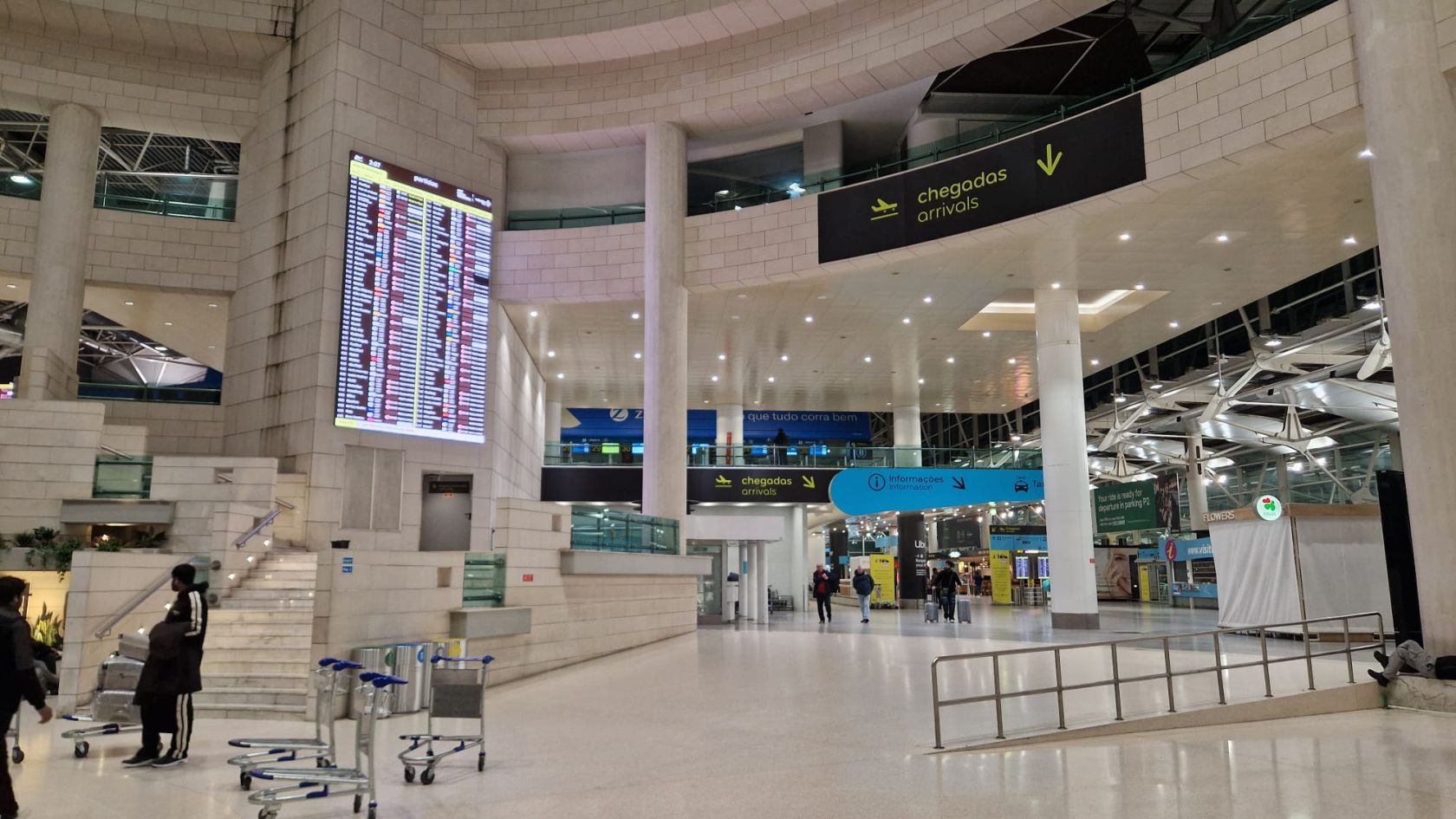
This measure was agreed between the two institutions as part of the ongoing review of passenger rights for aeroplanes, boats, trains, or buses in the European Union (EU), and it still needs to be formally approved by the European Parliament (EP) and the Council of the EU to come into effect.
Companion with free travel
Among the measures that will be included in European legislation is the possibility for "a companion of people with disabilities or reduced mobility to travel with them free of charge by plane if their presence is necessary, similar to what already happens on bus, train, or boat trips," says the EP in a statement.
"Whenever an airline requires a passenger to travel accompanied for safety reasons and cannot provide the necessary assistance, the passenger will be entitled to travel with a companion of their choice, at no additional cost. The companion must be seated next to the passenger who needs assistance," clarifies the EU Council.
The new rules agreed today also stipulate that intermediary ticket sales companies, such as travel agencies, will have to inform customers at the time of booking of "any additional administrative or service fees" that they usually charge if a trip is cancelled, there is a prolonged delay, or boarding is denied.
"The refund of the full ticket price and the intermediary fee, if charged, must reach the passenger within 14 days. If an intermediary fails to meet this deadline, the airline will be responsible for processing the refund within seven days of receiving the payment details necessary to make that refund," says the EP.
Exception for micro-enterprises
The EU Council adds, however, that to avoid “a disproportionate financial burden” on “smaller” intermediaries, the agreement provides for “an exception for micro-enterprises, provided that passengers are clearly informed of this provision at the beginning of the booking process.”
The two institutions also agreed to create a “common form” for all travel – whether by plane, boat, bus or train – which passengers can fill out to request compensation or a refund in case of cancellations or delays.
“The European Commission will make the form available, in all EU languages, on its website. This will be a way to request a refund, as companies will still be able to direct passengers to their own electronic form, on paper or a mobile application,” it says.
Quoted in this statement, Italian MEP Matteo Ricci, who drafted the EP proposal on the matter, points out that, with today's agreement, "the passenger rights package is 'complete' by establishing a clear set of rules to protect and strengthen Europeans on all modes of transport."
"More robust measures to help people with reduced mobility and a new regulatory framework for the purchase of tickets through intermediaries further improve the protection of European passengers," he says.
In turn, Alexis Vafeades, Minister of Transport of Cyprus, the country currently holding the rotating presidency of the Council of the EU, argues that "passenger rights on all modes of transport only have real meaning if they can be effectively enforced."
"This agreement will make it easier for travellers to access the information, assistance and refunds to which they are entitled, while strengthening the protection of people with disabilities and reduced mobility," he says.
 Add as a preferred source on Google





 Portugal Handbook
 English
 Nederlands
 Deutsch
 Français
 Español
 Italiano
 Svenska
 Pусский
 中文
中文 Türkçe
 Português
 Czech
Czech Hungarian
 Polski
 عربي
عربي Suomi
Suomi עִברִית
 Português (Brasil)
Follow us on social media