


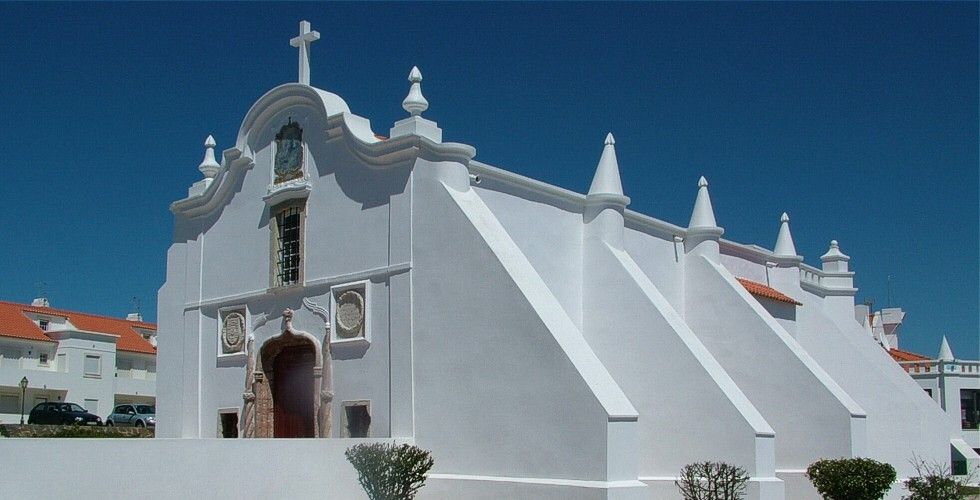
The restoration work, funded by the Recovery and Resilience Plan (PRR), involved a total investment of €450,000, including a €200,000 construction contract, according to data provided to the Lusa news agency by Património Cultural, Instituto Público (IP).
The remainder of the investment went toward restoring artefacts from the Church’s treasury, publishing a monograph on the building's history, and cultural promotion initiatives.
Construction work
The construction work covered conservation efforts, flooring rehabilitation, ventilation improvements, stonework restoration, and new conditions for the space's use.
The church was commissioned by Vasco da Gama in his hometown of Sines to fulfil a vow of gratitude for the success of his 1498 sea voyage to India.
"One thing that will endure is this restored church, the most important building he [Vasco da Gama] bequeathed to us," architect Ricardo Pereira, from the Sines Municipality, said to Lusa during a site visit.
For architect Rita Vale, from Património Cultural, this intervention also "closes a cycle" of work previously carried out on the church.
"It is now fully restored," she stated, highlighting the "conservation and restoration of the portal and stonework" of the building.
Suitable materials
According to Rita Vale, the project utilised "the most suitable materials" to address the building's specific location and withstand the "weathering and changes" it has endured "over the years." As part of the renovation, it was necessary to replace the old ceramic flooring, laid over sand during a project in the 1940s, with pine flooring set on a "ventilated air gap to combat moisture," explained Ricardo Pereira.
Classified as a National Monument, the temple underwent restoration as part of commemorations marking the 500th anniversary of the navigator's death, born in Sines.
For Álvaro Beijinha, Mayor of Sines, the municipality responsible for managing the property, this intervention is “fundamental on several levels.”
“First of all, because we are preserving heritage that belongs to everyone; and secondly, from a tourism perspective, it will serve as an additional draw for visitors, beyond its role as a place of worship,” said the mayor, emphasising that this represents “well-executed public investment.”
Following the renovation, Rita Vale argued for the need to establish a maintenance and monitoring plan in coordination with the municipality:
“It has already lasted 500 years; we want it to last at least another 500,” she stated.
In addition to restoring flooring, plasterwork, roofing, stonework, drainage systems, and altarpieces, the project included installing a restroom integrated into the building's architecture.
New altar
A new altar was also installed, designed by architect Vítor Mestre and featuring elements created specifically for the space, such as an embroidered linen frontal, as well as contemporary works by local artists Andreia Gil and Tânia Gil.
“The contemporary intervention is absolutely essential so that we can leave a constructive mark here” and engage new generations in the life of the temple, Ricardo Pereira emphasised.
The monument’s interior also features 12 tile panels, which have likewise undergone restoration, bearing “references to the Atlantic world and the Portuguese empire, including a depiction of an Indigenous Brazilian,” he explained.
“The great heritage element, our great historical element, is the sea,” and “the sea explains almost everything” that happens in this territory, the architect observed.
The church is scheduled to reopen to the public in July, though a specific date has not yet been announced.
 Add as a preferred source on Google





 Portugal Handbook
 English
 Nederlands
 Deutsch
 Français
 Español
 Italiano
 Svenska
 Pусский
 中文
中文 Türkçe
 Português
 Czech
Czech Hungarian
 Polski
 عربي
عربي Suomi
Suomi עִברִית
 Português (Brasil)
Follow us on social media