


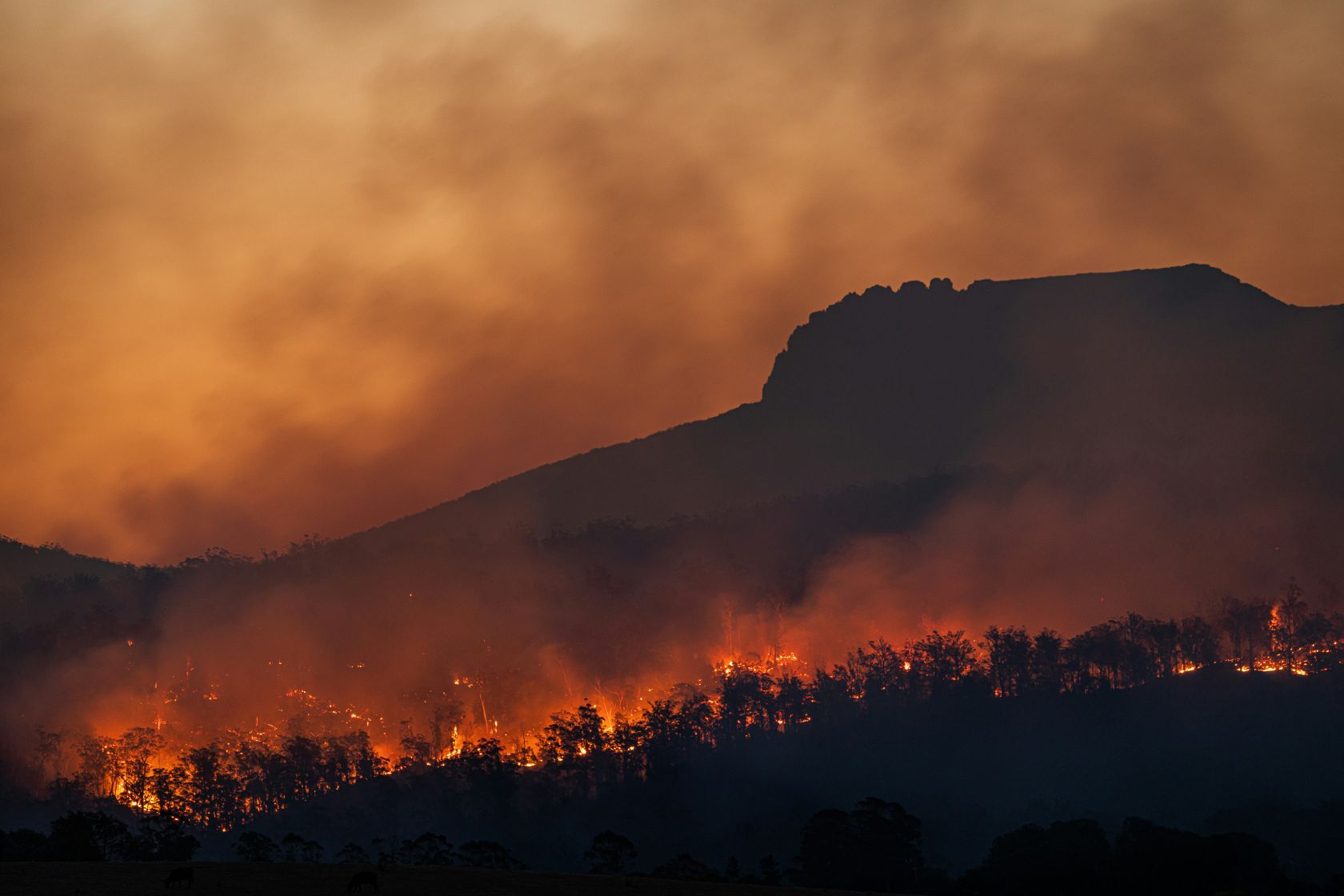
The IPMA has also placed the rest of mainland Portugal at very high and high risk, with the exception of six coastal municipalities in the districts of Braga (Esposende), Aveiro (Ílhavo, Aveiro, and Murtosa), Leiria (Peniche), and Lisbon (Lourinhã), at a time when the country is facing a new heat wave.
The rural fire risk, as determined by the IPMA, has five levels, ranging from low to maximum. The calculations are based on air temperature, relative humidity, wind speed, and precipitation over the previous 24 hours.
Hot and dry period
At the beginning of the week, IPMA warned of an approaching "long period of hot and dry weather," with maximum temperatures reaching values between 40 and 43°C in the Tagus Valley and Alentejo starting on 2 July, and extending to other regions of the country throughout the week.
On 1 July, the National Emergency and Civil Protection Authority (ANEPC) warned of a "very high to maximum" risk of rural fires across the country in the coming days due to the forecast of hot weather, recommending preventive measures for the population.
Worsening weather conditions
In a statement, ANEPC says that the worsening weather conditions for the coming days are expected to increase the risk of fire, with conditions favourable to the eventual occurrence and spread of rural fires, as well as increasing the difficulty of suppression actions in most of the continental territory.
As a consequence, ANEPC raised the Special Readiness State to level III, given the foreseeable "very significant increase" in the danger of rural fires in the coming days.
Civil Protection
The Civil Protection Level III Special Readiness State is an intermediate/high-level alert that calls for the reinforcement of resources and the enhanced readiness of rescue and operational teams for imminent intervention or response to disaster situations, on a scale of four progressive levels.
Preventive measures
As preventive measures, it is prohibited to carry out extensive burnings, use fire to cook food throughout the rural area, except in authorised locations, burn piles of debris, use brush cutters, cutters, and destroyers, and fumigate or disinfect apiaries without spark arresters.
Health care
To protect health from the heat, Civil Defence recommends special attention to chronically ill people, children and the elderly.
Similarly, it points out the importance of drinking at least 1.5 litres of water (the equivalent of eight glasses), applying sunscreen with a factor of 30 or higher every two hours, wearing a hat and light, loose, and cool clothing, and opting for light meals.
Also, due to the persistence of high temperatures, IPMA raised the red alert (the most severe) to 12 districts starting on 3 July.
On 2 July, the districts of Beja, Évora, Portalegre, Setúbal and Lisbon are under red alert, with the alert extending on Friday to Leiria, Coimbra, Aveiro, Braga and Viana do Castelo.
 Add as a preferred source on Google





 Portugal Handbook
 English
 Nederlands
 Deutsch
 Français
 Español
 Italiano
 Svenska
 Pусский
 中文
中文 Türkçe
 Português
 Czech
Czech Hungarian
 Polski
 عربي
عربي Suomi
Suomi עִברִית
 Português (Brasil)
Follow us on social media