


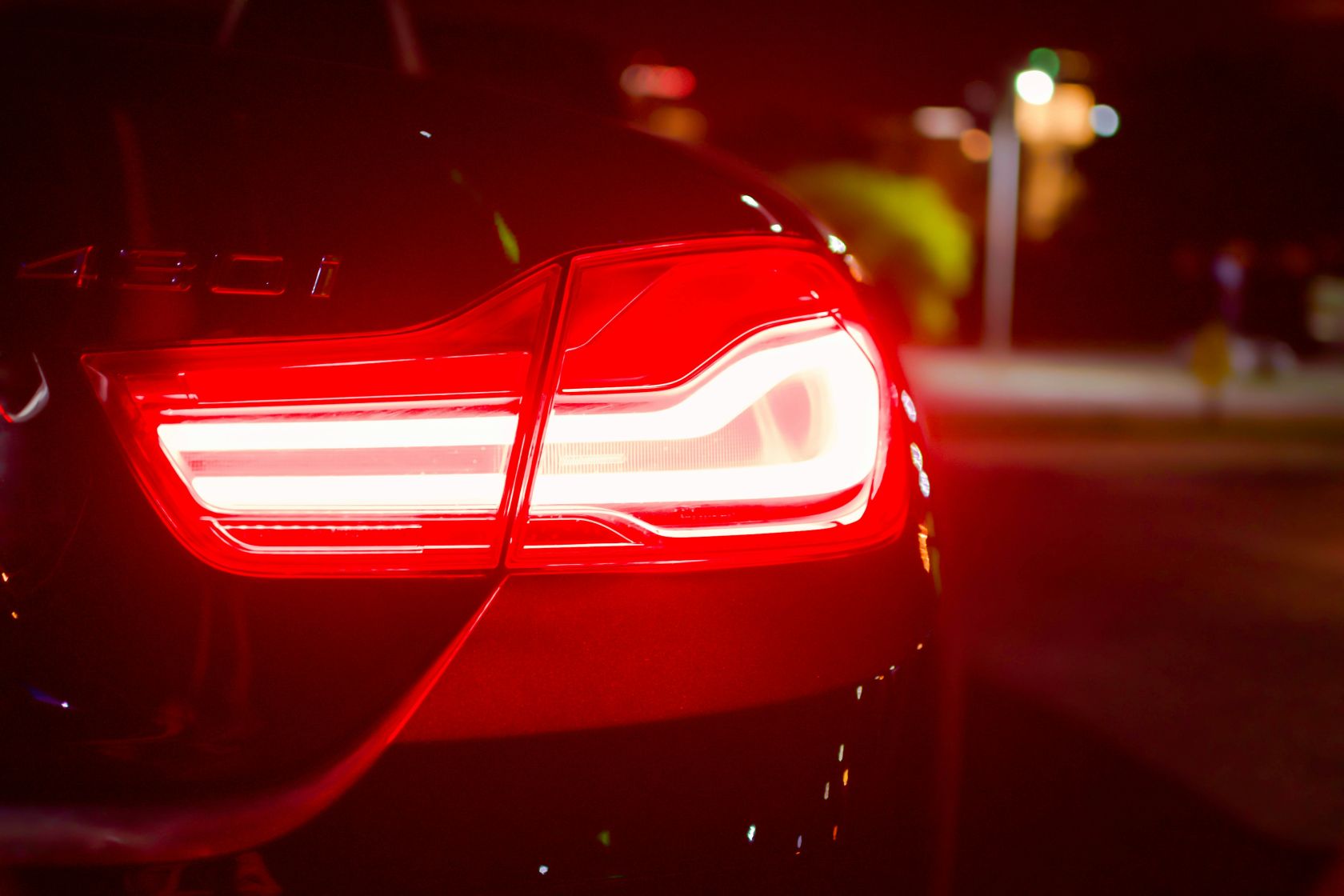
New vehicles will be required to feature an Emergency Stop Signal (ESS), a system that makes abrupt braking far more noticeable to motorists travelling behind.
In contrast to conventional brake lights, which remain steadily illuminated when the brakes are applied, the ESS activates the rear brake lights in a rapid-flashing sequence during severe stops.
The purpose is to attract attention more quickly and give following drivers additional time to react, helping to reduce the risk of rear-end collisions.
Emergency situations
This technology, which uses the vehicle’s electronic systems and sensors to continuously monitor factors such as speed, braking force, ABS activation and deceleration rate, is intended only for genuine emergencies rather than everyday braking.
If the car is travelling above 50km/h and slows abruptly at a rate exceeding 6 metres per second squared, the flashing brake lights are triggered automatically.
Flashing lights have long been established by road safety experts to capture a driver’s attention more effectively than a constant light source, as even a fraction of a second gained in reaction time can make a significant difference, particularly on motorways or high-speed roads where stopping distances are much greater.
According to figures cited by technology publication Pplware, the system could shorten the stopping distance of the vehicle behind by an average of 4.5 metres in emergency braking situations, and that additional space may be enough to prevent a collision altogether or substantially reduce the severity of the impact.
Advanced assistance
This requirement applies only to newly sold vehicles, not affecting cars already on the road, and existing owners will not be expected to retrofit the technology, nor will there be any penalties for driving without it.
Instead, the feature will become standard as manufacturers introduce new models that comply with the updated European regulations.
The Emergency Stop Signal forms part of a broader package of mandatory advanced driver assistance systems introduced by the European Union to improve vehicle safety, as other technologies already required on new cars include Intelligent Speed Assistance, driver drowsiness monitoring, lane departure warning systems, reversing detection aids, event data recorders – commonly referred to as “black boxes” – and preparations for alcohol interlock devices.
 Add as a preferred source on Google







 Portugal Handbook
 English
 Nederlands
 Deutsch
 Français
 Español
 Italiano
 Svenska
 Pусский
 中文
中文 Türkçe
 Português
 Czech
Czech Hungarian
 Polski
 عربي
عربي Suomi
Suomi עִברִית
 Português (Brasil)
Useful addiction. But there should also be a campaign to encourage drivers to leave a reasonable breaking distance!
By Angela from Beiras on 07 Jul 2026, 13:08
This feature would be MUCH NEEDED in Portugal due to infuriating tailgating!
By L from Lisbon on 07 Jul 2026, 17:57
Why not just start issuing summonses for tailgating?
While an emergency light is nice it does not stop the problem.
Also when you pass a car from the left and cut off the car in the right lane is not helped by an emergency light.
The behavior needs to be changed.
By j from Algarve on 12 Jul 2026, 13:20