


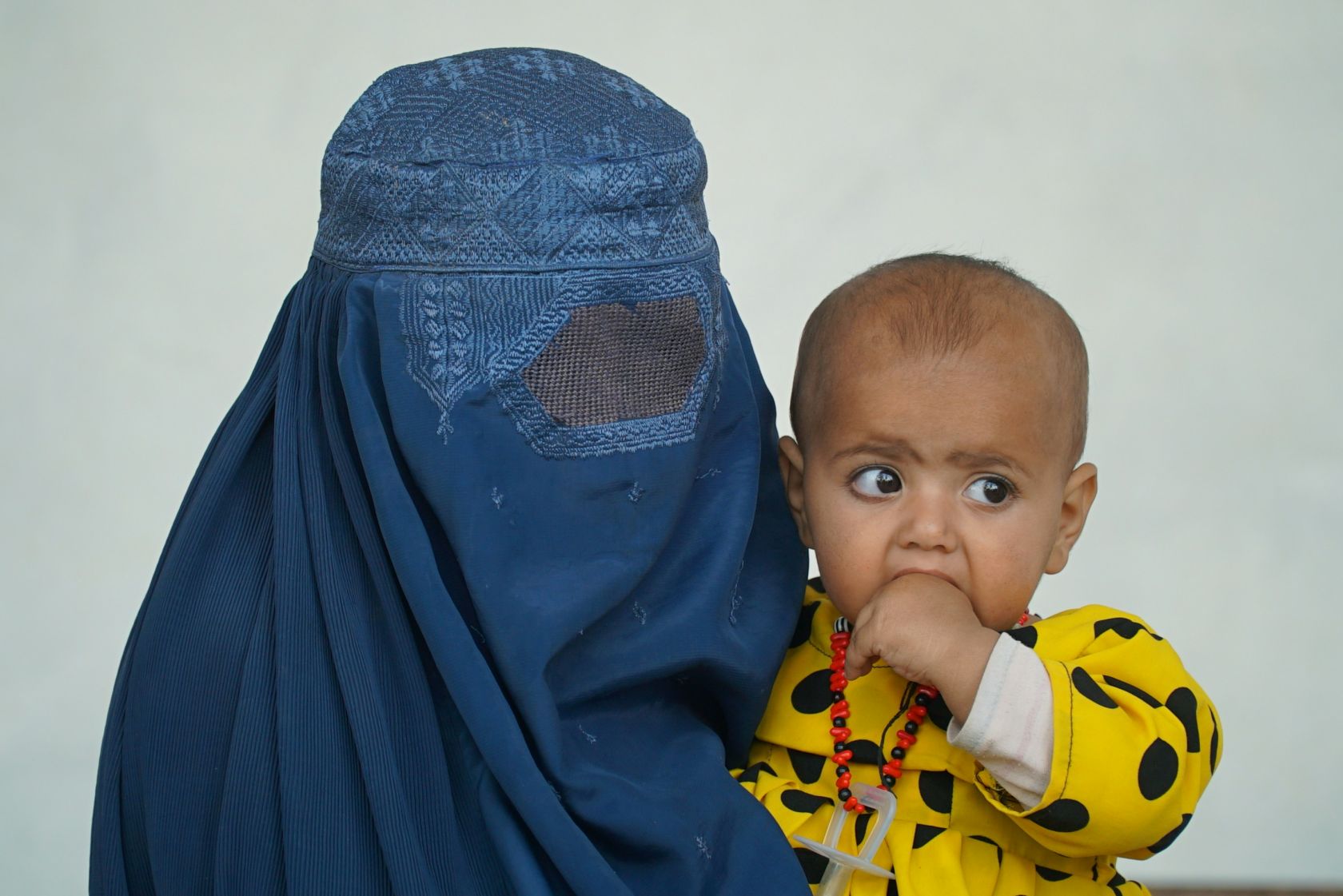
PSD, Chega, Iniciativa Liberal, and CDS approved, on 9 July, in committee, a bill known as the "burqa law," which aims to prohibit the concealment of the face in public spaces, despite opposition from the parliamentary left.
This vote in the Constitutional Affairs Committee was the same as the one that took place when this bill, which originated with Chega, was approved in general last October. It then remained stalled for about eight months awaiting discussion in committee.
In June, the PSD presented a replacement bill for the original Chega bill, focusing on security reasons inherent in the prohibition on concealing the face to downplay the issue of Islamic burqas.
Changes to the proposal
In light of its initial proposal, Chega added age or origin to the list of reasons why no one can be coerced into concealing their face, in addition to gender and religion, and changed the name of its own project: Where it previously read "prohibits the concealment of the face in public spaces except for certain exceptions," it now reads "prohibits the concealment of the face in public spaces for reasons of security and public order."
In cases of forced concealment of the face, in the initial version of the project, Chega advocated the application of the crime of coercion, with a prison sentence of up to three years. And this sentence would be increased by one-third when the victim was a minor. Chega now proposes an administrative offence punishable by a fine of between 150 and 750 euros in cases of negligence, and between 400 and 3,000 euros in cases of intent.
Public safety
Although the PSD insisted that the legislation is intended to address public safety issues and highlighted that it was André Ventura's party that agreed to focus the legislation on a matter of national security, in terms of political discourse, MPs Madalena Cordeiro (Chega) and Rui Rocha (Liberal Initiative), in their speeches, emphasised the idea of combating the concealment of faces for religious reasons.
 Add as a preferred source on Google





 Portugal Handbook
 English
 Nederlands
 Deutsch
 Français
 Español
 Italiano
 Svenska
 Pусский
 中文
中文 Türkçe
 Português
 Czech
Czech Hungarian
 Polski
 عربي
عربي Suomi
Suomi עִברִית
 Português (Brasil)
Totally agree...Primarily on Public Safety
By Donn Rance from USA on 09 Jul 2026, 17:16
Someone has to liberate these women from a historical medieval anachronism. But if they really want to enslave themselves, maybe they ought to return from whence they came. After all, when in Rome, do as the Romans do. Or better yet, deport their husbands since I'd wager that it's the threat of misogynist violence that's keeping the ladies stuck in a 12th century time warp. And what do we hear from the Left when women are literally enslaved before their eyes - crickets, of course.
By Tony from USA on 09 Jul 2026, 22:01
Very good.
However, it has little to do with security, and all to do with symbolism:
this symbolic ban, tells a certain people 'if you come here, you play by our rules, and if you don't like that, go elsewhere or stay where you are'.
The implication that women who do not cover their faces, are immodest, is grotesque and disturbing. There is no place in a civilised society for this, and I agree with the ban.
By Hart from Lisbon on 10 Jul 2026, 05:03
Shameful! This is simply Islamophobia clumsily dressed up as some attempt to protect women. None of us are fools, we know why this is introduced.
It's no concern of the State what anyone wears in public, unless concealment of the face is done to support criminal activity, such as robbing a bank or committing criminal acts in public during a demonstration.
Are face coverings allowed at protests that risk turning violent?
Portugal takes a step backwards by introducing this policy which is ultimately based on hatred and intolerance.
I have no problem at all seeing women in public wearing a head scarf or even a burkha. But I'm not a racist or Islamophobe.
By Billy Bissett from Porto on 10 Jul 2026, 11:08
Islam has much that places women in a subservient position. If this law was indeed only addressing valid security issues, which I doubt, I would agree to it. In keeping with the supposed intent the same law should be implemented in the UUSA prohibited ICE gestapo from concealing their identity, and the fascist white supremists who marched in Washington, DC on the 4th of July. People who say things suggesting “people should go back where they came from” are proving to all of us they are racists unamericans, and very likely tRump supporters. They likely forget how Christianity has sometimes been distorted to defend violence toward all who are not white, and suggesting women should stay in the home and have babies. Those people are not Christians.
By JoeT from Algarve on 10 Jul 2026, 11:27
Has anyone ever seen a woman wearing a burqa in Portugal? No? Then I suggest these parliamentarians should start focusing on the country's real problems (of which there are plenty) rather than wasting time on imaginary ones.
By Mark from Porto on 10 Jul 2026, 14:30
This law will be almost impossible to be enforced in Portugal, actually most Portuguese laws are theorems. Nonetheless after Covid and having to wear masks all the time had such an impact on me that I changed my opinion, just don't ever hide your face. Full burkas are outright public human abuse.
By Diogo F. from Madeira on 11 Jul 2026, 00:41
Joe and Billy showing up as exactly the type of Americans we Europeans do not want here. THIS IS EUROPE! WE decide what happens here! And since Germany, France Britain, Sweden, Holland, Belgium, etc don't care what their populations want, because democracy all over Europe has been erased, all that's left seems to be Portugal.
You do not come here and get to dictate to Portuguese people what is and isn't allowed! The left sees fascists everywhere, except in the mirror!
And you don't like governments that address serious concerns of law abiding and tax paying citizens, if we're so evil, and racist and intolerant and 100 other mouth-frothing insults, then I suggest you join your beloved Muslims and leave. Nobody will miss you. Nobody will ask you to stay. Nobody will even notice. Go to a Muslim country to enjoy tolerance and diversity and kumbaya.
Off you go now. Bye.
As for Mark: missing the point completely. Classic. Lol
By Hart from Lisbon on 11 Jul 2026, 06:45
This is the most racist, islamaphobia, tiny minded bs I've heard in Portugal. Portugal don't fall for the boogie man in the burka argument, this country is better than this or maybe it's not.
By Dj from Porto on 11 Jul 2026, 12:14
Hart, your comments are case in point that this is not for public safety, but for narrow minded, little dick, tiny men like yourself comfort and bigotry. Telling people to go back to their country what a childish, immature, stupid thing to say.
By Dj from Porto on 11 Jul 2026, 12:21
Dj - I'm a woman. A real one, with the two x chromosomes and all other the bits and pieces.
By Hart from Lisbon on 12 Jul 2026, 05:00
Imagine being so mentally ill, that you believe that forcing women to cover their faces, because otherwise they're whores, is 'big dick energy'...!
By Hart from Lisbon on 12 Jul 2026, 05:10