


Heatwaves: why Portugal gets so hot
Summer temperatures regularly exceed 35°C across much of Portugal, particularly inland. During the hottest spells, thermometers can climb above 40°C in parts of the Alentejo, the Douro Valley and inland central Portugal. These prolonged periods of exceptionally high temperatures are known as heatwaves.
A heatwave is generally defined as several consecutive days of unusually high temperatures compared with what is normal for a particular location and time of year. Portugal’s national weather service, IPMA, issues yellow, orange or red warnings when prolonged heat is expected, particularly when high daytime temperatures are combined with unusually warm nights that offer little relief.
Recent research suggests heatwaves in Portugal have become more frequent over recent decades, with both their duration and intensity increasing. While heatwaves have always been part of Portugal’s climate, climate scientists say rising global temperatures are making these extreme events more common.
During heatwaves, authorities often advise people to stay hydrated, avoid strenuous outdoor activity during the hottest hours of the day and take extra care with young children, older adults and pets.
The Nortada: Portugal’s natural air conditioning
If you’ve ever wondered why Porto can be 24°C while inland areas approach 40°C, the answer is often the Nortada.
The Nortada, literally meaning “north wind”, is a strong north-to northwesterly wind that develops along Portugal’s Atlantic coast, most commonly between June and September. It is created by the interaction between the Azores High pressure system over the Atlantic and a thermal low that develops over the hot Iberian Peninsula.
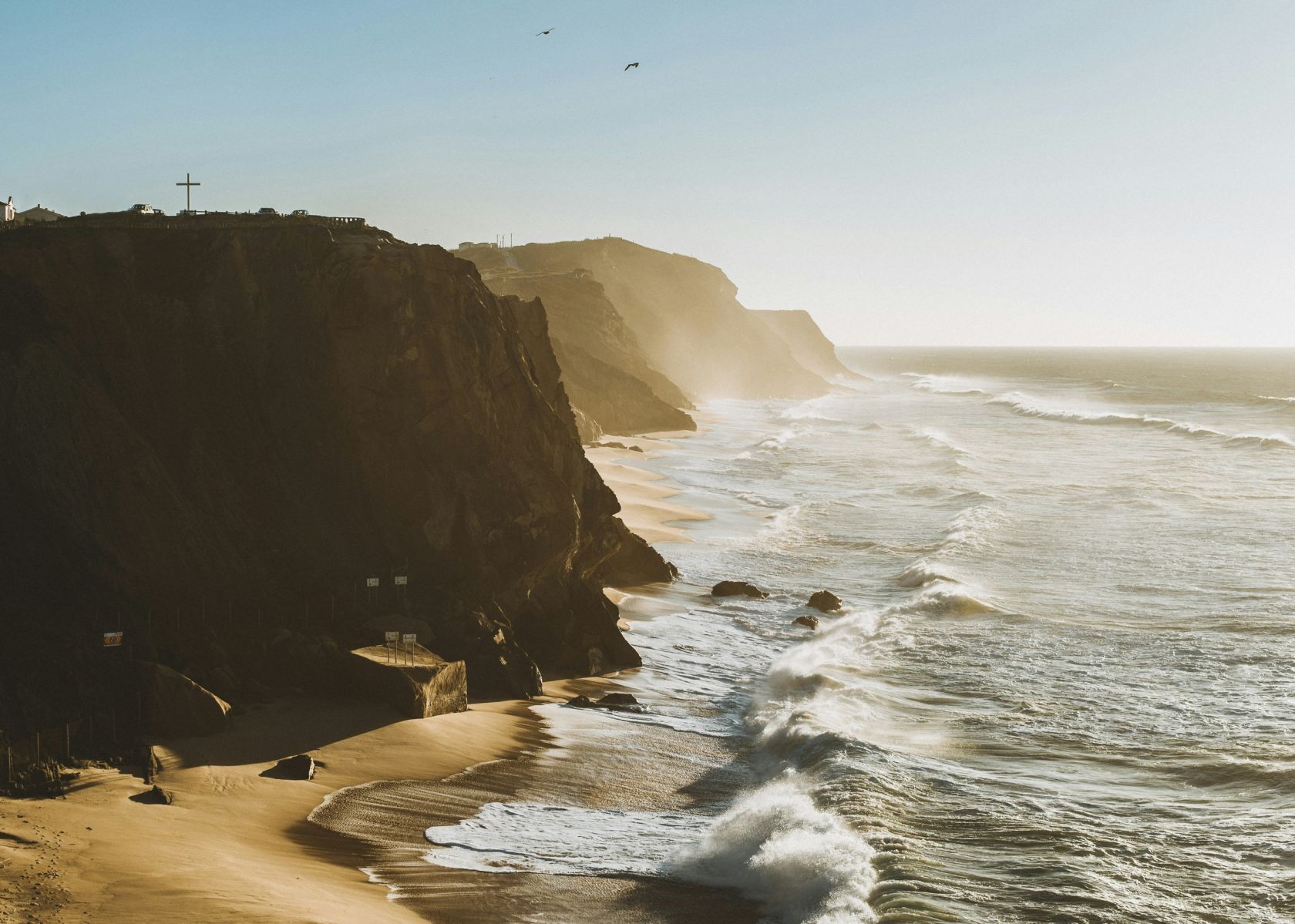
As the inland areas heat rapidly during summer, cooler Atlantic air is drawn towards the coast. This creates refreshing coastal winds that can significantly reduce temperatures in cities such as Porto, Peniche, Nazaré and Lisbon.
The Nortada is also responsible for another distinctive feature of Portugal’s west coast: surprisingly cold sea temperatures. Strong northerly winds push warmer surface water away from the shoreline, allowing colder water from deeper in the Atlantic to rise to the surface in a process known as upwelling. Even during August, sea temperatures along much of the west coast often remain between 17°C and 20°C.
For surfers, sailors and kitesurfers, the Nortada is a welcome companion. Beaches such as Guincho, near Cascais, and Martinhal in Sagres are internationally recognised for the reliable winds it produces.
The Levante: the Algarve’s hot easterly wind
While the west coast is cooled by Atlantic breezes, the Algarve occasionally experiences a very different weather pattern known as the Levante.
The Levante is an easterly or south-easterly wind that blows from the Mediterranean and southern Spain towards southern Portugal. Unlike the Nortada, it often arrives with hot, dry air and can push temperatures well above seasonal averages across the eastern and central Algarve.
During a Levante event, overnight temperatures may also remain unusually high, making evenings feel warm and sometimes humid. Sea temperatures in the Algarve can temporarily increase because the easterly winds allow warmer Mediterranean-influenced waters to spread westwards along the south coast.
Although the Levante is generally less frequent than the Nortada, it often accompanies some of the Algarve’s hottest summer days.
Why Portugal’s weather changes so quickly
One of Portugal’s most fascinating characteristics is how dramatically conditions can vary over relatively short distances.
On a summer afternoon, Porto may be enjoying a fresh 24°C under the influence of the Nortada while Évora records 40°C under clear skies. The Algarve can experience calm, sunny conditions while the west coast sees strong winds and rough Atlantic surf.
Portugal’s varied landscape also plays an important role. Mountain ranges influence rainfall and wind patterns, while proximity to either the Atlantic Ocean or the Mediterranean helps create distinct regional climates.
Understanding weather patterns such as heatwaves, the Nortada and the Levante helps explain why Portugal’s climate is so diverse. Whether you’re planning a beach holiday, choosing where to live or simply deciding what to wear, these local weather phenomena are an important part of everyday life and one of the reasons Portugal’s climate is as fascinating as it is enjoyable.
Set The Portugal News as your preferred source for news on Google
 Add as a preferred source on Google








 Portugal Handbook
 English
 Nederlands
 Deutsch
 Français
 Español
 Italiano
 Svenska
 Pусский
 中文
中文 Türkçe
 Português
 Czech
Czech Hungarian
 Polski
 عربي
عربي Suomi
Suomi עִברִית
 Português (Brasil)
Follow us on social media