


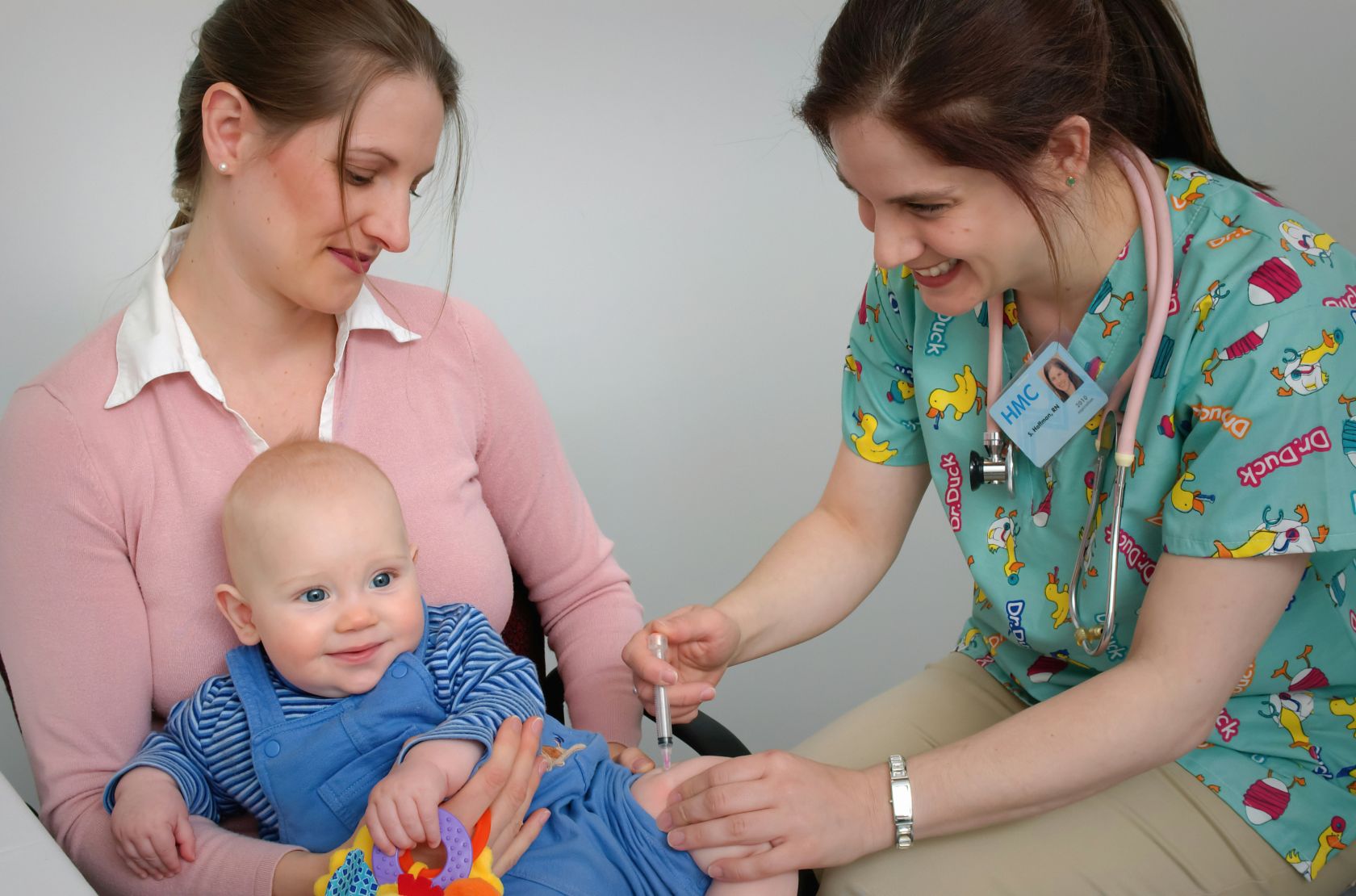
The warning is in a report by the United Nations Children's Fund (UNICEF) and the World Health Organization (WHO), which indicates that, in the last year, a total of 13.5 million children did not receive any doses of vaccines, leaving them vulnerable to diseases that can be prevented by vaccination, while another 6.2 million obtained only partial protection.
Reduced numbers
Despite these numbers representing 745,000 fewer children without any vaccine dose than in 2024, the two organisations warn that the 2025 data indicate that the goal of reducing "zero-dose children" by 2030 is still far off.
The 2030 Immunisation Agenda aims to halve the number of "zero-dose children" globally, from an estimated 12.8 million in 2019 to 6.4 million within four years.
By mid-decade - in 2025 - the 13.5 million children who did not receive any vaccine dose represented 700,000 more than in 2019 and 3.9 million above the intermediate average of 9.6 million projected for this year, the document warns.
Globally, nine countries – Nigeria, Yemen, the Democratic Republic of Congo, India, Indonesia, Ethiopia, Afghanistan, Pakistan, and Angola – accounted for more than half (52.4%) of all children who did not receive any vaccine doses in the past year.
According to the report, measles vaccination with at least one dose is trying to recover to 2019 levels, as there are 1.8 million more unvaccinated children against this disease than seven years ago, but, on the other hand, coverage of the last dose of the human papillomavirus (HPV) vaccine among girls increased from 28% to 31% in the past year.
Vaccination programs
Vaccination programs in 2025 showed slight improvements in diphtheria, tetanus, and pertussis (DTP) vaccine coverage compared with 2024, but remain below 2019 levels.
In a press conference, the director of the WHO's immunisation and vaccines department acknowledged that vaccination progress between 2024 and 2025 is modest, but stressed that, over the past 25 years, especially after the investment of the Global Alliance for Vaccines (Gavi), “it has been enormous.”
“One of the great achievements is that children are now protected from more diseases than ever before,” highlighted Kate O’Brien, for whom this was possible because “safe and effective vaccines against diseases that were not preventable have been developed and licensed and are now being administered.”
In the middle of the decade, a UNICEF and WHO report provides an interim assessment of progress by countries that adhered to the goal of reducing by 50% the number of children without any dose of the vaccine by 2030, highlighting that 90 countries maintained high and stable coverage above 95%.
Nine other countries made some progress but did not reach this goal, and 74 had more children without any dose of the vaccine in 2025 than in 2019.
Set The Portugal News as your preferred source for news on Google
 Add as a preferred source on Google






 Portugal Handbook
 English
 Nederlands
 Deutsch
 Français
 Español
 Italiano
 Svenska
 Pусский
 中文
中文 Türkçe
 Português
 Czech
Czech Hungarian
 Polski
 عربي
عربي Suomi
Suomi עִברִית
 Português (Brasil)
Follow us on social media