


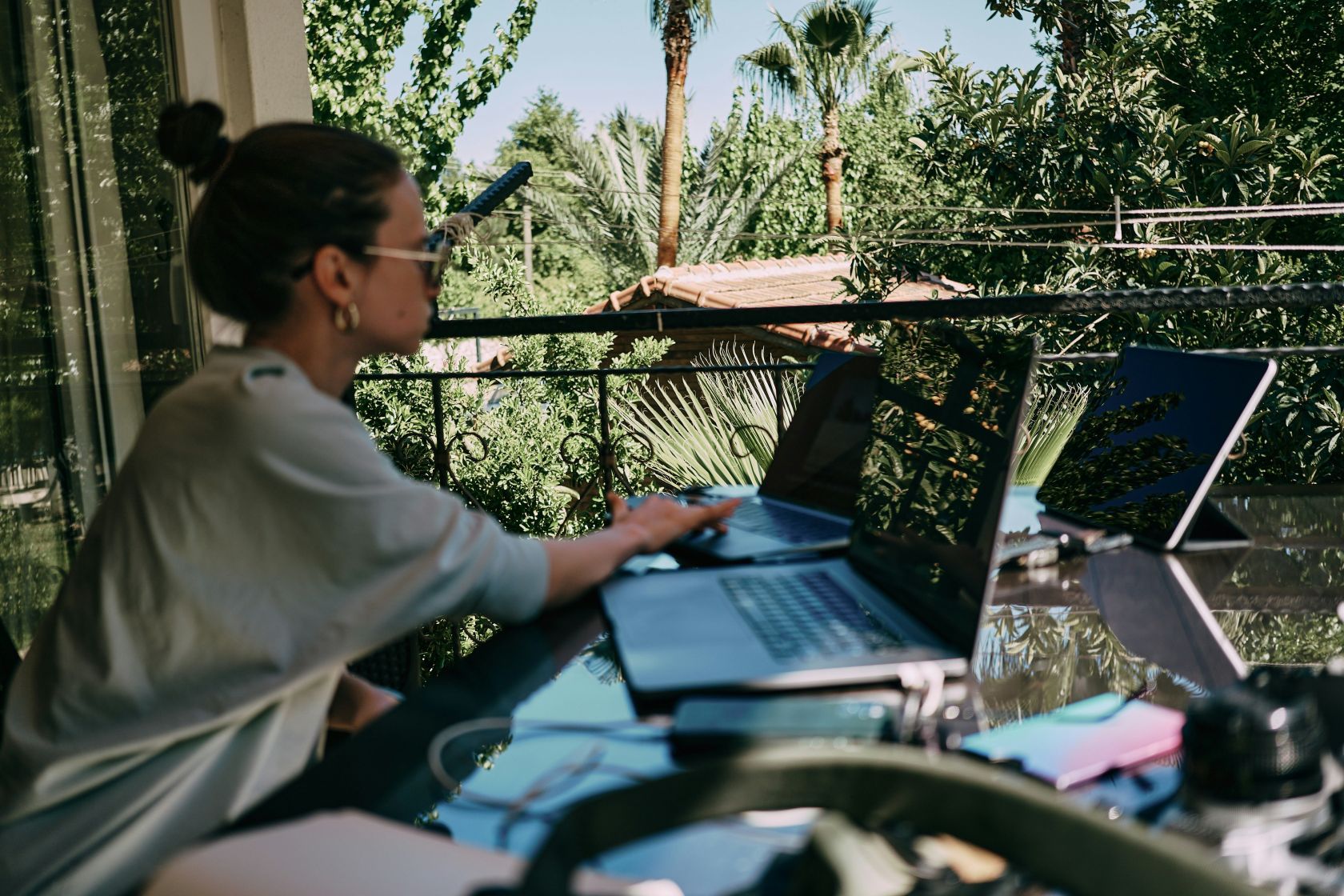
“Digital nomads are people who work in relative isolation, whether at home or elsewhere; since they are away from home, they often lack a local network of family or friends, and this initiative fosters socialisation,” explained Gonçalo Costa.
Muse-IN is the first initiative of the Viseu CoLab project, led by the associations Digital Nomads Viseu and INterioriza-te; the inaugural gathering took place at Casa da Ribeira in Viseu.
Casa da Ribeira was the first municipal museum, with others to follow, to open its doors to the Muse-IN project, bringing together around 30 digital nomads for a day of culture-infused coworking.
The goal, he noted, is for “these types of gatherings at both municipal and non-municipal museums to take place roughly every three weeks, with the workday always beginning with a tour of the museum space” where the group is meeting.
“The idea is to showcase the museum and the culture and history of Viseu. We welcome digital nomads, remote workers, and even entrepreneurs; it’s a way to share the municipality's culture and customs.”
The gatherings are scheduled for Mondays, “because museums are closed to the public then, so it doesn't interfere with tourist visits,” added Gonçalo Costa, highlighting the “full support of the Municipality of Viseu” for the initiative.
“We have around 500 digital nomads in the Viseu district; they come from various countries around the world and are mostly aged between 30 and 50. About 40% are Portuguese, hailing from various different regions,” said Pedro Salgadinho, the head of Digital Nomads, who is originally from the island of São Miguel in the Azores and currently resides in Viseu.
Salgadinho noted that “people sometimes feel the need to work outside the home to change their surroundings, but in cafés, you have to make purchases, and they don’t always welcome people working there for an entire afternoon.”
“There is also a need to work in spaces alongside other people; at least some of us feel that way, but the space needs to have the right facilities, such as access to power outlets,” he added.
For Marisa Almeida, a representative of the association INterioriza-te, which has “some experience with mobile coworking in the Dão-Lafões region”, there was a “need for a space in Viseu,” and “having this opportunity now to work in museums and get to know them is excellent.”
Almeida believes these gatherings “help foster a sense of rootedness for those who lack it, whether because they are far from family or because they chose the interior, or specifically the city of Viseu, as their place of residence” and remote work base.
“Viseu has become a popular choice because it is large, yet small enough to do most things on foot; the city centre has everything, services and shops, and a vibrant atmosphere. There is always something going on, which is great, because most digital nomads don’t have their own transport and highly value cities where they can get almost everywhere on foot,” Salgadinho highlighted.
According to the three key figures involved, these gatherings also offer “the unique benefit of multicultural exchange and promote the region's gastronomy.” “Digital nomads share a great deal of information with one another about the places they pass through and visit; by hosting these gatherings in museums and getting together for lunch, we are boosting the local economy, but above all, we are promoting the region and our culture,” highlighted Gonçalo Costa, a native of Viseu who is returning to his roots with this project after ten years of studying and working away from home.
 Add as a preferred source on Google





 Portugal Handbook
 English
 Nederlands
 Deutsch
 Français
 Español
 Italiano
 Svenska
 Pусский
 中文
中文 Türkçe
 Português
 Czech
Czech Hungarian
 Polski
 عربي
عربي Suomi
Suomi עִברִית
 Português (Brasil)
Follow us on social media