


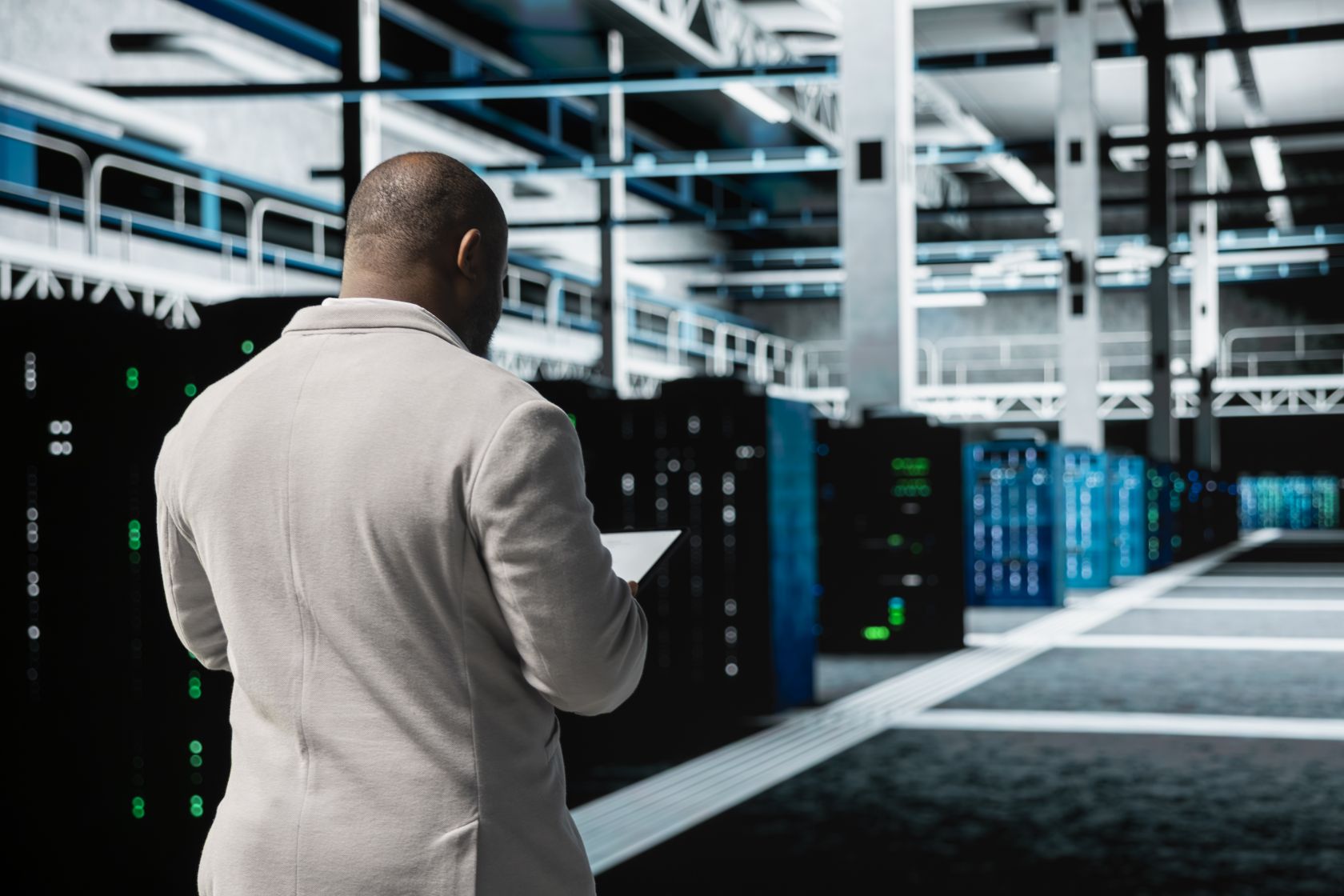
Most of this budget is allocated to Germany but the Netherlands, Belgium and Portugal will benefit proportionately from the influx of capital the return on which to Amazon will be high once the incentives offered by governments and local authorities have been discounted.
A total pay-roll of 2,800 full-time jobs is promised but these will be of a skilled technical nature. For these, many candidates can be expected from countries outside of the EU. They will pay IRS as part of global income under their national assessment.
Apart from localised construction costs, much of the internal expenditure for Data Centres is ascribed to servers, chips and other costly equipment, nearly all of which will be imported directly by Amazon and depreciated accordingly. Life-spans are notoriously low due both to severe thermal and electrical stress and to redundancy. AI Chips and GPU racks have a maximum three-year life expectancy. CPU servers have 5 to 6 years, core network switches 7-10 years and cooling hardware 10 – 12 years.
Thus, maintenance and replacement of the machinery of cyber networks is a continuous and expensive cycle. With additional research costs, it will not generate immediate taxable profit for the European countries which have agreed to act as host for the “magnificent seven” U.S. companies.
The U.S. and China now dominate the AI markets but with quite different approaches and political motivation. Whereas the Americans are aiming high with an escalation to the unpredictable realms of self-trained super-intelligence, the Chinese are expanding their much improved versions of “general” AI to benefit business in general and social services in particular.
Moreover, China realises that its hegemony of the BRICS nations means that it must share with them its technical knowledge. This will mean a cohesion of all equipment such as fibre cables and data centres which are scattered globally without central regulation and planning.
Europeans should realise that their continent is wedged between two enormous rival systems. Neither of these must be allowed to buy through ”investment” the sovereign democracy which precariously sits in Brussels. Yes, we desperately need to keep pace with building an AI infrastructure to protect our culture, but not at any cost.
Set The Portugal News as your preferred source for news on Google
 Add as a preferred source on Google








 Portugal Handbook
 English
 Nederlands
 Deutsch
 Français
 Español
 Italiano
 Svenska
 Pусский
 中文
中文 Türkçe
 Português
 Czech
Czech Hungarian
 Polski
 عربي
عربي Suomi
Suomi עִברִית
 Português (Brasil)
Follow us on social media