


The first kind change their cars with the same sort of regularity that a Hollywood celebrity changes spouses. Every three years, off they trot to the dealership, where a smiling young chap called Tristan explains how this year's model has a touchscreen the size of Luxembourg and an artificial intelligence system capable of ordering a cappuccino while simultaneously monitoring tyre pressures.
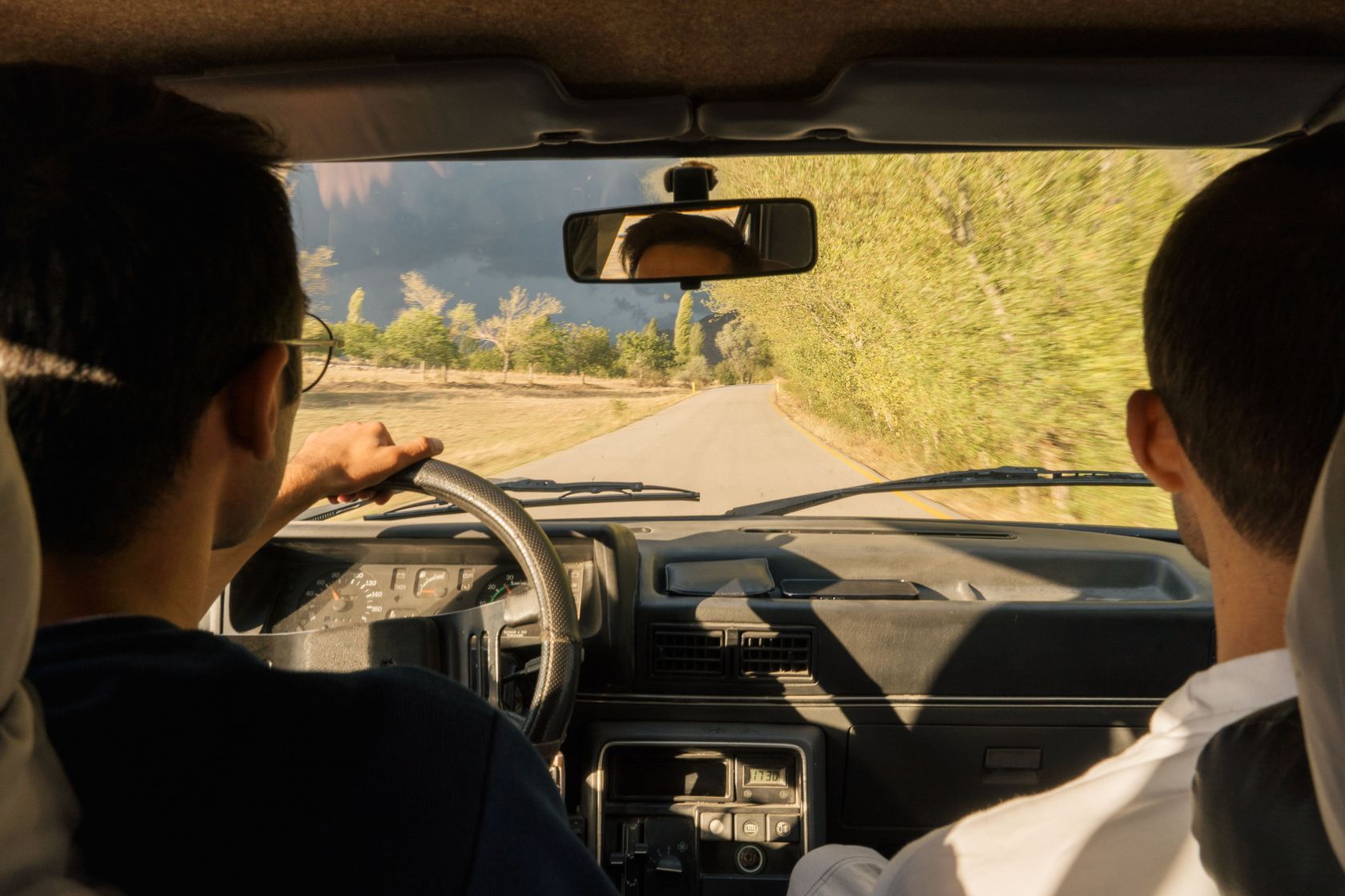
The second kind still drive cars that were around when Tony Blair was considered youthful. You know the sort of car I'm talking about. The paint is slightly faded, the driver's seat has moulded itself to the same contours as the driver’s backside with the precision of a NASA-designed space capsule. The radio only picks up three stations, one of which appears to be broadcasting from a fishing trawler somewhere in the North Atlantic. And yet they wouldn't swap that car for anything.
A part of the family
To understand why, we must first understand that for some people, a car isn't merely transportation. It’s part of the family. Before you start rolling your eyes and muttering that it's "just a machine", consider this.
An old car has probably been more a part of a person’s life than most of their friends. It was there when they got their first proper job, it was there on their wedding day, and even on the day they brought a newborn child home from hospital, driving at 17 mph because suddenly every pothole appeared capable of causing permanent damage to the precious cargo.
Yes, an old car can become a historic and very personal capsule. It was there for family holidays, supermarket runs, awkward first dates, emotional goodbyes and triumphant journeys home after life's occasional victories. Some people don't simply drive a car for twenty years, they accumulate precious memories in it.
The psychology behind this is surprisingly powerful. Human beings form attachments to objects that accompany them through significant experiences. Psychologists call it the "endowment effect". Once something becomes part of our story, we value it far beyond its objective worth.
To an insurance company, an ageing Ford Mondeo is worth less than the cost of a garden shed. But to its owner, it holds twenty years of their life story. Every scratch tells a tale, every dent reminds them of something. Even the worn steering wheel feels amazingly familiar, in the same way an old leather armchair does. Old car owners know exactly how hard to close the driver's door, they know which button on the dashboard tends to stick. They realise that a peculiar noise the car makes every November is nothing serious, and have long since accepted that investigating it would probably make things a lot worse. In other words, an old car becomes predictable. Comforting. Safe. A bit like an old Labrador. They love it because it has shared life's journey with them. And that really matters.
Serial upgraders
Then we have the other tribe. The serial upgraders.
These are the people who view a three-year-old vehicle with the same horror that medieval peasants reserved for plague outbreaks.
The moment a warranty expires, panic sets in.
They begin browsing brochures and watch YouTube reviews. They compare monthly payments, study trim levels with the concentration usually associated with nuclear physicists.
For these people, the car is not a companion, it's a statement. A reflection of identity, a public announcement. A new car says, "I've made it." Or at least, "I'm making the monthly payments required to create the appearance that I've made it."
This mindset has been carefully cultivated by decades of corporate marketing. The entire automotive industry depends upon convincing perfectly happy people that they are somehow incomplete without owning their very latest model. Last year's perfectly acceptable car suddenly becomes embarrassing because this year's version has illuminated cup holders and a dashboard capable of displaying weather conditions in Mongolia.
Watch the video here 👇👇👇
In a nutshell, manufacturers spend billions literally creating dissatisfaction. Not with the car but with the owner. The message is subtle but relentless. And that message says, successful people drive newer cars, progressive people drive newer cars, and interesting people drive newer cars. Before long, many consumers begin to believe this narrative. At that precise moment, the car ceases to be transportation, it becomes a very visible form of social signalling. An accessory. A mobile LinkedIn profile.
There's nothing necessarily wrong with this. Human beings have always used possessions to communicate status. Roman senators had fancy togas, medieval nobles had castles, and modern executives have German SUVs with more computing power in their electric tailgate-lift module than all the Apollo rockets combined.
An automotive package
The big difference is that older generations often bought their cars outright and kept them.
Today, many people subscribe to an automotive package. The monthly payment becomes normalised, and actual ownership becomes almost irrelevant. In the world of new cars, the relationship between car and driver is temporary from the outset, which goes a long way towards explaining why the emotional attachment never develops. After all, it's difficult to bond deeply with something you've already planned to replace.
So, there’s something undeniably admirable about the old-car people. These people exist in quiet rebellion against modern consumer culture. While everyone else is chasing upgrades, software updates and the latest fashionable crossover that resembles a domestic appliance, they simply keep driving their old pal. A car that still works despite its fading paint. So, they keep it.
A relationship built on history
It's a wonderfully old-fashioned concept. And perhaps a surprisingly sensible one.
Because somewhere along the line, we may have started confusing novelty with improvement. The owner of a twenty-year-old Volvo may not have adaptive cruise control or mood-sensitive ambient lighting, but they do possess something increasingly rare. Contentment. They have reached the conclusion that enough is enough. The car performs its function, precious memories remain intact, the steering wheel still feels right, and that familiar smell when they open the door still exists, meaning that the stories are still there.
So, when they climb into their old car each morning, they aren't merely starting an engine.
They're continuing a relationship, which sounds ridiculous until we think about it. Because relationships aren't built on perfection; they're built on history, reliability, familiarity, and shared experiences. So, for millions of people, that scruffy old car parked outside isn't simply a machine, it's a faithful old friend. One that has accompanied them through thick and thin.
A companion that never judged, rarely complained, and always waited patiently on the driveway.
In an age where everything seems disposable, replaceable, and permanently due for an upgrade, isn't there something rather wonderful about that?
Set The Portugal News as your preferred source for news on Google
 Add as a preferred source on Google








 Portugal Handbook
 English
 Nederlands
 Deutsch
 Français
 Español
 Italiano
 Svenska
 Pусский
 中文
中文 Türkçe
 Português
 Czech
Czech Hungarian
 Polski
 عربي
عربي Suomi
Suomi עִברִית
 Português (Brasil)
Follow us on social media