


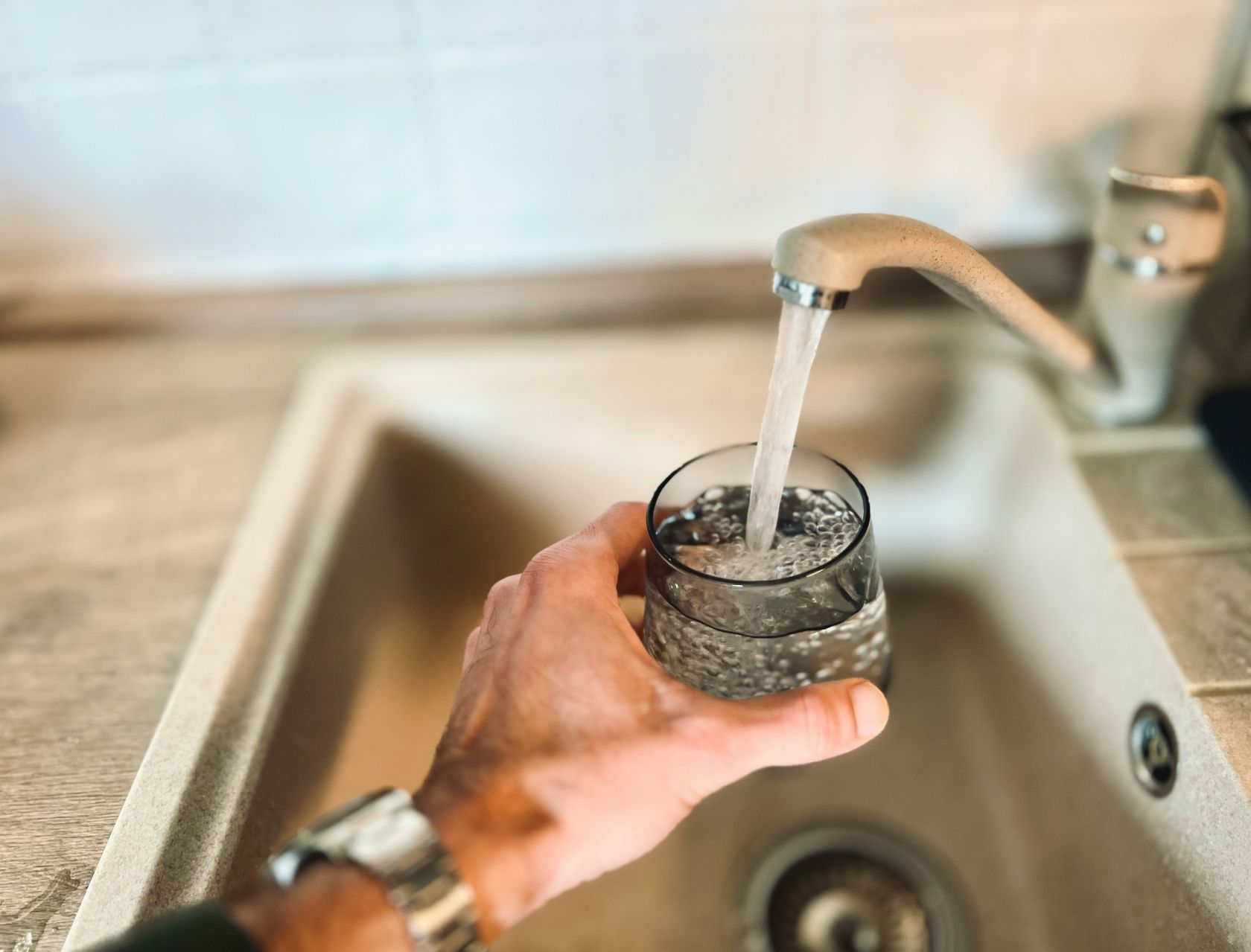
According to this year’s Annual Report on Water and Waste Services (RASARP), 98.84% of tap water is safe; this figure is derived by combining the completion rate of mandatory analyses (99.91%) with compliance with parametric values (98.93%).
The newly released data mark 11 straight years in which the water quality indicator has stood at 99%, the report, seen by Lusa, indicates. It shows that “upstream” safe water (the process of abstraction, treatment, and transport to municipalities) remains at 99.69%, while “downstream” safe water (distribution to consumers) stands at 98.84%.
Susana Rodrigues, Director of ERSAR’s Quality Department, notes “some problems” with smaller-scale systems, adding that upstream systems offer greater security, partly because they are more professionalised.
Last year, 74,473 analyses were performed on upstream water, covering the entire planned schedule, and only 229 (0.31%) failed to meet standards.
For downstream water, 392,667 analyses were conducted (99.1% of the target), with 4,235 (1.07%) showing non-compliance—partly due to poor water quality at certain public fountains.
Compared to the previous year, the rate of safe water went from 98.86% in 2024 to 98.84% in 2025; the number of municipalities (225, or 81%) with water quality at or above 99% remained unchanged, while 42 municipalities (15%) recorded 100% safe water (five fewer than in 2024).
Another 51 municipalities had safe water rates above 95% but below 99%—the same figure as in 2024.
According to ERSAR maps, the best results (99% or higher) cover most of the country, except in some regions of the Alentejo and in municipalities in the central and northern interior.
Most instances of non-compliance relate to pH (31%) and microbiological parameters (38%), caused, respectively, by the water’s natural characteristics and failures in disinfection systems.
Two municipalities fell into the “red” zone—meaning they did not exceed the 95% threshold: Marco de Canaveses and Fornos de Algodres.
In the first case, the lower figure is linked to analyses of water from public fountains; according to Susana Rodrigues, these should not even be used, given that tap water, which is of “excellent quality”, is also available.
In Fornos de Algodres, the issue was purely administrative, relating to the expired certification of the technician performing the analyses.
“The key message is that there is no unsafe water,” said the official during the report’s presentation, highlighting the importance of municipalities connecting to bulk water supply systems.
Vera Eiró, Chair of the Board of Directors at ERSAR, also argued that “a connection between the local distribution network and the bulk supply system offers the greatest assurance,” adding that municipalities are increasingly coordinating more closely, centring their efforts on a joint entity.
According to ERSAR, only 62 municipalities have vertically integrated systems, meaning they are responsible for both bulk supply and local distribution. At the same time, 180 public standpipes still serve as the sole source of drinking water for 8,797 inhabitants.
The most difficult-to-manage systems, featuring the highest number of supply zones, are found in the local distribution sector in the country’s interior.
If a municipality has numerous supply zones, often managed by parish councils, it can lead to “microbiological non-compliance”; therefore, the ideal solution is for these locations to connect to bulk supply systems, Susana Rodrigues emphasised.
She also explained that although new testing parameters were introduced last year, water quality did not decline.
Last year, ERSAR conducted 60 inspections of management entities, issuing formal notices of violation to 32 of them (primarily due to failures in data disclosure). In comparison, ASAE carried out 128 inspections of private supply systems.
Set The Portugal News as your preferred source for news on Google
 Add as a preferred source on Google






 Portugal Handbook
 English
 Nederlands
 Deutsch
 Français
 Español
 Italiano
 Svenska
 Pусский
 中文
中文 Türkçe
 Português
 Czech
Czech Hungarian
 Polski
 عربي
عربي Suomi
Suomi עִברִית
 Português (Brasil)
Follow us on social media