


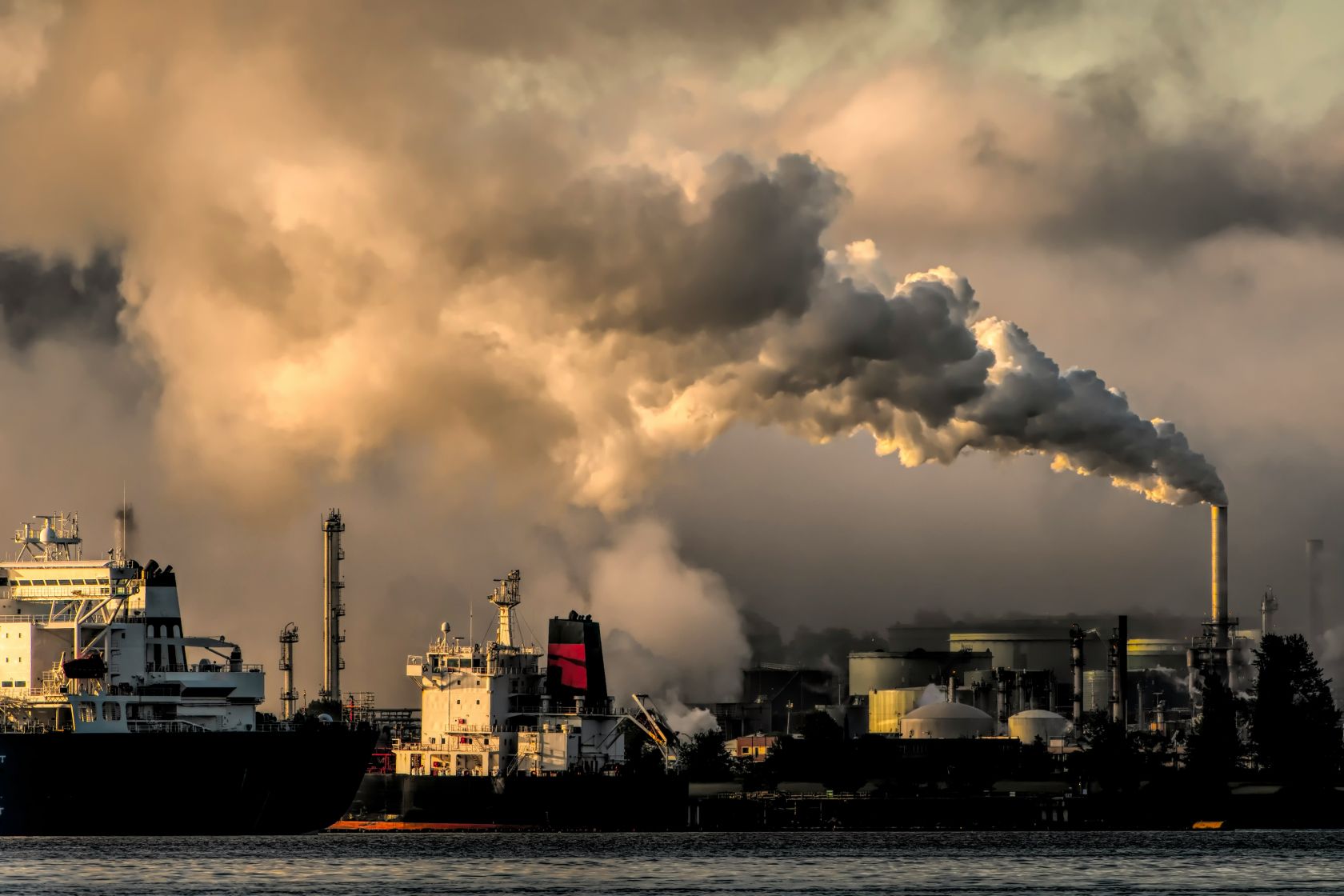
The World Meteorological Organization (WMO) latest report states that the global average surface concentration of CO2 reached 426.8ppm in 2025 (153% of the pre-industrial level of 1750).
Methane and nitrous oxide (the second and third most important long-lived greenhouse gases from human activity) have also followed the same trajectory and have likewise hit new all-time highs. Methane concentration has reached 1948 ppb (267% of 1750 levels).
Methane has a much shorter atmospheric lifetime than CO2 but still accounts for around 16% of the radiative forcing of the long-lived greenhouse gases. The WMO also notes that around 35% of methane emissions are from natural sources, which are very sensitive to climate change (i.e. wetlands), the other 65% being from human sources (livestock, rice, fossil fuel exploration and production, landfills and biomass burning).
Nitrous oxide levels are 126% higher than pre-industrial levels, and it is the third biggest contributor to the greenhouse effect (a combination of natural and anthropogenic sources including agricultural fertilisers, biomass burning and industrial activity).
WMO Deputy Secretary General Ko Barrett issued a statement in which she warned that the continued accumulation of these gases is trapping an extraordinary amount of heat in the atmosphere, leading to an ever-increasing number of extreme weather events and escalating risks to the economy and society.
She stressed that with the last 11 years being the warmest on record and that trend expected to continue, the long atmospheric lifetime of CO2 will have an impact on the climate system for years, decades and even centuries to come.
Set The Portugal News as your preferred source for news on Google
 Add as a preferred source on Google








 Portugal Handbook
 English
 Nederlands
 Deutsch
 Français
 Español
 Italiano
 Svenska
 Pусский
 中文
 Türkçe
 Português
 Czech
 Hungarian
 Polski
 عربي
 Suomi
 עִברִית
 Português (Brasil)

Follow us on social media